When does low water pressure need a plumber?
Book a plumber when the weak flow reaches every outlet, began suddenly, arrives alongside banging pipes or a rising water bill, or survives a simple fixture-level fix such as a cleaned aerator. One sluggish faucet usually has its own clog. When every tap runs weak, suspect the supply line, a valve or the regulator.
Sorting it out takes a minute. Open the kitchen tap, then the bathroom, then an outdoor spigot. If only one outlet is weak, focus on that fixture. Hot water that runs weak while cold stays normal points to the water heater or its valves, which our page about low hot water pressure covers. When everything is weak, treat it as a house-wide fault.
The water main and anything past the meter belong to the water district. A leak in the stretch from the street to the meter is the supplier's job to fix, and asking the supplier will tell you whether a main break or hydrant flushing is affecting your block.
Why is the water weak all through my home?
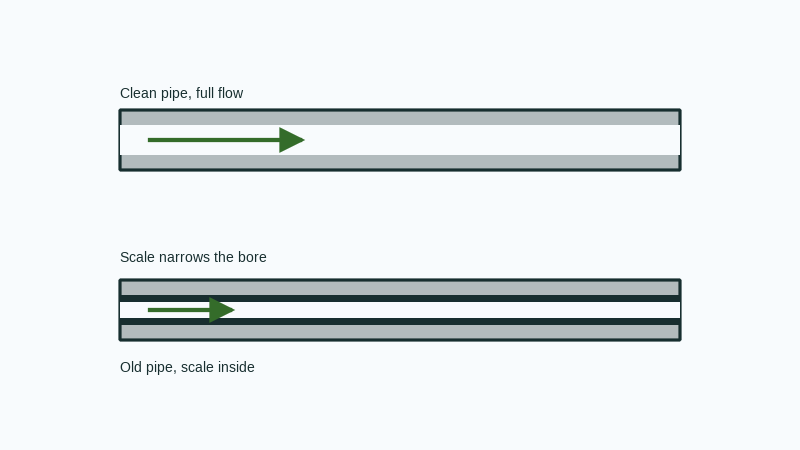
Typical causes are a shutoff valve left half closed, a tiring regulator, scale or corrosion that narrows aging pipe, a concealed leak, or trouble upstream of your property line. To narrow it down, note if the loss came on suddenly or crept in gradually, and what material your pipes are made of.
- Sudden drop. A valve bumped shut during other work, a regulator that died, a leak, or a supply fault on your street. The guide to sudden low pressure walks through it.
- Slow slide over years. Scale or corrosion inside older galvanized steel or copper lines. Older homes may have materials that age in ways that restrict flow, though your own pipe type is what counts.
- One fixture. Clogged aerator, cartridge debris or a kinked supply hose.
- Pressure that dips at certain times of day. Worth noting for a plumber, since it can point to a tired valve, a regulator, or heavy demand on the supply.
Most of Simi Valley gets its water from Ventura County Waterworks District No. 8, and the eastern end from Golden State Water, both buying from Calleguas. Moorpark is on Ventura County Waterworks District No. 1. Your bill names yours.
Can I test or adjust the pressure myself?
Yes, and the check is easy. A hardware-store gauge threads onto an outdoor hose spigot. Write down one reading with everything off and another with a tap running. If you have a regulator you can turn it, but a single wrong adjustment may overpressure the house, so many owners leave that step to the plumber.
Take readings in the morning and again in the evening, since supply pressure drifts through the day. A steady figure far under your expectation puts the fault inside your property, past the meter. A figure that climbs overnight and sags under load hints at a regulator that is creeping or failing.
Check the spot at which the main line comes into the house for a bell-shaped brass fitting. Our page showing how a pressure regulator appears has the details, and where it is usually located helps you find yours. Spot a leak or heavy corrosion on it, and you should stop and book a plumber.
Which psi range suits my main water line?
No one figure fits every house, and we have not verified a code number, so ask the plumber which range suits your fixtures and appliances. Weak pressure irritates at the tap, whereas very high pressure punishes the water heater, hoses and valves. Act on what the gauge shows.
When the gauge reads high, a regulator brings it down. When it reads low and the regulator is healthy, the trouble sits in the pipes or upstream. Excess pressure also shows up as banging, dripping relief valves and fixtures that wear out early, so weak flow is not the only reason to measure. To compare regulator choices, see the whole-house regulator page.
What steps restore weak pressure at home?
Go from cheap to costly. Open all valves fully, clean the aerators, inspect the main shutoff and the one at the meter, and hunt for a leak. When the gauge confirms low pressure and nothing is shut or clogged, a plumber tests the regulator and the pipe run. A regulator replacement is a common, contained repair.
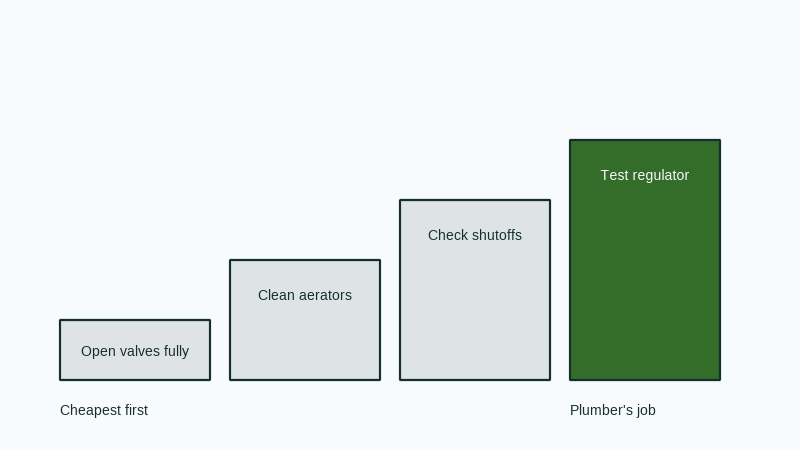
Safe do-it-yourself steps: take the aerators off and soak them in vinegar, flush a showerhead, and confirm that both shutoffs are wide open. Work for a plumber: replacing a regulator, tracing a leak, swapping corroded supply lines, or repiping once the inside of the pipe has choked. Regulator replacement is the most frequent single repair.
Leaks hidden in the walls or ground also steal pressure. The EPA puts the yearly loss from leaks in an average household at over 9,300 gallons. A test for one is simple. Record the meter reading, keep every tap closed for two hours, then compare. A dial that has shifted means a leak is somewhere in the system.
How much should a low-pressure repair run?
That depends on the cause. A cleaned aerator costs nothing, a regulator swap is fairly contained, and repiping the house is a major undertaking. We don't print dollar figures we haven't verified. Once the plumber has checked the gauge reading and the pipes, you can ask for a written number ahead of the work.
As a rough labor yardstick, federal Bureau of Labor Statistics data show a nationwide median hourly wage of $30.67 for plumbers, pipefitters and steamfitters. Businesses charge more than a wage because they cover tools, a vehicle, insurance and permits. Ask for diagnosis, repair and parts on separate lines, and ask what happens next if the first fix does not bring the pressure back.
Larger work can need permits. Simi Valley issues them through its Building and Safety Division, while Moorpark handles them at its own Building and Safety office. Under state rules, jobs of $1,000 or more in labor and materials generally call for a contractor license.
To have a plumber measure and repair it, send a pressure request saying which outlets run weak and since when. Requests are read on weekdays from 9am to 5pm and then passed along to a plumbing business nearby. Arroyo Simi Plumbing explains how the service works.
Common questions
Why is my pressure low in the shower only?
The usual cause is mineral scale in the shower head, a flow restrictor or a worn cartridge. Unscrew it and leave it in a vinegar bath. When the tub spout flows well and only the shower runs weak, the diverter or valve may be failing. See low-pressure shower heads.
Why does just my kitchen tap run weak?
Most often the aerator is blocked, the supply hoses beneath the sink are partly kinked, or the stop valve is not fully open. Clean the aerator first, then inspect the valves. Our page on low kitchen sink pressure lists the next steps.
Does weak water flow pose any danger?
Not on its own, yet it can signal a leak, and weak flow may stop a tankless heater from firing or a washer from filling. A concealed leak can ruin floors and walls. Should you notice damp patches or a spiking bill, check the meter and read about a high bill when no leak shows.
Why do my sprinklers get weak flow?
Every sprinkler zone draws from a single supply, so a weak main flow shows up there first, as do blocked heads, a jammed valve or a leak inside one zone. Run the zones one at a time to spot the one that drops. A half-closed irrigation backflow device can restrict flow too.
What does a plumbing technician do?
It is a broad title for anyone who installs or repairs plumbing systems, from apprentices to veteran plumbers. In California, whoever takes your job should have a contractor license. You can verify it with the Contractors State License Board before accepting any quote.
Will a plumber fit a regulator I buy myself?
Many plumbers will install a regulator you purchased, though some decline to warranty it. Size matters because the pipe diameter has to match, and a poor fit may mean a repeat visit. Check first, and see 3/4 inch regulators if your main is that size.