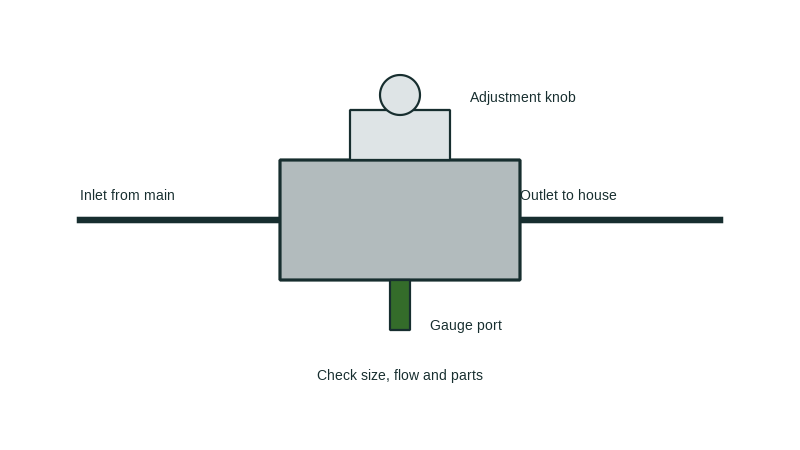
Rankings of top regulators change with the year and the seller, and we have tested none, so we name no winner. What we can offer is what separates a good regulator from a poor fit for a Simi Valley or Moorpark home, so you can hold any model up against your own needs. First confirm that you need one, using a pressure gauge. Our hub on pressure problems and valves describes the symptoms, and should you prefer not to install it yourself, send us a request. We hand it to a nearby plumbing company, and that company, like every business accepting requests here, pays us a fee.
What qualities make a regulator a good choice for a house?
A good regulator suits your pipe size and connection, keeps its setting steady as street pressure and demand shift, can be adjusted, passes enough flow for the whole house, and is made from durable materials such as brass. It also comes from a maker that publishes specs and keeps parts available for years.
Compare these points on any model:
- Size and connection. Match your main line, often 3/4 inch, and the connection type, threaded, soldered or union. Our page on a 3/4 inch regulator shows how to check.
- Adjustment range and a gauge port. You want to set pressure and verify it. A built-in gauge port is handy.
- Flow capacity. A regulator too small for the house can cause weak flow when several fixtures run. Check the maker's flow data against your home's demand.
- Body and internals. Brass or bronze bodies and replaceable cartridges or seats outlast cheap castings.
- Strainer or screen. Debris clogs the seat; a serviceable screen helps.
- Warranty and parts. Read the maker's warranty terms in writing and check whether replacement kits are sold.
Established brands in this field include Watts, Zurn Wilkins and Cash Acme, among others, and we mention them as examples only. Ask a plumber which ones have worked well for them, and have it installed correctly.
Who should fit it, and does it need a permit?
A homeowner can fit a regulator if they are comfortable shutting off the main and soldering or threading fittings, but many hire a plumber because mistakes flood the house. We have not verified whether either city requires a permit for a regulator swap, so ask the building office before starting.
Simi Valley addresses use the City of Simi Valley Building and Safety Division, while Moorpark addresses use Moorpark Building and Safety, inside City Hall on Science Drive. Confirm hours before visiting. California generally requires a contractor license when labor and materials come to $1,000, and for any job that needs a permit. You can look up a license number on the state board's site, cslb.ca.gov.
Get the quote in writing, and remember that a deposit cannot exceed $1,000 or 10 percent of the contract price, whichever is smaller. Per the EPA, leaks waste over 9,300 gallons of water a year in the typical household, and high pressure worsens leaks, so the setting matters.
How do I know a regulator is what I need?
Test before anything else. Connect a pressure gauge to a hose bib with all water off. A high reading, hammering pipes, running toilets or a weeping water heater relief valve suggest excess pressure. Weak pressure has other possible sources: a clogged screen, a valve not opened fully, a failed regulator or a supply problem, and a new regulator may not fix it.
Pressure starts with the supplier. Ventura County Waterworks District No. 8 serves most of Simi Valley, Golden State Water serves the eastern end, and Ventura County Waterworks District No. 1 serves Moorpark; Calleguas Municipal Water District is the wholesaler for all of them. Street pressure varies by location, and your supplier's customer service line can say what to expect at your address.
When every fixture is weak, read our page on weak pressure through the house. When only one is weak, clean the aerator or inspect the cartridge. A regulator is the wrong remedy for a clogged showerhead.
When does this job call for a plumber?
Book one when the main shutoff cannot be closed, the old regulator is soldered in place, pressure is still off after a swap, pipes hammer, a relief valve drips, or you simply want the pressure tested and set correctly. A plumber can also look for leaks that the high pressure has already caused.
Does the quality of my water change which regulator to buy?
Yes. Scale and grit shorten the life of the valve seat and clog screens, so serviceable parts and a strainer matter more with hard water. We have not verified a hardness figure for any Simi Valley or Moorpark supplier, so read your supplier's yearly water quality report and ask the plumber.
Mineral buildup also affects the pipes and fixtures downstream. Ways to handle it appear in our page on keeping hard water scale away. If a softener is installed, tell the plumber, since it is another item in the line.
Replace a regulator when it fails, not on a timer, but check pressure once a year with a gauge. It costs little and it catches creeping pressure early.
Should an expansion tank go in with a new regulator?
Often it is worth adding. After a regulator locks pressure inside the house, water that expands as the heater warms it cannot escape back to the street, so pressure can spike. A small tank on the line absorbs the extra volume. It is commonly needed, though we do not claim code requires it. Have the plumber inspect your setup.
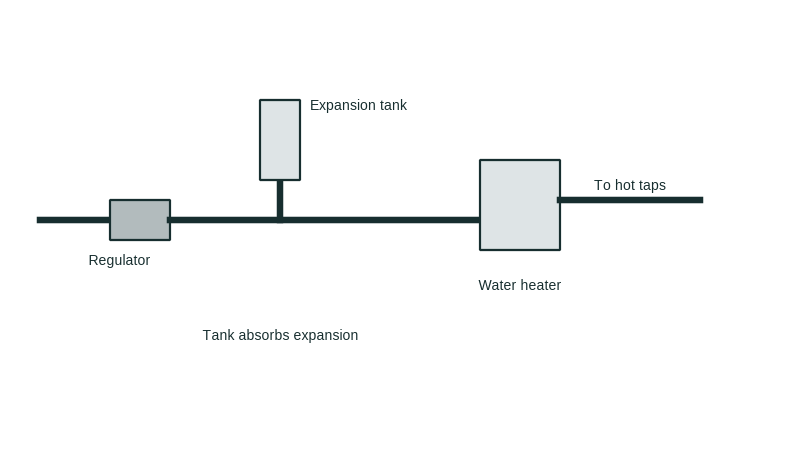
Thermal expansion trouble shows up as pressure rising while the water heater runs, a dripping relief valve, or hammering after heating cycles. The cure is an expansion tank sized for the heater and correctly pressurized, which a plumber installs. Our page on hot water pressure regulators covers a related case.
Common questions
What is the typical length of a regulator installation?
A simple swap usually means a short visit of an hour or two. Soldered fittings, a stuck main shutoff or an added expansion tank make it longer. The plumber gives the estimate alongside the written quote, and you will have no water until the job is finished.
Which questions belong on my list before a regulator goes in?
Request a written quote giving the model and size, plus the contractor license number for checking with the state licensing board. Ask as well which pressure will be set, if an expansion tank is advised, whether a permit applies, and what warranty covers the job, again in writing.
Should an adult be home for the installation?
Yes. Someone over 18 should point out the main shutoff, approve the setting and watch the water return. The supply goes off during the work, so plan your day around that. If you cannot be there, tell the plumber when they reach out about timing.
How high should the regulator be set?
Follow the advice of the plumber and your fixture and appliance manufacturers, and the plumbing code, which we have not cited here. Do not guess a number from a forum. Test with a gauge and adjust in small steps. See our guides.
Is a pricier regulator a better one?
Not necessarily. Build quality, flow capacity and serviceable parts matter more than price. A correctly sized, well-installed mid-range unit often beats a premium one fitted wrongly. Compare specs and warranties in writing, and ask which one the plumber recommends and why.