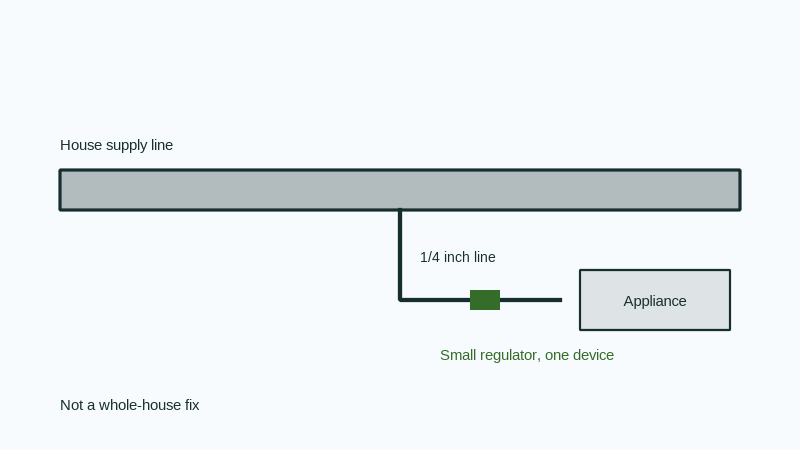
The 1/4 in the name is the connection size, and a quarter-inch line is thin: the sort of tube that feeds a refrigerator ice maker, a small filter or a drip line. A regulator that size trims pressure for one small device. It does nothing for showers, laundry or the heater, all of which run on much larger pipe. If the pressure trouble covers the whole house, read our group on low water pressure, or send a request, which we pass to a local plumbing business able to take a measurement.
What are small 1/4 inch regulators used for?
They lower the pressure on a small branch line serving one device: an ice maker or water dispenser line, a reverse osmosis or filter setup, a drip irrigation head, a humidifier, a small misting line or a lab-style appliance. They shield delicate parts from the full pressure of the house supply.
Many of these devices print a pressure limit in the manual or on a label. If your house pressure exceeds it, a small regulator on that line is a neat fix. Drip systems and filters often have a regulator built in already, so check before adding one. Never stack two without checking, since the result can starve the device of water.
Can a 1/4 inch regulator fix high pressure for the whole house?
No. House-wide pressure is controlled at the point of entry, by a much larger valve on the supply pipe. A quarter-inch regulator on one small line leaves everything else untouched. Banging pipes, dripping relief valves or fixtures that fail often all point to the main.
Our page on the whole-house regulator explains what that valve does, and water-line regulators covers its placement. Begin by threading a gauge onto a hose bib and reading it. A high number means the main regulator is the answer, and a plumber should set and test it.
Which small regulator should I pick?
Match four things: the connection type and size, the pressure range the device needs, the flow the device uses and the material. Compression fittings, push-to-connect and threaded ends all exist at this size. Read the device's manual for its pressure limit, and pick a regulator whose setting range covers it.
For a line feeding an ice maker or dispenser, check the drinking-water rating; look for a marking saying it is approved for potable water. Choose brass or a rated plastic, and keep the arrow pointing with the flow. Cost should not be your only guide, because a cut-price regulator can leak, creep or fail without warning. What to look for is listed in the article on choosing a home regulator.
How is a small regulator fitted to an appliance line?
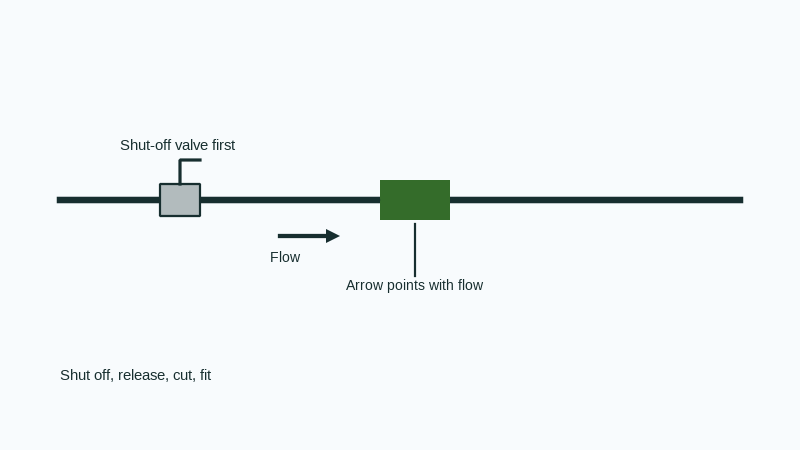
Close the supply valve for that line, release pressure by opening the tap or the appliance, cut the tube square, fit the regulator with the arrow pointing along the flow, tighten connections gently and check for drips. Then restore water and recheck after an hour. Plastic fittings crack if overtightened.
If the line is copper or has a saddle valve, the job needs more care. A saddle valve tends to clog and leak over time, and a proper shutoff is better. If the connection shows any corrosion, stop and let a plumber replace the valve. Water under a refrigerator or in a cabinet can run for hours before it shows, and by EPA's estimate the typical home wastes over 9,300 gallons a year through leaks.
Is a small regulator a DIY job or a plumber job?
A single regulator on an appliance tube is a DIY job for most handy owners, provided you close the water first. Work on the supply pipe, next to the heater or on a gas appliance belongs to a plumber. In California a contractor license becomes mandatory once a plumbing job's labor and materials total $1,000.
Any job that needs a permit needs a contractor license too. A small tube regulator normally stays under that line, but if unsure, confirm with the building office: Simi Valley's Building and Safety Division, or Moorpark's Building and Safety office. Form requests are read Monday to Friday, 9am to 5pm. For a bigger fix on the main, see regulator replacement.
Does a regulator help when pressure is really low?
A regulator only lowers pressure; it cannot raise it. If a device is starved, check the shutoff valve, the filter, the tube for kinks and the pressure at a nearby tap. A weak house supply is a different problem, covered under sudden low water pressure.
Your supplier, Ventura County Waterworks District No. 8 or Golden State Water in Simi Valley, or District No. 1 in Moorpark, can tell you the pressure normally delivered to your street. If supply is steady but the device is weak, replace the regulator, filter or tube. Return to Arroyo Simi Plumbing for more articles on the trade.
Common questions
What pressure do small appliances need?
It depends on the device, so read the manual. Ice makers, filters, humidifiers and drip lines each list a range, and some list only a maximum. If the label is missing, look up the maker's data sheet by model number. Measure your supply with a gauge before choosing a regulator.
Can I use a 1/4 inch regulator on a refrigerator line?
Yes, if the refrigerator's manual allows it and the regulator is rated for drinking water. Many ice makers already tolerate normal house pressure, so a regulator only helps if pressure exceeds the limit. Use a proper shutoff valve and check the connections for drips regularly.
Does a regulator reduce flow?
A little. Any valve adds some restriction, and a small regulator on a thin tube has little flow to spare. For an ice maker or filter, the flow is low anyway, so the effect is rarely noticeable. For anything needing more flow, step up in size or consult a plumber.
Where do I buy a pressure gauge to check?
Hardware stores sell basic hose-bib gauges. Thread it on, open the valve, and read the dial while no water is in use. Compare with your device's limit. If the reading is high at several taps, ask a plumber to examine the main regulator, which protects the whole house.