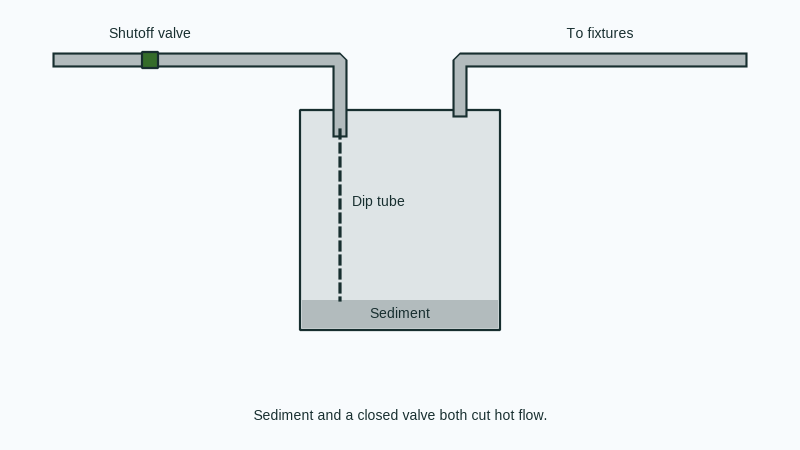
Turn on one hot tap and one cold tap together. If both are weak, the trouble is the supply coming into the house, a separate problem handled under low water pressure. If only hot is weak, inspect the heater, the valves around it or the hot pipes. That narrows the suspects to a handful, and most can be checked in minutes. This page works well next to the water heater repair guide, and you can always send a request.
Why is the hot side weak when cold runs normally?
The hot line contains parts the cold line does not: the water heater, its shutoff valve, sometimes a mixing valve, and the hot pipes themselves. A half-closed valve, sediment inside the tank, scale in the outlet fitting or corroded pipes can all choke hot flow while cold stays full. If only one tap is affected, suspect that fixture rather than the heater.
Try several taps. When only one faucet runs weak on hot, clean its aerator and inspect its supply line. If every hot tap runs weak, the restriction sits near the heater or along the main hot trunk line. In houses with older metal pipes, internal buildup can choke hot lines first, since heat speeds mineral deposits. Homes still running their original plumbing are the likeliest to show it.
Which checks come first?
Begin with the shutoff valve on the cold line into the water heater and the hot outlet valve, if there is one. Both must be fully open. Then clean the aerators on the affected faucets and compare. These free, safe checks rule out the simplest causes before you pay for a plumber visit.
To clean an aerator, unscrew the faucet tip, rinse out the grit, soak it in vinegar when scale is heavy, and refit it. If a showerhead is the only weak spot, soak it the same way. Next, run the hot tap that sits lowest in the house, such as a laundry sink or hose bib, and see if pressure recovers. If it does, the restriction lies higher up in the system. Note which taps behave differently, and give that note to the plumber.
Could tank sediment be choking the hot flow?
Yes. Minerals settle on the tank bottom, and flakes can break loose to block the outlet fitting or a downstream screen. Hard water speeds this up. Symptoms include rumbling, popping, discolored hot water and pressure that fades over weeks. Flushing the tank can help, but an old tank may be better replaced.
Water in Simi Valley and Moorpark reaches your district through the Calleguas wholesaler. Hardness appears in the annual report your supplier publishes, so read it rather than guess. A flush turns into plumber work if you are unsure how to isolate the heater safely: gas and electric supplies must be off, and the water is hot. What scale does inside pipes and fixtures is described in the guide to removing hard water scale.
Are old pipes the problem?
They might be. Galvanized steel lines clog from the inside with rust and mineral scale, and the hot side clogs first. Copper can scale up in hard-water areas and develop pinholes in others. If hot pressure has been worsening for years throughout the house, the pipes themselves may be at fault.
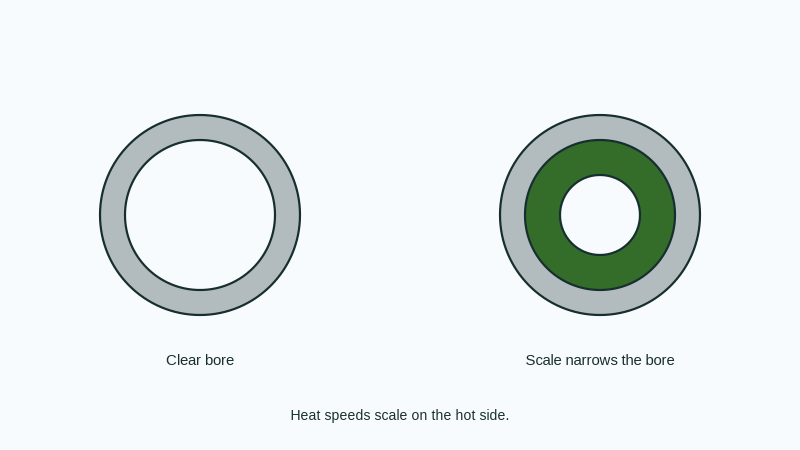
A plumber can judge this by reading pressure with a gauge and opening a fitting to look inside. Once galvanized pipe is confirmed, replacement is the lasting answer, explained under galvanized pipe replacement. For copper, a spot repair may suffice, or a repipe if the problem is widespread. For the options, see PEX vs copper.
Can a regulator or valve weaken only the hot water?
A whole-house regulator touches both sides, so it rarely explains a hot-only problem. A fault in a mixing valve, anti-scald valve or thermostatic valve near the heater can, though. So can a failed check valve or a closed isolation valve on a tankless unit. These are plumber jobs.
For background on regulators, our guide to replacing a water pressure regulator explains their purpose, and the page on regulators for hot water covers the hot side specifically. A regulator does not cure a blockage: it only lowers pressure, never raises it.
Why does a tankless unit lose flow?
Two things rob a tankless unit of flow: a clogged inlet filter and scale inside the heat exchanger. Once flow falls under the minimum needed to light the burner, the water turns lukewarm and weak. The unit may also display an error code.
Descaling is routine upkeep for tankless units in hard water, and the manual explains it. If the unit shows a code you cannot clear, have a plumber who knows the brand take a look. Our tank vs tankless page covers the trade-offs for a Simi Valley home.
At what point should I hire a plumber?
Do so once the checks above change nothing, when hot pressure drops suddenly, when you spot rust or leaks near the heater, or when it makes loud noises. A sudden drop plus a wet spot can mean a leak. Water heater work involves gas, electricity and hot water, so the safe limit for most homeowners is cleaning aerators and checking valves.
California generally requires a contractor license when a job hits $1,000, and any job needing a permit requires one regardless. Replacing a water heater normally takes a permit, which comes from Simi Valley's Building and Safety Division or Moorpark's Building and Safety office. We process requests that come in through the form on weekdays, 9am to 5pm. Return to Arroyo Simi Plumbing. We receive a fee from the businesses that accept requests.
Common questions
Why does hot water come out weaker than cold?
Because hot water passes through the heater, valves and fittings that can clog or scale, while cold goes straight to the tap. Begin at the heater's shutoff valves, then the aerator, then tank sediment. If all of those are fine, the hot pipes themselves may be restricted.
Will a tank flush cure weak hot pressure?
Sometimes, when sediment is the cause. A flush clears loose sediment from the tank floor and can free a partly blocked outlet. It will not repair corroded pipes or a failed valve. If the tank has never been flushed, plenty of debris may come out, so expect a messy job or hire a plumber.
Is weak hot pressure a safety risk?
Not by itself. The danger lies in a hidden cause, such as a leak or heater fault. Take care with hot water if the temperature swings, because a cold-side pressure drop can scald. Keep the thermostat at the label's recommended setting and test the water by hand before a child steps in.
Does hard water weaken hot pressure?
Yes. Hard water deposits mineral scale in the tank, fittings, aerators and pipes, and the hot side collects it faster because heat accelerates deposits. Check your supplier's water quality report for the hardness figure, and think about a softener if scale keeps coming back.