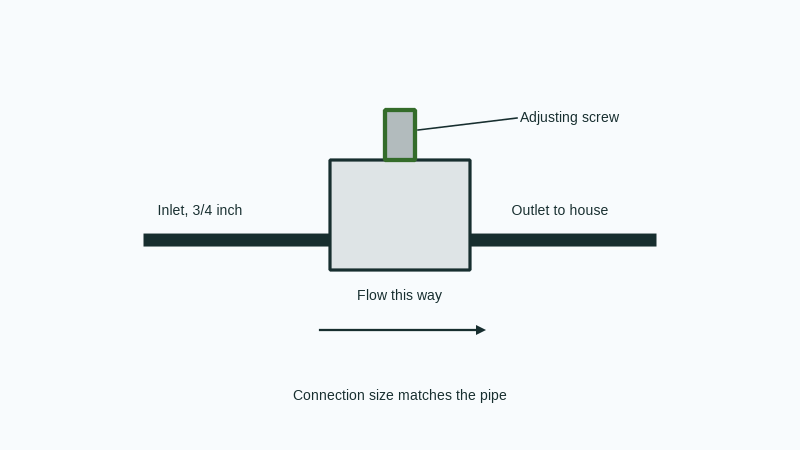
This valve, shaped like a bell, normally sits right where the main supply enters the home, and it lowers the pressure coming from the street to something pipes and appliances can handle. Shopping for a 3/4 inch model is about matching valve to pipe: a 3/4 inch line takes a 3/4 inch regulator. The sections ahead explain checking size, testing pressure and figuring out the point at which hiring a plumber pays off. Background on water pressure and valves sits on a separate page. We pass requests from Simi Valley and Moorpark to local plumbing businesses.
What does 3/4 inch mean on a pressure regulator?
That figure is the connection size: the valve's inlet and outlet fit a 3/4 inch nominal pipe. It tells you nothing about the pressure the valve delivers or how much water it passes. Many single-family homes have a 3/4 inch service line, but some have 1 inch, so check yours rather than assume.
To confirm the size, inspect the pipe going into and out of the current regulator and read the markings cast into the valve housing, which often show the size and the maker. If nothing is marked, wrap string around the pipe and compare the length with a chart for your pipe material, because nominal size differs from the outside measurement. A plumber can settle it in seconds.
Connection styles differ too: threaded, soldered or compression. A valve with the wrong style needs extra fittings. Carry the old one, or photos of it, to the store and match the connection.
Should I replace a regulator myself?
In principle yes, with limits. The work involves shutting the main, releasing pressure, removing the old valve, installing the new one, setting it with a gauge and checking for leaks. Mistakes can leave leaks at the main or a flooded house. Many people hire a plumber, especially when the old valve is soldered in place.
Think about what else the job affects. Where no thermal expansion tank exists, a new regulator that traps pressure lets water heater expansion drive it upward; an expansion tank is frequently needed, though we will not call it a code requirement. Ask the plumber to check. Also ask the permit office if a permit applies to the swap. We have not verified the rule for either city, so check with Simi Valley Building and Safety on Tapo Canyon Road or Moorpark Building and Safety on Science Drive.
California generally requires a contractor license once labor and materials reach $1,000, as well as for any permitted work. A regulator swap usually comes in below that figure, but check the plumber's license number on cslb.ca.gov and get a written quote. Deposits are capped at the lesser of $1,000 or 10 percent of the contract price.
How do I set the pressure on a new regulator?
Attach the gauge to an outdoor spigot while all water is off. Turning the adjusting screw clockwise raises the pressure and counterclockwise lowers it, so go a little at a time and let the dial settle in between. Aim for the figure your fixture makers and the plumber recommend. Then open a faucet, close it and check the reading holds.
If the number keeps rising after the faucet shuts, the regulator or a water heater expansion problem needs attention. Look again the next morning. Leaving the gauge attached for a day gives a clear picture. Our guide to hot water pressure regulators covers a related setup.
The EPA estimates an average household loses over 9,300 gallons of water a year to leaks, and high pressure makes small leaks bigger, which is one reason to get the setting right.
Do I even have a regulator, and how do I know it has failed?
Many houses have one and some do not. Close to the main shutoff, search for a brass body shaped like a bell, with an adjusting screw on top. Signs of a failing unit include very high or creeping pressure, banging when valves close, running toilets, a dripping water heater relief valve, or thin flow after years of service.
The thud inside walls when a tap closes is discussed in the article on water hammer sound. When pressure is weak throughout the house, a clogged regulator screen or worn diaphragm could be to blame, and the valve needs cleaning or replacing. Weak pressure at a single fixture points first to its aerator or cartridge.
Regulators wear out without any set lifespan. A plumber can test it and swap it once the reading drifts. Pressure that climbs overnight while nobody uses water usually signals a failing regulator combined with thermal expansion, and it deserves a plumber's attention.
How can I check my home's water pressure?
Thread a gauge onto an outdoor hose connection or a laundry faucet, confirm nothing indoors is using water, and read the dial. Check again at other hours because street pressure moves, and record the peak. Basic gauges are an inexpensive item at hardware stores.
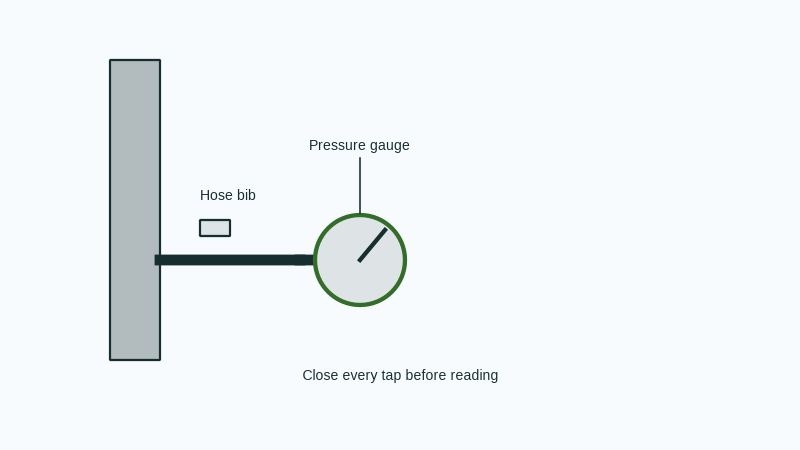
Reading the result: a very high number wears out fixtures faster, and toilets may run or bang while water heater relief valves drip. A low number could come from a clogged regulator, a valve left half shut, a blocked filter, or a supplier problem rather than over-regulation. Target pressure comes from fixture and appliance makers and the plumbing code, which we have not cited here; have the plumber describe the setting they pick and the reasoning.
The water supplier controls pressure upstream. Most of Simi Valley is served by Ventura County Waterworks District No. 8 and the eastern end by Golden State Water, and Moorpark by Ventura County Waterworks District No. 1, all supplied wholesale through the Calleguas Municipal Water District. Hillside and valley addresses can see different street pressures, so a regulator may matter more on some streets than others. For pressure details in your area, contact your supplier.
Common questions
How long does replacing a 3/4 inch regulator take?
Plan for a short visit, often one to two hours, once old and new valves are matched. Soldered joints or a corroded main shutoff add time. Expect the plumber to include an estimate alongside the quote, and your water stays off while the valve is changed.
What should I ask a plumber before a regulator swap?
Request a written quote that names the regulator and its connection type. Also ask the plumber for a contractor license number, which the state board's website lets you verify, plus the pressure setting and the reason for it, the warranty on the work, whether a permit applies, and whether an expansion tank is called for, all on paper.
Does an adult need to be around while the valve is replaced?
Yes. Someone has to show the plumber the main shutoff, agree the scope and watch the water come back. The supply stays off for a while, so plan around it. If nobody can be at the house, raise timing with the plumber when they make contact.
Is 3/4 inch the right regulator size for my house?
If your main is 3/4 inch, yes, though a plumber should confirm. Some homes have 1 inch lines. Never fit a smaller regulator on a larger pipe, since flow can drop. Measure the pipe or have a plumber check it, and copy the connection type on the old valve so the new one fits without extra fittings.
Can a regulator cause low water pressure?
Yes, a clogged screen or failing diaphragm can restrict flow, or the setting may be too low. Record gauge readings before and after the work, and compare a fixture reading with one taken near the main. See the regulator buying advice or browse the guides.