How can I tell a regulator is worn out?
Replace it if a gauge shows readings that are excessive, weak or erratic, and turning the adjusting screw does not help. Typical symptoms include banging pipes, dripping faucets, a running toilet, leaks at fixtures and a dripping relief valve on the water heater. For weak-supply faults, see low water pressure.
Also known as a pressure reducing valve, a regulator is installed at the point where the main line enters the house, lowering supply pressure to a level your fixtures can take. A diaphragm and a spring inside it both wear out. Many are replaced after ten or twenty years, though the age varies by brand and water quality.
The key point is that signs of high pressure and signs of low pressure both lead back to one valve. A weak shower might be a failing regulator, and so might a toilet that refills noisily.
What is the way to check pressure before swapping parts?
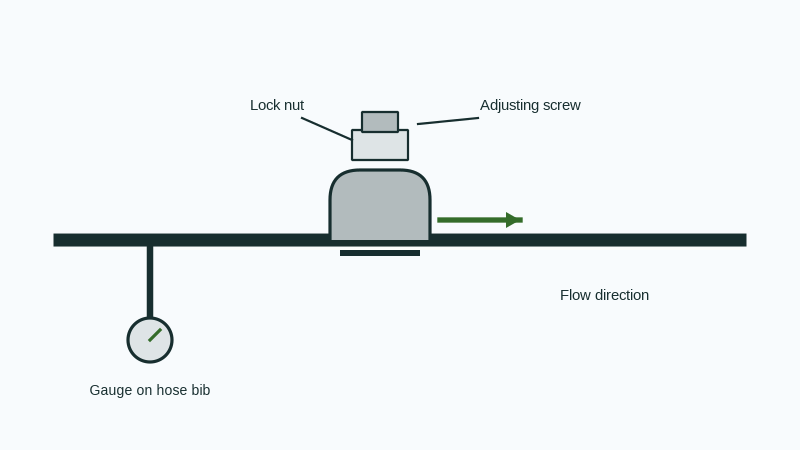
Thread a pressure gauge onto an outdoor hose bib, shut every fixture in the home, and read the dial. Read it again late in the evening, when demand is low and supply pressure often runs higher. Gauges are inexpensive and stocked by hardware stores. Compare the reading with the range listed for your fixtures and appliances.
With the gauge attached, run a few taps and watch how far the needle falls. A large drop when a tap opens suggests a restricted supply, a blocked strainer, a half-shut valve or a failing regulator. A needle that creeps up while no water runs suggests a valve that cannot hold.
Record the readings along with the time of day. A plumber can use the log to decide whether to adjust, rebuild or replace the valve. On a well, the pressure tank and its switch set the pressure, and the regulator may not be the part to examine.
Where does the regulator live, and how can I recognize it?
Usually it looks like a bell-shaped brass body with an adjusting screw on top, fitted in the main supply line right after the shut-off valve, near the meter or where the pipe comes into the house. In some homes it lives in the garage, a crawl space or an outdoor utility box. Finding the regulator describes what to look for.
Many homes have none and rely on pressure from the water district. Others have one installed years ago and forgotten. A valve with a bell profile, an adjusting screw and an arrow marking flow direction is the one.
Do not mistake it for a thermal expansion tank, which is a small tank near the water heater, or for a backflow device. Trace the main line from the meter to see what is on it.
Is adjusting the valve an alternative to replacing it?
Sometimes. Slacken the lock nut, then turn the adjusting screw in small increments while watching the gauge, and tighten the lock nut again. On most models clockwise raises pressure and counterclockwise lowers it. If the reading refuses to stay put, or the valve does not respond, replace it.
Adjust in small steps, and give the pressure time to settle between turns. After a change, open and close a tap and read the gauge again, since regulators can creep. Note where you set it.
When lowering pressure, confirm your fixtures still perform well. When raising it, stay within what your appliances and pipes are rated for, and consult the manual. A plumber can set it and verify with a gauge.
What does a regulator swap actually involve?
The plumber closes the main valve, relieves pressure at a tap, removes the old valve by unscrewing or cutting it, installs a new valve of matching size and style using unions or fittings, opens the main slowly, sets the pressure, checks for leaks and tests the fixtures. Many jobs finish within a few hours.
Size and connection type matter. The new regulator has to match the pipe size, and union fittings ease future service. One option is a valve with a bypass for thermal expansion built in, another is an expansion tank. Replacing a water heater expansion tank explains why that matters once a regulator is installed.
Ask whether the work needs a permit from the city's building office. In Moorpark that is Building and Safety, while Simi Valley has its own Building and Safety Division. The office can say what applies, and the plumber can obtain the permit.
Why would a new regulator change how the water heater behaves?
A regulator can turn a plumbing system into a closed one. Water expands as it heats, and with no path back to the main it raises the pressure inside the house. The heater's relief valve may then drip, and fixtures may be strained. An expansion tank gives the extra volume a place to go.
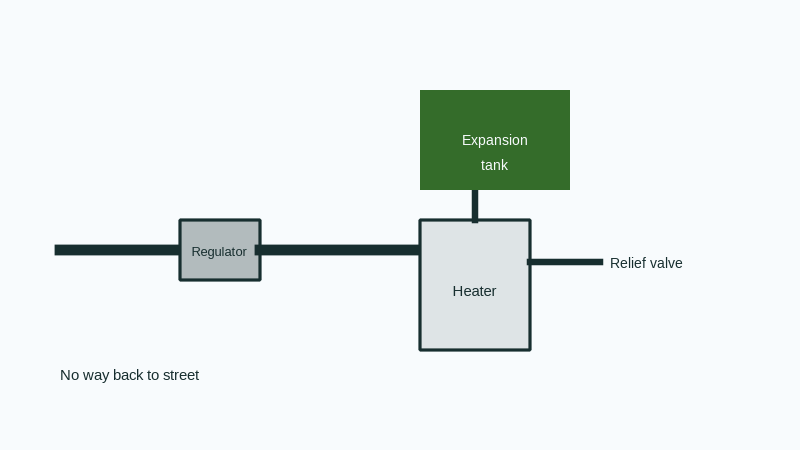
If you had a regulator replaced and the relief valve now drips, expansion could be responsible. Do not plug the relief valve. Ask a plumber to examine the pressure and the tank. Our article on the hammering sound in pipes describes another symptom that can follow a pressure change.
Your water utility determines incoming pressure, and a regulator can only lower it. According to Calleguas Municipal Water District, Ventura County Waterworks District No. 8 serves most of Simi Valley and Golden State Water the east end, while Ventura County Waterworks District No. 1 serves Moorpark. Your bill shows yours.
How can I find a plumber for this work?
Describe the symptoms, and send the gauge readings and photos of the valve. We pass your request to a nearby plumbing company, and the companies that accept requests pay us a fee. Form requests are read on weekdays between 9am and 5pm. Request a quote at Arroyo Simi Plumbing when you are ready.
When comparing quotes, look at valve brand and size, union fittings, any advice on an expansion tank, and the permit being in the price or not. Look at the warranty on the valve and on the labor.
Do not accept a replacement without a pressure reading before and after. A gauge reading is the proof that the work did what was promised.
Common questions
How long does a regulator replacement take?
Typically a couple of hours if the valve is easy to reach and the shut-off works. Expect longer when the main valve refuses to close, the pipe has corroded, or the space is cramped. Allow extra time for testing and any expansion tank work.
Can a bad regulator cause high water bills?
Indirectly, yes. High pressure makes fixtures leak and run harder, and a toilet or tap that seeps all day wastes water. A failed regulator is not a direct cause, but the leaks it triggers are. Read the meter with every tap closed to see whether something is leaking.
Is a pressure regulator the same as a pressure tank?
No. A regulator lowers incoming pressure from a utility. A pressure tank belongs to a well system and holds water at a set pressure using a switch. On a well, the pressure settings live in the tank system, and a well service company is the right one to ask.
What should I ask a plumber ahead of a regulator replacement?
Find out which valve they will use and its size, whether they advise an expansion tank, if a permit is included and what warranty covers it. Check the contractor license number with the state board, and have the price written down ahead of the work.