What job does a 1/2 inch pressure regulator do?
It lowers the pressure of water moving through a half-inch pipe to a steady level, protecting the fixtures downstream. The "1/2" refers to connection size, not pressure. Typical uses are small supply lines, a single branch, a laundry feed or a short home line. For pressure complaints in general, see our low water pressure page.
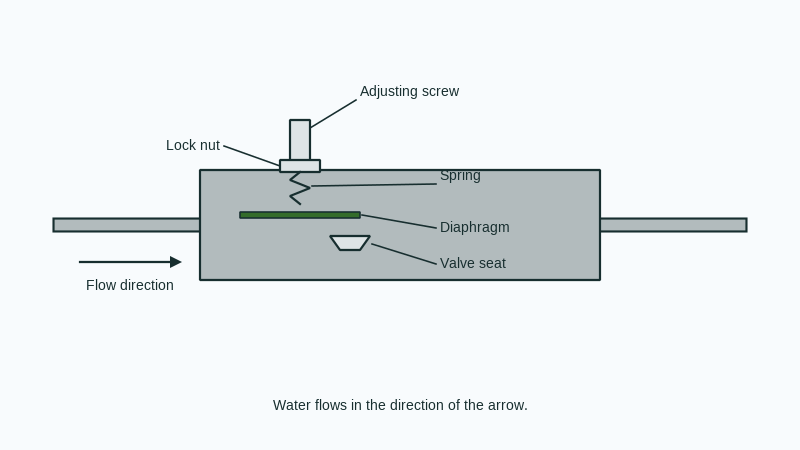
Inside the brass body sit a spring-loaded diaphragm and a valve seat. As supply pressure climbs, the diaphragm narrows the seat opening, and as it falls, the seat opens up. Turning the adjusting screw on top alters how tightly the spring is set, which changes the outlet pressure.
A regulator does not make weak pressure stronger. It only lowers pressure that is too high. If your problem is a weak shower, the regulator is as likely to be failing as to be set wrongly, and a gauge tells which.
How are flow and pressure connected in a regulator?
Pressure and flow are linked. A regulator sets the pressure downstream, but if the valve is undersized, flow drops when demand rises, and pressure at the fixture sags. The result feels like low pressure even though the setting is correct. The fix is a valve sized for the peak flow, not just the pipe.
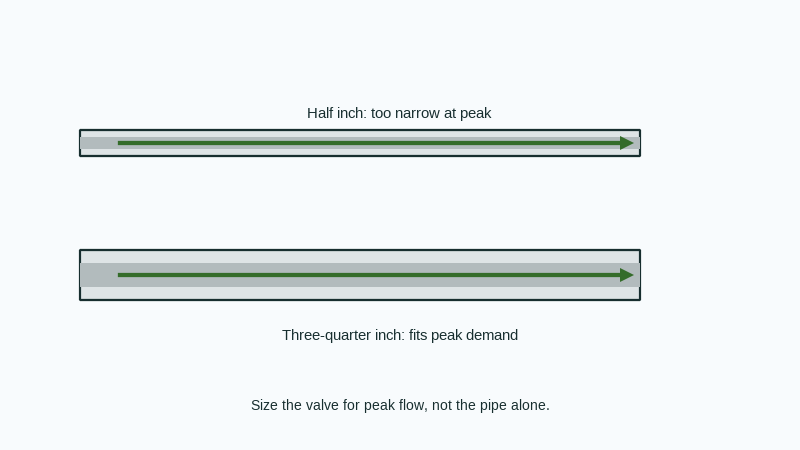
When two bathrooms run at once, the demand is higher than one. A half-inch valve in a larger home may handle one shower well and two badly. Manufacturers publish flow ratings, so check how much the model passes at a given pressure drop.
If water pressure fell right after a regulator went in, an undersized valve is a prime suspect. A plumber can compare gauge readings before and after, and move up to a larger size.
Which connection style should I pick?
Half-inch regulators come with threaded NPT ends, solder or sweat ends for copper, compression ends, push-fit ends or hose threads. The new valve must match the existing pipe and fit the space. Union ends make future replacement easier because you can unscrew the valve without cutting the pipe.
Threaded ends need thread tape or pipe compound on the male threads, and a firm but not excessive tightening. Soldered ends need heat, and should only be done by someone who is practised and has a fire-safe setup. Push-fit ends are simplest, but they must be fitted to clean, square-cut, deburred pipe.
Look at the arrow on the body. Water must flow in the direction of the arrow, and fitting the valve backward is a common mistake that causes no flow control or noise.
How do I measure and adjust pressure on a small regulator?
Attach a gauge downstream of the valve, or at a nearby tap with a hose adapter, run water at a normal rate and read the dial. Compare the figure with the appliance's rating, found in its manual. Adjust the screw a little at a time, read again and tighten the lock nut once the number is right.
Without a gauge, a hardware store sells one that screws onto a hose bib. A reading at an outdoor tap gives the whole-house figure, and a reading at a laundry tap describes the branch.
A figure that rises overnight suggests the valve seat is worn or debris has lodged in it. Many small regulators have a removable strainer you can clean. If cleaning does not help, replace the valve.
In which situations does a half-inch regulator fit?
Typical uses include a branch line to a washing machine or an outdoor tap, a mobile home or a small house with a half-inch service line, a single bathroom group, or a drip irrigation feed. Point-of-use regulators protect one appliance or zone from high pressure while leaving the rest of the house alone.
A washing machine supply regulator is a small valve, often with hose threads, that guards the machine's inlet valves. The washing machine water pressure regulator page explains it. A regulator for a shower is another point-of-use case; see shower pressure regulators.
For irrigation, a regulator keeps drip emitters from blowing off their fittings. Those are usually threaded hose-type regulators rather than the brass line valves, and they are often sold by flow rating.
When should the installation go to a plumber?
Seek help if the valve is on the main line, the shut-off refuses to close, the pipe is soldered or has corroded, you are unsure of the size, or the pressure changed abruptly. A main-line regulator affects the whole house, and a mistake there is costly to correct.
Send the quote form with the pipe size, the symptoms, gauge readings if you have them and photos of the existing valve. We pass your request to a nearby plumbing company, and companies that accept requests pay us a fee. Requests are read on weekdays between 9am and 5pm. Request a quote at Arroyo Simi Plumbing.
Most of Simi Valley is on Ventura County Waterworks District No. 8, with Golden State Water serving the east end, and Moorpark is on Ventura County Waterworks District No. 1, according to Calleguas Municipal Water District, so the pressure arriving at your house varies with the supplier and the street. For the full job, see water pressure regulator replacement.
Does a half-inch valve suit your whole house?
For most whole homes, probably not. Service lines usually measure either 1 inch or 3/4 inch across, and the regulator on them should match. A half-inch valve on a larger line can restrict the flow when several fixtures run at once, so showers go weak while the valve does its work.
Examine the pipe where it enters the house. Wrapping a tape measure around the pipe gives the diameter, and markings on a copper pipe or the size cast into a valve confirm it. Pipe sizes are nominal, so a 3/4 inch copper pipe measures slightly over that outside.
If your main line is larger, the guides to the 3/4 inch regulator and the 1 inch regulator are the ones to read. Matching size to the line is more important than picking a brand.
Common questions
Is fitting a half-inch regulator a homeowner task?
Many people can on a branch line with a threaded or push-fit valve and a working shut-off. On the main supply, or with soldered joints, it is better left to a plumber, since errors affect the whole house. Ask the city's building office whether a permit applies.
Will a half-inch regulator choke the flow?
It can when the line is bigger than half an inch or the valve is small for your demand. Each regulator has a flow limit at a given pressure drop. Compare the maker's flow chart for the model against your peak demand before buying.
Which pressure setting is right?
Read the manuals of the appliances and fixtures on that line, and follow the lowest recommended range. Adjust the valve in small steps while watching a gauge, and confirm the fixtures work well. We give no single number here, since it depends on what is connected.
What should I ask an installer ahead of hiring?
Learn which valve and size they will fit and why, whether the price includes a gauge test before and after, whether a permit applies, and what warranty covers the valve and the labor. Verify the contractor license number with the state board before work starts.