What is the going price for installing or fixing a gas line?
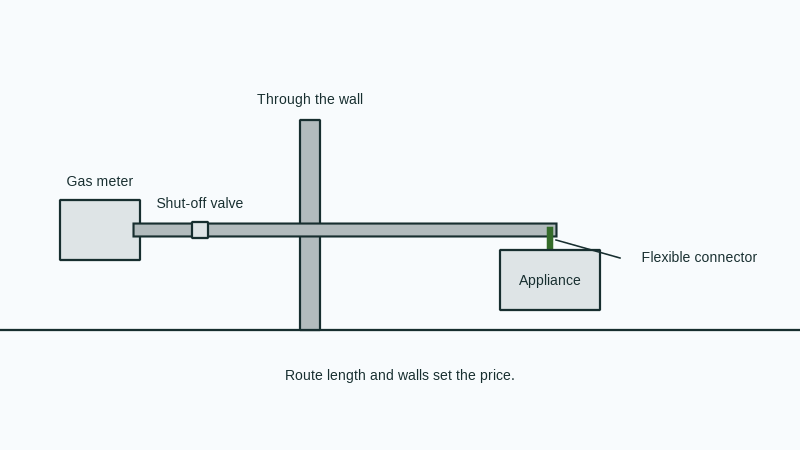
Gas work has no standard rate; every job is priced individually. The total turns on the length of the pipe run, its material, what it feeds, how hard it is to reach, and if the job triggers a permit and inspection. We could not confirm a published local dollar range, so none is printed. Arroyo Simi Plumbing can arrange written quotes you can lay side by side.
Extending a line a short distance to a gas range or dryer is a smaller job than bringing new piping across the yard to a pool heater, outdoor kitchen or fireplace. Repairs vary too. Fixing a leaking fitting at an appliance is minor, while finding and replacing a corroded buried section means excavation.
Because a mistake carries high risk, price should not be your only reason for choosing a plumber. A price well under every other bid often omits something, such as the pressure test, the permit or the fittings.
Is gas work billed by the hour?
Some plumbers bill gas work hourly with a minimum visit, and others charge one flat sum per job. Neither is automatically better. What matters is that the quote states which applies, what the minimum covers and whether travel, parts and the pressure test sit inside the figure.
A small repair can be priced fairly by the hour with a minimum visit. A new line of known length is safer on a flat price, which keeps the clock out of it. Find out what happens to the price when the plumber opens a wall and discovers a surprise, and what you would have to approve first.
To see how plumbers set labor and visit charges in general, the plumber cost guide explains the components without quoting figures we cannot source.
Which gas pipe materials are common, and what do they do to the price?
Gas piping in homes is usually black steel pipe, flexible corrugated stainless tubing, or a flexible appliance connector for the last stretch to the appliance. The local building office decides which material is allowed for which job under the plumbing and fuel gas codes, so a plumber should confirm this with the city.
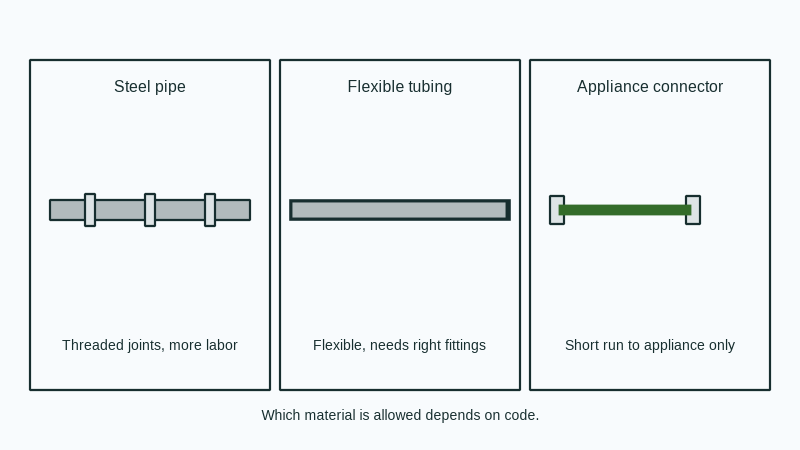
Steel pipe takes more labor, since it is cut, threaded and fitted joint by joint, yet it remains the traditional choice for fixed runs. Flexible tubing goes in faster along its route and may cost less in labor, though it needs correct bonding and fittings made for it. Flexible connectors for appliances are brief, listed parts that join rigid pipe to an appliance, and they are not designed to pass through walls.
Material rarely decides the total alone. Length, the number of turns and wall or floor penetrations count for more. For what that size means in practice, see half-inch flexible gas pipe sizing.
Which factors push a gas line price up?
Distance, access, a trench or concrete cut, a second appliance, a bigger meter or regulator, a rooftop or crawl-space route and permit fees all add to the total. An older home whose existing piping is in poor shape and cannot simply be tapped adds more. Each deserves a separate line item on the quote.
Concrete is the most common surprise. A pipe that has to cross a driveway or patio means someone cuts the slab, lays the pipe and patches it, and the patch is often priced on its own. Going beneath the house avoids that but takes longer in a tight crawl space.
Capacity matters as well. Adding an appliance to an existing line can overload it. Before you agree, a plumber should check the combined load of every appliance on that line, and may recommend a larger pipe from the meter. That is a safety check and not an upsell, and it should be written on the quote.
How much does an earthquake shut-off valve cost?
An automatic earthquake shut-off valve is its own item, separate from a gas line job. The valve model, the pipe size on the meter side, and any permit requirement all affect the price, and we have no sourced local figure to print. What an earthquake shut-off valve does explains how it differs from a manual shut-off.
The plumber should state whether the quote covers the valve itself, the fitting labor and any required inspection. Ask also who owns the work if the gas utility must be involved at the meter, since the utility, not the plumber, decides what happens at the meter itself.
How should I line up gas work quotes against each other?
Lay the quotes next to one another and compare five items: pipe material and length, the number of appliances and connection points, the pressure test, the permit and inspection, and who patches any holes. If one quote lacks a line the others carry, ask why. Compare the warranty on the work and parts the same way.
Have each plumber give the price in writing before starting, and state when it can change and what you would be asked to sign. Make sure the business name on the quote matches the name on the contractor license, and confirm the license status on the state contractor board's website.
Be wary of offers that skip the permit. Moorpark's Building and Safety Division runs permits and plan checks through an online portal, and Simi Valley's own building office works the same way. Ask them, not the seller, whether your job needs one.
What safety rules apply during gas work?
A gas leak is an emergency. On smelling gas, get everyone out of the building and keep your hands off light switches and anything electrical. Once you are outdoors, contact the gas utility's emergency line, and use 911 if someone is in danger. Never search for the leak yourself, and never test for one with a flame.
Gas piping is regulated work that most people should leave to a plumber who can pull the permit and pressure-test the line. Before touching gas piping yourself, ask the local building office what it permits, because a failed joint brings fire and carbon monoxide risk, beyond a simple leak.
After any gas repair, have the plumber point out the shut-off, test for leaks with a proper solution or gauge, and confirm the appliance lights and vents correctly. If you have gas appliances and no carbon monoxide alarm, fit one.
Common questions
How long does a typical gas line job take?
A small repair or appliance hookup can be done in a couple of hours, whereas a new run across a yard, through a slab or into a remodeled kitchen may take a day or more. The permit and inspection follow their own timetable, separate from the labor, and the plumber ought to explain it before work begins.
Which questions belong in a conversation about gas line work?
Ask which pipe material and size are planned, if the price covers the permit, the pressure test and any patching, and who is responsible should inspection fail. Get the contractor's license number and verify it with the state board. Insist on the scope and price in writing before any work starts.
Must I be home while gas work is done?
Yes, for the start and the finish at minimum. The plumber needs access to every appliance, the meter side and the shut-off, and you should watch the leak test and the appliance lighting before the job is closed. If you must be out, a trusted adult can take your place.
Is a flexible connector acceptable for running gas through a wall?
No. A flexible appliance connector is meant for the short final link from rigid pipe to an appliance, and it should stay visible and within reach. Running one through a wall or floor is not its purpose. Ask the plumber which approved piping suits your route.