If your bill suddenly climbs and no puddle shows, water is probably escaping quietly: a sprinkler valve, a toilet flapper, a line buried beneath the yard or slab, or a change in how much water you use. Read the meter, then test fixtures one at a time. The home page lists the kinds of plumbing help available, and the quote form passes your request to local plumbing businesses when you want leak detection.
Why is my bill rising when nothing looks wrong?
Hidden leaks and quiet waste account for most unexplained jumps. The common culprits are a running toilet, a failed irrigation valve or broken sprinkler line, a leaking water heater connection, a softener that keeps regenerating, and a supply line leaking in a wall or beneath the yard. Seasonal watering or guests can also lift a bill without any leak.
Start with the bill itself. Look at the usage figure rather than just the dollar total, and set it beside the figure for this month a year ago. Rates and tiers change, so a higher charge does not always mean higher use. If usage is flat while the amount rose, that is a rate question for your water provider. Why a water bill climbs has a fuller list of causes.
Your bill names the provider. Most of Simi Valley is on Ventura County Waterworks District No. 8, the eastern end is on Golden State Water, and Moorpark is on Ventura County Waterworks District No. 1. Each has its own customer service for questions about readings.
When is a plumber needed, and will the utility help?
Call a plumber if the meter still moves with all fixtures off and the main closed, if you hear water you cannot find, or if the line is underground. Ask your water provider whether it offers any adjustment for a verified leak. Do not assume one exists, and ask before you spend on repairs.
Use the quote form to send a request, and list what you have tested: the meter readings, toilets, irrigation and the main. Plumbers usually quote a visit for leak detection first, then a separate repair. Ask each bidder what the visit covers, and find out if repair prices are fixed ahead of the work. Check the contractor license number with the state.
How can the meter reveal a hidden leak?
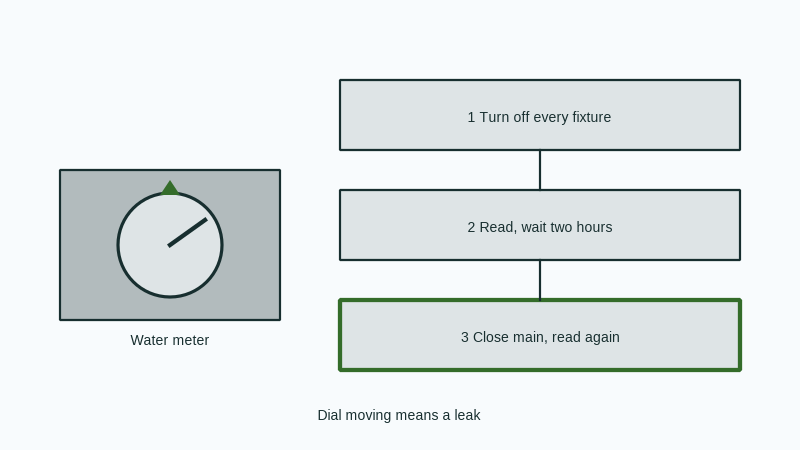
Shut off every tap and appliance, switch the irrigation timer off, then find the meter near the street and write down the reading. Many meters have a small flow indicator, a dial or a triangle, that spins whenever water moves. Use no water for two hours, then look again. If the number has changed, or the indicator is still turning, water is escaping somewhere.
The EPA gives the same two-hour method. Next, close the main shutoff where it enters the house and repeat. A meter that now stays still means the leak is indoors, between the shutoff and the fixtures. A meter that keeps turning points to the pipe stretching from the meter to the home, often buried. Write down times and readings so a plumber can use them.
The meter lid can hide insects, so use a stick or a screwdriver to lift it. Some utilities discourage owners from touching the box, so look at the provider's guidance. Do not operate the utility-side valve.
What if the leak is buried or under the slab?
A leak on the pipe between the meter and the home, or in a pipe beneath a concrete floor, may show itself through a higher bill, the sound of running water, soggy ground, or warm patches on the floor. Leak detection, using acoustic and sometimes thermal tools, finds it without digging up the yard.
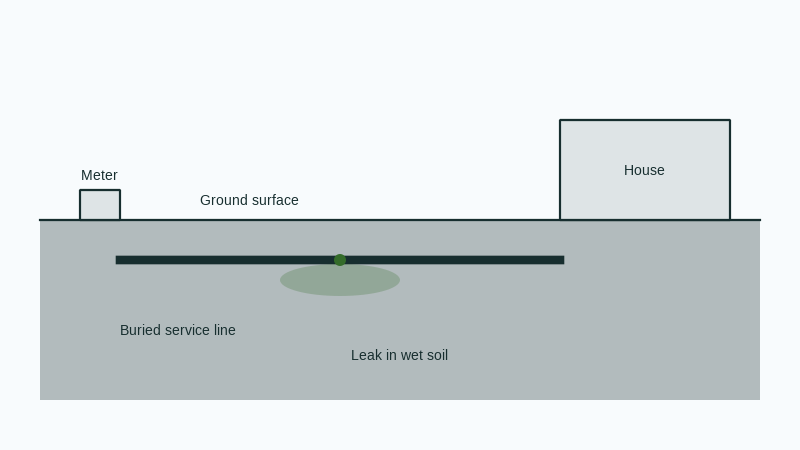
A burst pipe underground is a different class of leak but can behave the same way. If you see a pool of water in the yard, shut off the main. Read how slab leak detection and repair works and what leak detection costs. Our burst pipe prevention page has tips that catch problems earlier.
Pinholes in older copper can also leak under a slab, particularly in tract homes built in the 1960s, 1970s, 1980s or 1990s. If a leak is confirmed, compare the cost of a repair against a full repipe, since the repipe overview explains when that makes sense.
Might sprinklers or a softener explain the bill?
Yes. For many Simi Valley and Moorpark lots, watering is the biggest summer use, and a stuck valve or a cracked sprinkler head can spill water for hours daily. Watch each zone as it runs, checking for soggy ground, geysers and weak heads. Review the timer settings, seasonal adjustment and rain sensor.
A water softener regenerates on a schedule and uses water each time, so a unit set to run too often or stuck in its cycle can raise use. See whether a softener can cause a high bill. Other quiet users include a pool autofill, a swamp cooler, a leaky hose bib and an outdoor spigot left dripping. If the meter test says water is leaking while irrigation and fixtures are off, move on to the line itself.
Could a toilet leak be behind it?
Often. A silent toilet leak can run all day without a sound. Drip food coloring into the tank and wait about ten minutes without flushing. Colored water in the bowl afterward means the flapper or fill valve needs attention. The EPA lists this test among its leak-detection tips.
Toilets are the cheapest leak to fix and the biggest hidden user. These pages explain what to replace: a running toilet, flapper repair and inlet valve replacement. Check every toilet, even the one nobody uses. Hard water scale can stop flappers from seating.
According to the EPA, the average household loses more than 9,300 gallons of water a year to leaks. For a family of four, winter use above 12,000 gallons per month suggests serious leaks. Compare that against your own winter bill.
Common questions
A meter test takes two hours of waiting, and a toilet test about ten minutes. A plumber carrying leak detection equipment may need half a day for a thorough look, longer if access is hard. Repair time depends on the location of the leak and whether concrete or landscaping must be opened.
What questions come before hiring a leak finder?
Ask which method is used, whether the quote ends at locating the leak or includes fixing it, how the location is reported, whether anything opened gets patched, and what the repair estimate is once the leak is found. Get the contractor license number, plus a written quote you can set against a second one.
Must someone be home for the leak search?
Someone should be, to unlock gates, show the main shutoff and the meter, and answer questions about when the bill changed. A quiet house helps, since the plumber may listen for water. Tell them about the irrigation timer, pool and softener.
Can a high bill come from a leak I can fix myself?
Yes. Toilet flappers, dripping outdoor faucets and irrigation heads are common DIY fixes. Replacing a main shutoff, repairing a buried line or opening a slab is not. After a DIY fix, repeat the meter test to confirm that the meter no longer moves.