Why is backflow testing required, and what is it?
Backflow testing confirms that the device protecting your drinking water is still working. Backflow is an unwanted reverse flow that can draw foul water into clean lines, a serious health risk. Water suppliers require owners with certain assemblies, such as sprinkler systems, fire lines and commercial connections, to have them tested, often every year. See the Arroyo Simi Plumbing home page for how to request a visit.
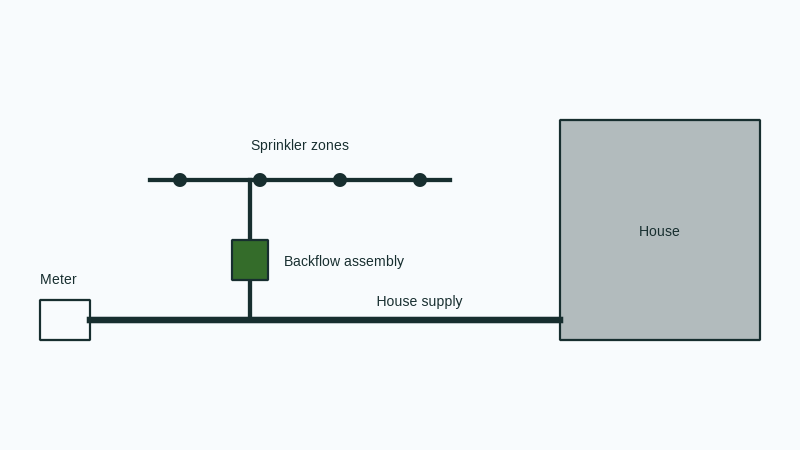
Backflow happens two ways: back-siphonage, when supply pressure falls below the pressure in your system, and back-pressure, when your system pressure climbs above the supply. Devices include double check valves, reduced pressure zone (RPZ) assemblies and air gaps. An RPZ valve needs a trained installer and regular testing, and the highest hazards may need an air gap, so the supplier decides which device fits.
Which device you have, and how often it is tested, depends on the hazard and on your supplier's rules. Ask the supplier that issues your water bill.
Which owners in Simi Valley and Moorpark must have a backflow test?
Owners of irrigation systems, fire sprinkler lines, commercial properties, pools or other connections that could contaminate the supply are the usual candidates, but the water supplier decides, not us. Simi Valley has two retail suppliers, and Moorpark is served by Ventura County Waterworks District No. 1. Each runs its own program, so ask yours for its list and deadlines.
In Simi Valley, most homes are served by Ventura County Waterworks District No. 8 and the eastern end by Golden State Water, with Calleguas as wholesaler. In Moorpark, the supplier is Waterworks District No. 1, not the city. The bill shows who the supplier is, and its notice, usually a letter, says when a test is due and which testers it accepts.
A plain hose spigot has an inexpensive vacuum breaker, and many suppliers do not ask for annual tests of those, but check with yours, since rules differ.
Who is allowed to perform a backflow test?
California backflow rules are set at state level and applied by each water supplier, and testing is normally carried out by whichever tester the supplier approves, often one holding a recognized backflow tester qualification. We have not verified the current state text, so ask your supplier for its approved tester list before you book anyone.
Ask any tester for proof of qualification and check that the supplier will accept the report. A test on a device that the supplier does not recognize may not satisfy the notice. Also confirm who files the report; some testers submit it to the supplier and others leave the task with you.
California's contractor licensing rules generally apply once a job's labor and materials reach $1,000, so repairing or replacing a device is a job for a plumber with a license, not merely a tester. The state board's site lets you search by license number.
What takes place during a backflow test visit?
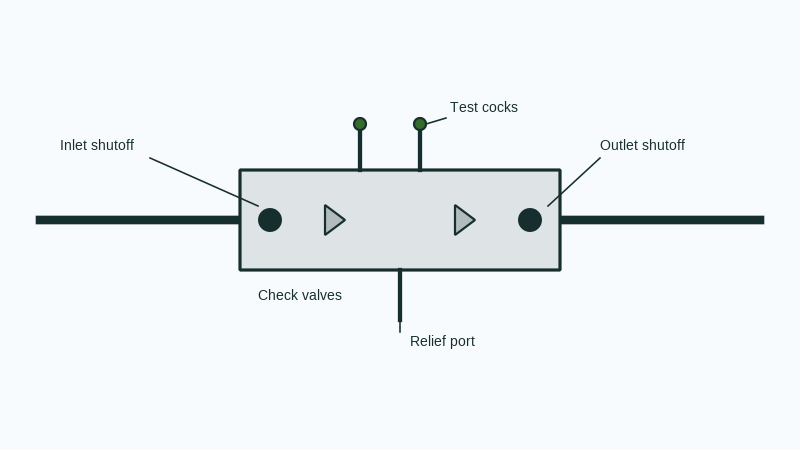
The tester closes the water to the assembly, hooks up a test kit with gauges at the test cocks, and measures the pressure the relief valve and each check valve hold. A device that passes is logged and the report goes out. A device that fails has to be repaired or replaced, then retested. One assembly normally takes a short visit, and the tester can tell you more on the day.
Expect a short interruption of water to the line being tested, so warn people in the building. Keep the assembly clear and accessible: overgrown planters, a locked gate or a buried box delay the visit. If the device fails, parts like rubber seats and springs are often replaced on site, though a worn valve may need full replacement.
Annual tests catch problems early. A device that leaks, vents water or sticks can look fine from outside, which is why the test uses gauges.
Which permits and codes cover backflow devices and gas piping?
A permit may be needed to replace or install a backflow assembly, issued by Simi Valley's city Building and Safety Division or by Moorpark's Building and Safety office, and the water supplier may need to approve the device. Gas piping is separate: it falls under the plumbing code the city enforces, and gas work requires a contractor with a California license.
Residential gas piping codes cover pipe sizing, materials, shutoff valves, support and testing, with an inspector reviewing the finished work. Ask the permit office which edition of the code applies. Gas work is no do-it-yourself project. When gas is smelled, everyone leaves the building first. Once outside, contact SoCalGas at 1-800-427-2200, or use 911 if someone is in danger. Read our guide on gas line costs for what moves the price of gas piping jobs.
Online permit portals for other counties do not apply here. Simi Valley uses the city's online permit portal; Moorpark uses its Self-Help Online Portal. Confirm hours and requirements on each city's site before you rely on a timeline.
How do I book a backflow test, and can I get service the next day?
Send the request with the device type, location and the date on your supplier's notice. We hand it to a local plumbing business. The businesses that take requests pay us a fee, and timing depends on the business. Next-day service cannot be promised, so ask each business for the earliest slot and state the notice deadline up front. Also see our page on how backflow testing works.
Have ready: the supplier's letter, the device make and model if visible, whether it serves an irrigation system or a fire line, and access instructions. We state no response times for the businesses we arrange.
For a deeper read on what the process involves and the difference between the testing options, see backflow prevention testing.
If your supplier has sent a notice, request a backflow test and include the device location and the deadline. We read requests on weekdays, 9am to 5pm.
Common questions
How frequently must a backflow device be tested?
Most suppliers require an annual test of the assemblies they list, and another after any repair or reinstall. The rule comes from your supplier's cross-connection program, so check your notice. Ask your supplier what happens if a deadline is missed.
What are the costs of a backflow test?
No local figure has been verified, so none appears here. The cost rises with the count of assemblies, the difficulty of reaching them and the tester you choose. Ask for a per-device quote in writing, and whether sending the report to your supplier is included.
May a homeowner test a backflow device personally?
Not in practice. Testing calls for calibrated gauges and a tester your supplier recognizes, and a homeowner's own report is not normally accepted. You can keep the area clear and have the notice ready. If a device fails, repairs are for a plumber with a California license.
Is there a backflow test cheat sheet?
Testers follow manufacturer and supplier procedures, which vary by device type, so we publish no cheat sheet. The useful checklist for owners is simpler: find your notice, locate the device, clear access, book before the deadline and keep the report.
Can I earn a tester qualification through an online course?
Qualifying as a tester involves hands-on training and an exam, so an online course alone cannot be relied on. If you are hiring, ask the tester for proof the supplier accepts rather than relying on a website claim, and confirm it with the supplier.