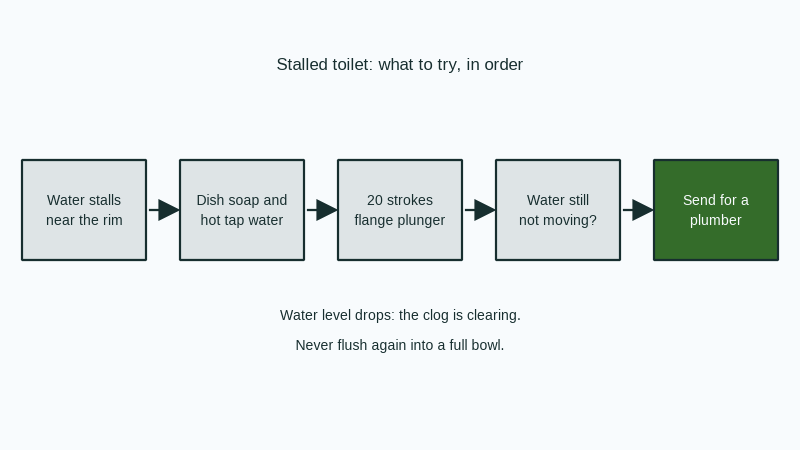
Stop flushing as soon as the water stalls near the rim. Flushing again into a full bowl is how a ten-minute clog becomes a wet floor and a damaged ceiling below. From there you have two options: spend ten minutes on the plunger method below, or submit a request and we hand it to a nearby plumbing business that serves Simi Valley and Moorpark. The sections here show where to draw the line between the two, then cover mobile homes, running toilets and what drives the bill.
Which household items clear a blocked toilet?
Nothing from the cleaning aisle. Add only a squirt of dish soap, then tip in hot tap water by the bucketful from about knee height once the bowl has settled. Soap coats the blockage and the weight of the water pushes it along. Skip caustic drain cleaner entirely, since it pools on porcelain and burns skin when the plunger splashes.
Use hot tap water, never boiling: a kettle's worth can crack a cold bowl. When soap and water do nothing within ten minutes, use a flange plunger, the type whose rubber sleeve extends from inside the cup. Seat the sleeve in the drain throat, push once softly to let the trapped air out, then plunge firmly for roughly twenty strokes. A soft clog (paper, waste) usually gives way. A stiff one that will not budge is likely a solid object, like a toy, a razor cap or a wad of baby wipes, and extra force packs it tighter.
What method does a plumber use on a blocked drain?
The blockage gets located before anything is pushed through. With a single toilet, the tool is a closet auger: a compact cable turned by hand, with a rubber-sleeved head that leaves the bowl unscratched. Should the bathtub gurgle on every flush, the plumber moves to a longer machine via a cleanout, or lifts the toilet from its floor flange and works in from there.
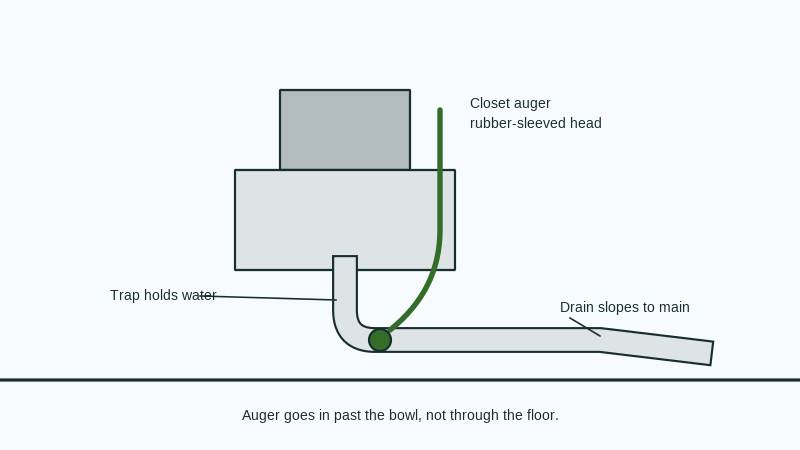
Pulling a toilet is routine work. The plumber checks the flange for cracks, clears the line, then sets the bowl on a new wax seal. A camera run afterward shows whether the stoppage was a one-off or a damaged line that will repeat. The drain-clearing guide lays out the machine types and when each one fits.
Does boiling water fix a stuck drain?
For a toilet, no. Porcelain dislikes sudden heat, and boiling water has no pushing force against a lodged object. In a greasy kitchen drain it can loosen the film for a few minutes, but old plastic traps soften under it, and the grease hardens again a few feet downstream. Hot tap water mixed with dish soap gives most of the benefit and none of the risk.
Showers behave much the same way. Almost every shower clog is hair wound through soap scum just under the strainer. Lift the strainer, hook the mat out with a drain claw or zip strip, then rinse through with hot tap water. Water still standing afterward means the plug sits deeper, so a longer cable is required. If the shower and the toilet back up at once, suspect the shared branch or main line, a sign discussed in the note on a slow-draining sink.
Which habits do plumbers recommend changing?
Mostly four. Flush only toilet paper, because wipes sold as flushable stay intact a long time. Put cooking fat in a can rather than the sink. Fit a hair catcher in every shower and tub drain. And request a camera inspection if one fixture clogs twice in a month, since a repeat clog usually signals a pipe fault, not bad luck.
Hydro jetting blasts the pipe interior clean with high-pressure water. Plumbers use it, generally for recurring trouble in the main line. It is almost never step one for a single toilet. Ask what the plumber found, and ask to see camera footage if a run was done.
When should I send for a plumber instead of plunging again?
Send for one if the water level has not moved after a fair plunger effort, if a tub or floor drain gurgles when the toilet flushes, if the same toilet clogs again within weeks, or if sewage appears anywhere but the bowl. All of these point to a blockage beyond the toilet, and plunging harder reaches nothing.
If water keeps rising and will not stop, turn the oval shutoff handle behind the toilet clockwise, then lift off the lid of the tank and press the flapper closed. Keep children and pets out until the floor has been cleaned and disinfected. Requests through the form get read weekdays, 9am to 5pm, so if an overflow is happening now, stop the water first and send the request afterward.
Why do drains clog in the first place?
Mostly it is what went down the drain: paper, wipes, hair, grease, soap film, food scraps, and the occasional small toy. The pipe contributes too, when roots push into a joint, when a sag lets water pool and drop its solids, or when old cast iron turns rough inside.
Where you live shifts the likely culprit. In Old Town Simi and Strathearn, with older homes and mature trees, tree roots invading aging sewer laterals are a real suspect. Tract neighborhoods built between the 1960s and the 1990s tend to suffer repeat clogs from low-flow toilets that need a firm flush. In newer Wood Ranch homes, wipes and paper are the usual story. If one fixture keeps clogging, tell the plumber right at the start.
What about toilets in a mobile home?
The same clogs occur, but the plumbing below is lighter. Mobile home drains are mostly thin plastic over short, shallow runs, beneath a floor with little working room. A slow toilet might be a sagging line, not the bowl.
Never force a cable hard through that pipe. A split or loose joint sends water into the crawl space, where it can sit unseen. Mention the home type to the plumber when you submit the request, and clear a route to the access panel before the visit.
Is a running toilet a plumber job too?
The cause is often a small, cheap part, so try fixing it yourself first. Put several drops of food coloring in the tank, then wait ten minutes without flushing. Color showing up in the bowl means the flapper leaks. A stuck or worn fill valve and a float set too high are the other usual causes.
The EPA says an average household can lose over 9,300 gallons of water yearly through leaks, and a toilet that runs quietly ranks among the leading causes. The running toilet guide walks through the fix. When fresh parts do not stop it, a plumber can check the water level and overflow tube.
What affects the cost of a clogged toilet visit?
Four factors: how deep the blockage is, whether the bowl must come up off the floor, whether a camera run is required, and the time of day you want the visit. A quick auger job is at the cheap end. Pulling the toilet for a new flange and wax seal costs more, and so does an evening slot.
This page lists no price, since none was verified for Simi Valley and a national average would only mislead. Get the written quote before the plumber begins, and ask what it covers. Generally, a California contractor license becomes necessary when labor plus materials hit $1,000, though a simple clog usually falls well under that. To see how plumbers price this job, read about what unclogging a toilet costs.
How do I submit a request?
Fill out the form on the quote page with the address, a short description of how the toilet behaves, and whether any other drain is slow. A local plumbing business pays a fee to receive it, then contacts you to set a time. Photos of the water level help. The how-it-works page explains the steps, while the home page, Arroyo Simi Plumbing, shows what other jobs we pass along.
Common questions
Does Dawn soap work on a clogged drain?
Soap helps on greasy kitchen clogs and, with hot tap water, can loosen a soft toilet clog. It does nothing against a solid object or a deep blockage. Squirt in plenty, give it about ten minutes, then pour in hot tap water. If the level has not dropped, plunge once and then send for a plumber.
Can just the sink drain be swapped out?
Yes. Strainer, tailpiece and trap each come out and go back without disturbing the sink or the wall pipe. Most sinks take a plumber under an hour. Only a corroded wall pipe or a cracked basin makes the job bigger. Look under the sink for drips and green crust first.
What size is a kitchen sink drain pipe?
Most kitchen sinks have a 1.5 inch trap and tailpiece that meet a 2 inch pipe in the wall. A double bowl adds a short arm joining the two drains, and a disposal replaces the strainer with its own outlet. Older homes may have metal in the same sizes. Measure the pipe or check its markings before buying parts.
Why does a kitchen sink drain clog?
Grease is the main cause, cooling into a film that traps coffee grounds, rice, eggshell and starch. A disposal grinds scraps small but does not stop the film from building. Scrape plates into the trash, use a paper towel on pans before washing, and pour cooking fat into a can. Run cold water while the disposal works.
Which liquids can go down a clogged kitchen drain?
For a grease clog, the safest first step is dish soap followed by hot tap water. Baking soda followed by vinegar fizzes but seldom clears a real blockage. Keep caustic cleaners out of a kitchen sink, because they sit in standing water and splash. A hand snake does more. The steps appear in the kitchen sink unclogging guide.