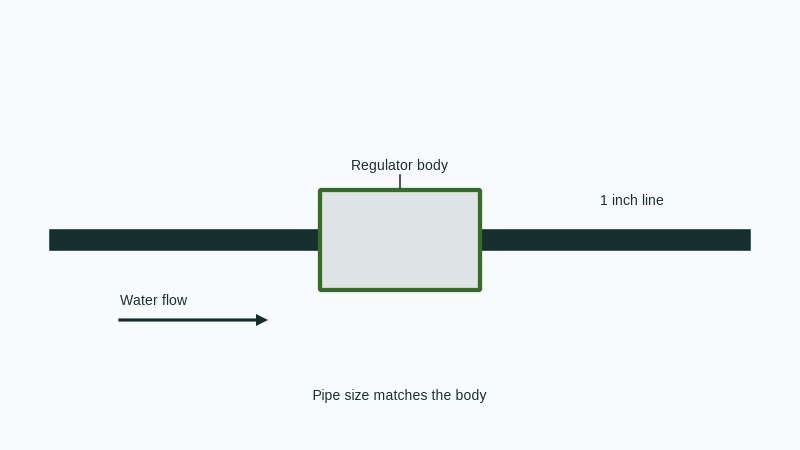
The water pressure regulator is a bell-shaped valve on the main line, and it holds incoming pressure at a lower, even level throughout the house. The 1 inch in the name is the connection size, and it should match the pipe it sits on. This guide belongs to our set on pressure and valves. To get a plumber, use the quote form: your request goes to a local plumbing business, and businesses taking on requests pay us a fee.
What job does a 1 inch pressure regulator do in a home?
It brings the pressure from the utility main down to a set level, so fixtures, the water heater, appliances and pipes are not held under constant high pressure. A 1 inch body fits a 1 inch line, which many larger houses and those with long runs use. Sized correctly, it protects pipes and hoses without cutting normal flow.
Force and volume are separate things. Pressure is the push behind the water, and flow is the amount that actually moves. A regulator too small for the line can restrict flow, so showers sputter when two fixtures run. A failed one can pass full street pressure through, which strains every joint. Banging pipes are one sign, described in water hammer sound.
If your house has no regulator and the reading from a gauge at an outdoor hose bib is high, one may be missing, so measure before you buy.
How do I find out whether my line takes a 1 inch regulator or another size?
Choose the regulator by the pipe it connects to, not by the size you think the house needs. Wrap string around the pipe near the existing valve and measure its circumference. For copper, about 3.5 inches around is a 1 inch nominal line, and about 2.75 inches is three quarter inch. Read any labels on the old regulator body as well.
Pipe size differs from thread size and from the outside measurement, and it varies with the material. Galvanized and copper are measured differently, and PEX has its own sizes. If you are unsure, let a plumber confirm it in person. The pages on 3/4 inch regulators and 1/2 inch regulators cover the smaller sizes.
Some homes shrink the line size at the valve with adapters. That is poor practice, since it can add restriction, so ask about it.
Might the regulator be the reason pressure is too low?
Yes. A clogged strainer, a worn diaphragm or a setting turned too low can starve the house. If every fixture is weak at once, test the regulator and the main valve before blaming the supply. A plumber holding a gauge can tell which side is at fault within minutes.
If only hot water is weak, a water heater issue may be the cause instead, and the guide to hot water pressure problems explains it. If a single faucet or shower is weak, the cause is local to that fixture. Go through the cases in order before paying for a part.
Where is the regulator located, and what shows it has failed?
Check the main water line just after the shutoff valve, usually near the point the supply enters the house: in the garage, in a box on an exterior wall or in a utility closet. A failing one shows as pressure that creeps high at night, banging pipes, leaky fixtures or low pressure that comes and goes.
To track it down, use the regulator location guide. Thread a gauge onto an outdoor tap with all fixtures off and read it in the evening and the morning. A reading that climbs well above the level the plumber set suggests the regulator is not holding. The opposite, a very low reading, can also mean a clogged strainer or a part that has closed up. The page on pressure that drops suddenly indoors covers that case.
Regulators wear out, often after many years, and mineral scale can foul the seat. Water hardness varies by supply, so read your water district's annual quality report if you are curious about yours.
How is a pressure regulator replaced, and what should I ask for?
The plumber starts by shutting the main and emptying the line. Next the old valve is cut out or unthreaded, and the new one is fitted in the same position with its arrow pointing along the flow. A gauge sets the pressure, and every joint is checked for leaks. With the same size in the same spot, the swap is usually quick.
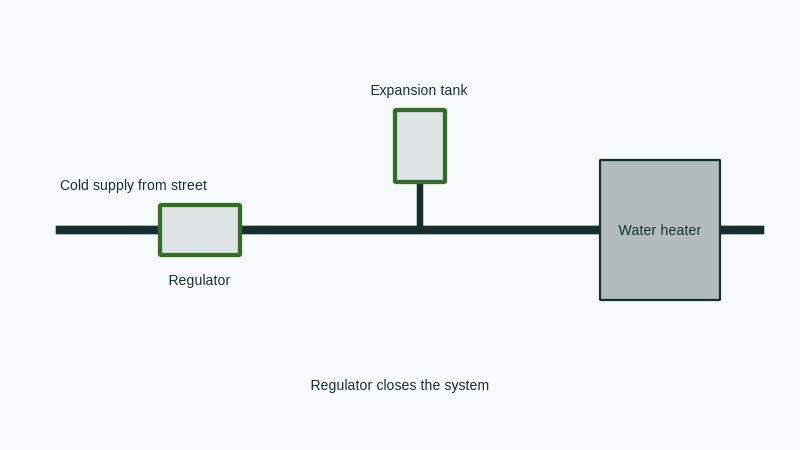
Ask the plumber which pressure they will set and why, and keep it within the ratings of your fixtures and appliances, as their manuals state. Ask if an expansion tank is needed, because a regulator turns the house into a closed system where expanding hot water has no outlet. See replacing a regulator and whole house regulators for more.
Most homeowners should hire this job out. It means working on the main line, and one slip can flood the house. If the work involves moving pipe, a permit may be needed, so confirm with Simi Valley or Moorpark Building & Safety, whichever applies.
Common questions
How long does replacing a 1 inch regulator take?
A direct swap of the same size often keeps a plumber busy for an hour or two, covering draining, fitting, setting and testing. Corroded pipes, a cramped location or the need to add an expansion tank can lengthen it. Expect the water to be off while the work goes on, so plan around that.
What should I ask the plumber before this job?
Ask which size and brand they plan to fit and why, what pressure they will set, whether a strainer and expansion tank are in the quote and how they test. Also request the contractor license number, a yes or no on the permit, and a written quote you can compare.
Must someone be home during the replacement?
Yes. A person needs to be there to show the main shutoff, open the garage or utility area for the plumber and be home as the water goes off and returns. Clear access around the valve before the plumber arrives and point out any leaks or noisy pipes.
Is fitting a regulator a reasonable DIY job?
For someone with plumbing skills it is possible, but we advise hiring it out. The job means cutting into the main line, soldering or using compression fittings, and setting pressure with a gauge. A leak or a wrong setting can cause damage, and some jobs need a permit.