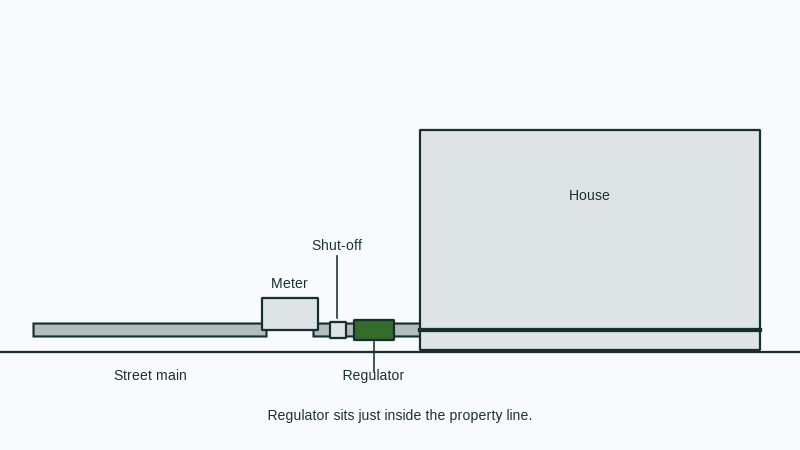
Think of the water line as a single pipe doing a single job: moving water from the district's meter into your house. A regulator on that line, normally just inside your property, reduces whatever the street delivers to a pressure your fixtures can handle. A healthy regulator goes unnoticed. A failing one announces itself through noise, leaks and odd shower behavior. This page belongs to our group on low water pressure, and to have a plumber test yours, send a request.
What is the regulator on the water line for?
It reduces the pressure of incoming water to a steady, lower setting. A spring and diaphragm inside the valve respond to downstream pressure, so a surge on the street side never reaches your taps. It spares hoses, water heaters, valves, faucets and appliances from constant strain.
Street pressure shifts with your location, the time of day and elevation. Elevation matters, so a hillside home can see different pressure from one on the flats. Your water supplier, Ventura County Waterworks District No. 8 or Golden State Water in Simi Valley, or District No. 1 in Moorpark, can describe typical pressure in your area. The regulator smooths it out for the house.
At which point on the water line does the regulator go?
Directly after the main shutoff valve, downstream of the meter on your side, usually close to where the line enters the building or in a box by the garage wall. The meter and its valve usually belong to the water district, so confirm with yours. The regulator is part of the house plumbing.
Follow the main line from the meter or first shutoff. The usual giveaway is a brass fitting shaped like a bell, topped with a threaded cap and locknut. Some homes keep it in a below-grade box, and some have none at all. More likely spots appear in the guide to finding the regulator. If you cannot find one, a plumber can read the pressure on a gauge to judge whether you need one.
Which regulator size suits my water line?
The regulator matches the pipe size on the main line. Many houses have a service line of three-quarter inch or one inch, and the regulator body is sized to suit, though a smaller flow capacity may also work. A plumber measures the pipe and checks flow needs. Undersized valves restrict flow when several fixtures run at once.
Our pages on 3/4 inch units, 1/2 inch units and 1 inch units cover how size relates to house layout and flow. A larger house with more bathrooms generally wants a bigger line and regulator. Never pick by price alone: a cheap valve with poor flow can make a good house feel low on pressure.
What shows that the regulator has gone bad?
Signs include banging when valves close, a sudden pressure rise or drop, a dripping relief valve on the water heater, faucet leaks that seem to arrive in clusters, a toilet that refills over and over, and a gauge reading higher than it used to. A reading from a hose bib gauge confirms it.
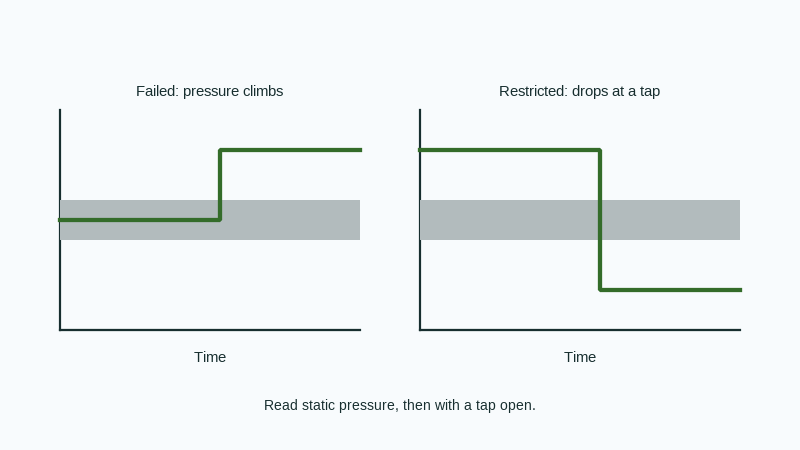
Failure can go two ways. Full street pressure can get through a torn diaphragm, whereas a clogged screen or worn seat can choke flow. Take a pressure reading with nothing running, then once more with a tap open. A big drop means a restriction. See water hammer sounds for the knocking symptom, and sudden low water pressure for the reverse problem.
Can I replace the regulator myself?
A handy person can manage it, but the work is on the main line and can flood a yard if a fitting fails. The job means closing the water at the meter or the main, cutting into the line, matching the unions and then using a gauge to set the pressure. Most owners hire a plumber.
A contractor license is required in California once a job reaches $1,000 combined in labor and materials. A regulator swap falls below the dollar line, but check with the Building and Safety Division in Simi Valley or the Building and Safety office in Moorpark about whether a permit applies. Never operate the district's own meter valve unless the district allows it; use your own main shutoff. Read about regulator replacement for the procedure.
Is it fine to change the pressure setting myself?
You can, with care. Attach a gauge, loosen the locknut, give the adjusting screw a small turn, and recheck with a tap open. Small steps matter, and wrong settings give weak showers or noisy pipes. Check the maximum ratings on your appliances and fixtures before changing anything, and record the old setting.
If readings sit far from what your fixtures expect, or the adjusting screw does nothing, the valve may be failing. Replacement is then cleaner than endless tweaking. Our page on whole-house regulators lists what a plumber tests. Requests sent by form are read on weekdays, 9am to 5pm. Back to Arroyo Simi Plumbing.
Common questions
Are the meter and the regulator one and the same?
No. The meter records how much water you use and belongs to the water district. The regulator controls pressure and belongs to the house plumbing. They sit close together on one line, which is why people mix them up. Ask the district before touching anything on the meter side.
How long does a line regulator usually last?
No fixed age applies. Many last for years, but diaphragms and springs wear and grit damages seats. An old regulator showing signs of failure costs less to replace than to keep adjusting. Test the pressure now and then with a gauge, since slow drift is easy to miss.
Is a regulator needed in every home?
No, but many homes benefit. If street pressure already falls within what your fixtures can take, a regulator is not needed to function. If it runs higher, a regulator shields the house. A plumber using a gauge can tell you which situation applies, and your supplier can say what to expect.
Might a regulator be behind weak flow?
Yes. A clogged screen, a worn seat or an overly low setting can choke flow. Test pressure with a tap open. If it falls sharply from the static reading, the regulator or a valve is restricting. Our page on the best home regulator explains what to look for in a replacement.