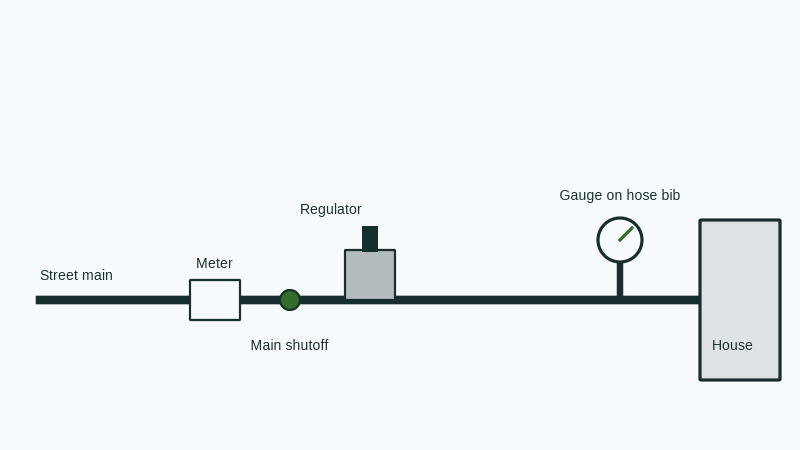
The whole-house water pressure regulator is a bell-shaped valve on the supply line from the street, and it brings street pressure down to a gentler level for your pipes and appliances. As it ages, pressure can creep too high or fall too low. The symptoms themselves are covered in the low water pressure plumber guide.
What does a whole-house regulator do?
It lowers and evens out the incoming water pressure, sparing fixtures, the water heater, the washer and the pipes from street pressure and its spikes. Inside the valve, a spring and a diaphragm work against the flow and hold outlet pressure close to its set point.
Street pressure changes with elevation, distance from the supply and time of day. Homes on the lower part of a hillside can see strong pressure at the main, while homes higher up might not need a regulator. Many houses have one beside the main shutoff, though an older one may have been removed, may have failed or may never have been fitted. Appliance makers set a pressure ceiling, and going above it can wear out valves and hoses sooner.
What does a regulator replacement involve?
The plumber begins by shutting the main and emptying the line. Next the old valve is cut out or unscrewed, and a correctly sized replacement is fitted using unions. The pressure is set on a gauge and the joints are checked for leaks. A direct swap of the same size is a short job. Changing the pipe size or layout takes longer.
Size matters. Regulators come in common pipe sizes, including 3/4 inch, 1 inch and 1/2 inch, and the new one should match the service line. Putting a regulator into a house that had none makes the water system a closed one, and a thermal expansion tank is frequently required. See expansion tank replacement.
Can I safely adjust the regulator myself?
Often it is, using small turns of the adjusting screw while watching a gauge, but the safe range matters and an older regulator may not respond. If the screw spins with no change in pressure, or pressure keeps creeping, the valve needs replacing. Do not force it.
Adjust by quarter turns, pausing after each to read the gauge. Clockwise generally raises pressure. Remember that the water heater, ice maker and washing machine each have limits. Hard water scale or debris inside an old regulator can make it stick. See washing machine pressure regulator for options at the appliance.
Where do I find the regulator?
Look just beyond the main shutoff, at the place where the water line comes into the house: in the garage, on an exterior wall near the hose bib, in a front-yard box or in a crawl space. The device resembles a bronze bell roughly grapefruit-sized, with an adjustment bolt or screw on top.
If you cannot see it, follow the line from the meter box to the house. Some homes put it in a box close to the meter, others inside the garage wall. For pictures and descriptions, open the pages on finding the regulator and on what a regulator looks like. If there is none, a plumber can tell you whether adding one is worthwhile.
How can I tell the regulator is failing?
Warning signs: pressure far above or below normal, pressure that swings during the day, noise or banging in the pipes, a dripping water heater relief valve, leaking supply hoses, and appliances that wear out early. If the regulator fails fully open, street pressure passes straight through.
A regulator can also cause weak flow, if debris clogs its screen or the diaphragm has stiffened. Weak flow everywhere points at the regulator or the main. Weakness at a single fixture means a local cause. In that case, read about a sudden pressure drop at home and about a weak kitchen faucet.
Who handles permits, and who should do the work?
Swapping a regulator is plumbing on the main line. Whether a permit is needed depends on the scope, and your city office decides. In Simi Valley the Building and Safety Division issues permits, and in Moorpark the Building and Safety office does. Ask the plumber whether the permit fee sits in the quote.
Jobs above the state threshold call for a California contractor license, as does any job that needs a permit. The license number can be checked on the CSLB website. A DIY attempt on the main line is a poor first project, since a failed fitting can flood the yard.
How can I get a plumber to take a look?
Send the quote form with your gauge reading, the age of the home and any signs you noticed, such as banging, dripping relief valves or weak flow. We forward your request to nearby plumbing businesses; the ones that accept requests pay us a fee, and one of them replies with a price and a visit time.
Someone reads form requests Monday to Friday between 9am and 5pm. What the job covers is laid out on the water pressure regulator replacement page, and the best home water pressure regulator page helps if you want to compare types ahead of the visit.
How can I check my home's water pressure?
Attach a pressure gauge to a laundry connection or an outdoor hose bib, open the tap, make sure nothing else is using water, and read the dial. Test in a quiet hour and again in the evening, because pressure moves. Write down the numbers and give them to the plumber.
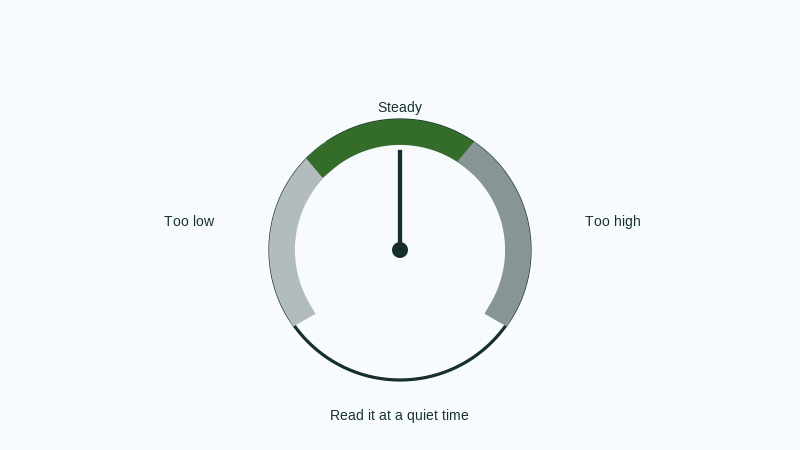
Gauges are inexpensive at hardware stores. A reading that jumps or climbs while nothing runs suggests a failing regulator, creeping pressure on a closed system or an expansion problem. Dripping faucets, banging pipes and a leaking relief valve on the heater all hint at high pressure. Ask the plumber which range suits your home, since makers of fixtures and appliances publish their own maximums.
Common questions
What is a regulator's typical lifespan?
Many last for years, but age, water quality and pressure all affect the life, and we cannot give a fixed number. Test pressure with a gauge every year or two, and replace the regulator when pressure drifts or the adjustment stops working.
What do I ask the plumber before a regulator job?
Find out if the price covers the valve, labor, a pressure test and an expansion tank where one is needed, and whether the permit is included, plus what pressure they will set and why. Also request their California contractor license number, then verify it on the CSLB site.
Does a regulator ever cause weak pressure?
Yes. A clogged screen, a stiff diaphragm or a setting that is too low will limit flow to the whole house. A plumber can measure pressure on each side of the valve to see whether it is the cause, and can advise on cleaning, adjusting or replacing it.
Does every house have a regulator?
No. Some have one at the main, some have regulators at appliances, and others have none. A gauge reading shows whether you need one. With high pressure and no regulator, ask a plumber about adding one, and whether an expansion tank should go in as well so heated water has room to expand.