Gas fires after earthquakes start when shaking snaps a gas line or connector and the fuel meets a spark or a pilot light. A seismic shut off valve is built to close the supply automatically and prevent that. Fitting one is gas piping work, so it belongs to a contractor and is no weekend project. Begin on the home page, or go straight to a quote request.
How does a seismic gas valve actually work?
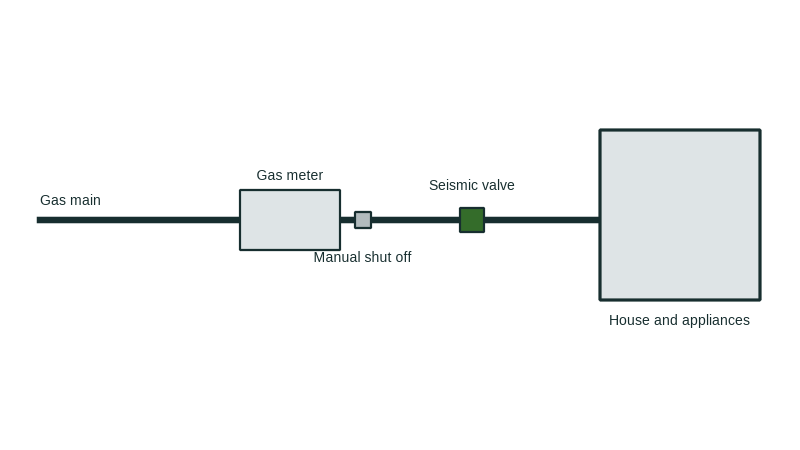
The device is a spring and ball, or something similar, bolted to the gas line just after the meter. Strong shaking trips it, the ball falls into a seat, and gas no longer reaches the house. It will not reopen by itself. A person resets it manually after the shaking ends, and safety checks on the gas line come before that.
The valve responds to ground motion, not to a leak. A pipe that fails slowly, or an appliance connector that cracks without a strong quake, will not trip it. In those cases the smell of gas remains your warning, and the response is the same: leave, then contact SoCalGas or 911 from outside.
Models vary in their trip mechanism and reset method. Ask any installer to show the manufacturer's documentation and to confirm the local building office accepts the model.
Is it the same as the valve at my gas meter?
Every gas meter has its own manual shut off, a quarter turn valve on the pipe beside the meter. It stops gas by hand, but only if someone is there with a wrench, and utilities advise against turning gas back on yourself once closed. An earthquake valve works while you are away or asleep.
After a quake, if gas is on the air or you hear hissing, everyone should leave the building first. Then, from a safe distance, contact SoCalGas, or 911 when danger is immediate. Stay away from light switches, indoor electrical devices and anything that sparks. Learn where your meter is and what its valve looks like before you ever need it. SoCalGas publishes guidance on the manual valve on its website, which is worth reading with the meter in view.
On some Simi Valley streets, especially older areas near Old Town Simi, meters sit in side yards that are cramped or blocked by fences. Make sure you could reach yours.
Which professional fits the valve, and is a permit required?
Altering gas piping is regulated work. A contractor license is generally needed in this state when labor and materials total $1,000, and a valve added to a gas line is the type of work cities want inspected. Contact Simi Valley Building & Safety or Moorpark Building & Safety before work starts to confirm the exact steps for your address.
Have the contractor pull the permit in their own name, not yours, and book the inspection. The City of Simi Valley lists its Building & Safety Division at 2929 Tapo Canyon Road, and Moorpark's office is at 323 Science Drive. Hours differ between the two, so check each city's page before traveling.
Be cautious of anyone who offers to fit a valve without a permit, who cannot give you a contractor license number to check on the state's license board site, or who says the valve is required by law before you have read the actual rule yourself. Treat any claim about requirements as unconfirmed until the city confirms it.
What decides the cost of an installation?
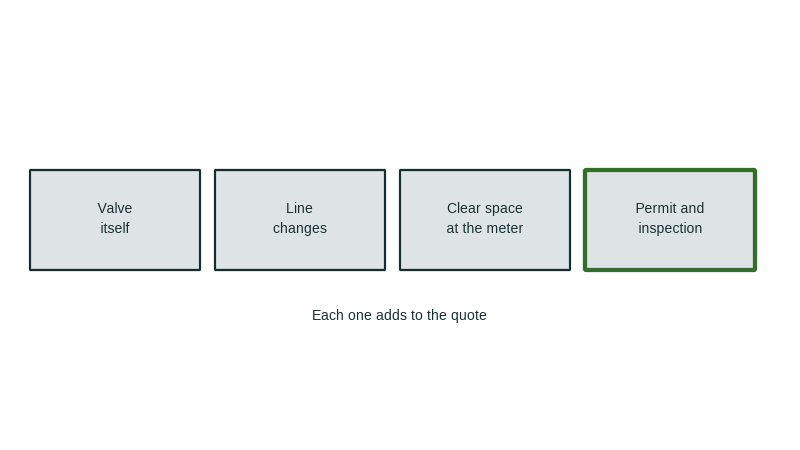
The valve is only one part. The rest of the quote depends on how reachable the gas line is, whether the line needs changes to take the valve, whether your meter location has enough clear space, the permit fee, and the inspection. A simple location costs less than one needing a trench or new piping.
We print no price, since nothing we could check applies to your house, and a figure from elsewhere would mislead you. Request two written quotes that name the valve model and list the permit. A cheaper bid that omits the permit is not actually cheaper.
Gas line size matters too. A valve is rated for a flow range, and the plumber must match it to your appliances so it does not close during normal use. Ask them to show how they sized it.
Do I need one if my home has no gas?
With no gas service reaching your house, there is nothing to shut off and no need. Check first, because some homes with a gas meter have just one appliance, and that still counts. Hillside and canyon homes near Santa Susana Knolls may have different fuel arrangements, so look at your utility bill and your meter.
Renters should know the decision belongs to the owner, and any plumbing change needs their written permission. Buying a home? Ask the seller whether a valve exists and whether a permit is on file with the city.
Common questions
How long does the installation usually take?
Many installations on an easily reached meter take a few hours, though the permit and inspection add calendar time. Gas must be shut off and tested before and after, so the house may be without gas for part of a day. The plumber should give you a window and explain any pilot relighting.
What should I ask a contractor before the work starts?
Ask for the contractor license number and check it against the state's records. Then find out who obtains the permit, which valve model is used and why, what the quote covers, and how gas is tested and relit afterward. Put the answers in writing, which lets you compare two bids line by line.
Do I have to be home during the installation?
Typically an adult should be there at the start and the finish, to open access to the meter and to confirm that appliances relight properly. The gas is shut during the work, so plan your cooking and hot water around it. When booking, tell the plumber about any pets, gates or locked side yards.
Is a seismic valve something I can install on my own?
No. Work on gas piping belongs to a contractor, since a mistake can cause a fire or an explosion. You can read about the valve, choose a model with the contractor and prepare the meter area, but the connection and the leak test should be done and inspected by a professional.