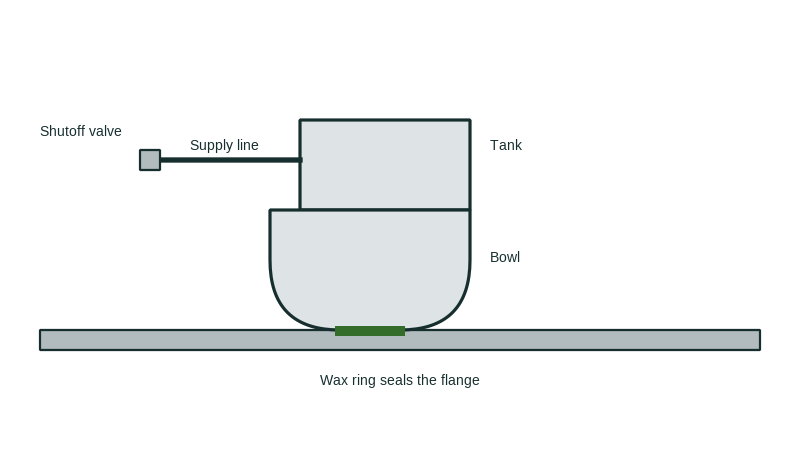
Most of the bill for a new toilet is the fixture you choose, while labor is the smaller share, unless something unexpected turns up beneath the floor. The numbers here are national guides, not Simi Valley quotes. Minor fixes short of a full swap, such as a flapper or fill valve, are dealt with on our page for toilet flush repair. The home page links to every job we cover around Simi Valley and Moorpark.
What is the typical price for a plumber to swap a toilet?
Bob Vila's national cost guide gives a typical all-in replacement of $224 to $532, averaging $371. These are national numbers rather than Simi Valley quotes, so treat them as a loose guide. Toilet prices vary a lot: two-piece models cost about $90 to $875 and one-piece $150 to $1,500, so the fixture you pick moves the total more than labor does.
Smart toilets and wall-hung models sit well above that band. Bob Vila lists wall-hung units from roughly $500 to $2,000 or more and smart toilets from $1,200 into the thousands. For a straight swap the standard two-piece toilet is the usual choice, as it fits the existing drain and shut-off valve unchanged.
We do not set a Simi Valley price. A local plumber names it after seeing the bathroom, and you get the quote in writing ahead of the first hour of work.
What does labor add on a toilet job?
Bob Vila's guides show a base plumber rate of $65 an hour with an average of $125, and a standard job usually runs 2 to 4 hours. At those rates, 2 to 4 hours comes to about $130 to $500 in labor. Emergency visits may reach $350 an hour, so check whether a quote is flat or hourly.
A handyman may quote less for a like-for-like swap, and on a simple job that can be fair. Take care when the work means moving a drain, opening a wall or touching gas or main lines. Past a small dollar threshold a contractor license is generally mandatory in California, and a job that needs a city permit must go to a license holder. The Contractors State License Board lets you search for any license on its site.
Put three questions to any labor figure. Does it cover hauling off the old toilet? Is a fresh wax ring and supply line included? Does it change if the flange is damaged? A rotted flange is a common surprise once the old toilet comes up.
Which extras raise or lower the price?
Several add-ons change the price. Hauling off the old toilet adds $50 to $200 where charged, flooring repair after water damage costs $8 to $24 per square foot, and problems found during installation can add up to $800 in labor, per Bob Vila. Relocating the toilet in a remodel is the largest jump, commonly $2,500 to $3,500.
Timing counts too. Bob Vila notes that emergency and after-hours calls can double or triple labor, or add a flat fee of $100 to $350. If the toilet is merely inconvenient and not flooding, a visit during regular hours costs less.
Dealing with a worn shut-off valve during the same visit is common. A valve that seeps around its stem, or never seals fully, is cheaper to replace during the toilet swap than on a second trip. You can read about that part on our page for toilet repair shut-off valves, and remodels bring in other trades, described in bathroom remodel plumbing.
Is a new toilet better than fixing the old one?
Often a repair is enough. The EPA says most toilet leaks come from worn flappers, cheap parts that go in quickly. Replace the whole toilet if it cracks, leaks at the base or clogs all the time, or if it is old enough to use up to 6 gallons per flush, compared with 1.28 for a WaterSense model.
According to the EPA, toilets make up nearly 30 percent of a typical home's indoor water use, and exchanging an old toilet for a WaterSense model can cut toilet water use by 20 to 60 percent. Whether that pays back depends on the toilet's age and your water rate, so let your own bill decide.
If the toilet runs on, rocks or seeps at the floor, try the cheaper fixes first. Our guides on replacing a fill valve and a toilet leaking at the base show the usual trouble spots. A cracked bowl or tank is the plain case for replacement.
What would new plumbing cost for an older home?
New plumbing for an older home is a job on a different scale from a toilet swap. A supply-line repipe is priced by house size, pipe material and wall access, and normally brings a permit and drywall repair. No figure is given here; read our repipe cost page, then gather written quotes.
Most Simi Valley homes were built in the 1960s to 1990s, so pipe type differs from house to house. A plumber can look beneath the sink and at the main to see what is installed and say whether a repipe merits pricing. Our repipe cost and general plumber cost pages explain the make-up of those quotes.
How do I replace a side-mount toilet handle?
Plastic or brass nuts inside the tank usually hold side-mount handles, and the thread typically runs backward, so turning clockwise loosens it. Close the shut-off valve, then flush so the tank empties and lift off the lid, unhook the chain or lift arm, then undo the nut and slide the old handle out.
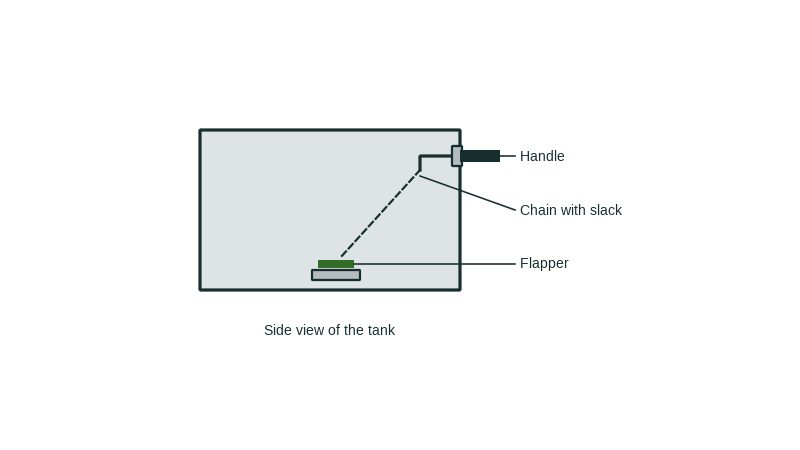
Feed the new handle through the same hole, tighten the nut by hand counterclockwise, and hook the arm back on leaving a little slack in the chain. A chain pulled too tight stops the flapper seating and the toilet runs. Turn the water back on, flush twice, and check the handle and the supply line for drips.
Fixing a seat that wobbles is its own small job, covered in fixing a toilet seat that has come loose.
What is the best way to weigh quotes for a toilet swap?
Judge quotes on what they include, not only the total. Each should say whether the toilet is supplied, whether bolts, a fresh wax ring and a supply line come with it, whether the old toilet is removed and whether flooring or valve work costs extra. Insist on getting the figures in writing before work starts.
Confirm through the license board's California site that the plumber's license is current, and ask who pulls a permit when the job needs one. California caps deposits on home improvement jobs too, so be wary if someone wants a large sum upfront. Use the quote form and a visit from a local plumber will be arranged.
If a clog is the problem rather than a replacement, what it costs to unclog a toilet is laid out on its own page, and the install cost for a faucet makes a handy comparison for small fixture jobs.
Common questions
How long does fitting a new toilet normally take?
A standard swap usually takes 2 to 4 hours, per Bob Vila's national guide, and longer when the flange, valve or flooring needs work. The plumber confirms the time on the day. We promise no response time. Someone reads requests on weekdays from 9am to 5pm, and then a local plumber sets up the appointment.
Which question comes first with a toilet installer?
Request a written quote that itemizes the toilet, wax ring, supply line, disposal and any valve work. Ask who handles flooring repair if the old toilet leaked, and whether the price moves if the flange is damaged. Before agreeing, look up the contractor's license number at the CSLB site.
Should I stay home during the toilet swap?
Be present on arrival so the plumber can locate the shut-off valve and agree the scope, and come back once the work is finished to test the flush. If you cannot, settle access in writing first. Move rugs and cabinet contents away from the toilet and keep the floor around it clear.
Does a handyman cost less than a plumber for a toilet?
Sometimes, on a simple like-for-like swap. The risk is a hidden fault such as a rotted flange, a leaking valve or a drain problem, and that is where a plumber is the right person. Work involving permits or main lines requires a contractor license in California, so verify before hiring.