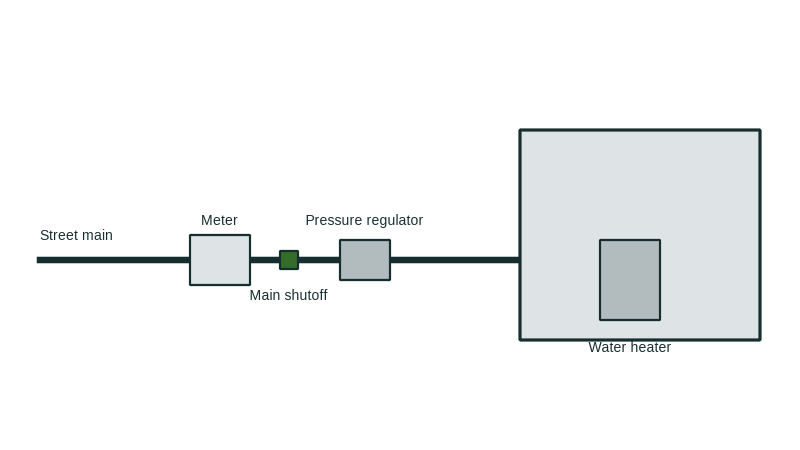
Lowering the odds of a pipe failure means finding your main shutoff, testing pressure, swapping out aging connectors and fixing minor drips early, while they are still small. A burst is usually the last stage of a slow problem. All the plumbing help available is listed on the home page, and for anything a check turns up that you cannot fix yourself, you can use the quote form.
Why do pipes burst at all?
Four things account for most failures: water pressure that runs high for years, corrosion eating through old metal, movement in the ground or house that strains joints, and freezing. In Simi Valley the first two matter most. A pipe that was fine at installation can fail decades later because of what has happened inside it.
Our explainer on why pipes split open takes each of those in turn. Tract homes dating between the 1960s and 1990s now have supply lines at the age where galvanized steel rusts out and copper develops pinholes. Polybutylene, used in some houses of that period, can fail at its fittings. Hard water, where present, leaves scale, and scale and mineral build-up add stress to fittings and heaters.
Freezing poses less risk in Simi Valley than in colder regions of the country, but not zero for exposed pipes in unheated spaces on cold nights, particularly in higher canyon spots. Nobody should assume it cannot happen to an outdoor line.
How can I test my pressure and the shutoff valve?
With all fixtures closed, thread a pressure gauge onto an outdoor hose bib and note what the dial says. A steady, moderate number is good, while a high one strains every pipe and appliance in the house. Next, find the main shutoff and operate it, which proves it works and lets you locate it in the dark.
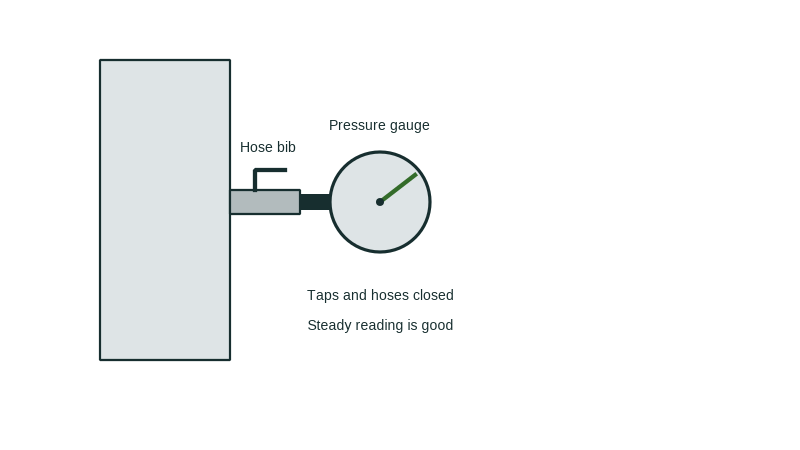
Hardware stores sell inexpensive gauges. Check at different times of day, because pressure can rise at night when neighbors use less water. A high reading suggests a regulator that is missing or worn out, and fitting a new one is plumber work in many homes. The pages on regulator replacement and on why the regulator that sits on the main line matters cover that. For banging when a tap shuts, see water hammer sounds.
Work the main valve through its travel a couple of times a year. A valve that will not budge, or weeps at the stem, should be replaced before you ever need it.
What areas of the home deserve a seasonal inspection?
Check every spot where a failure would do the most damage: beneath sinks, behind the toilet, at washing machine hoses, near the water heater and at outdoor spigots. Look for damp, rust, white mineral crust and drips. A flexible connector that is bulging or crusty should be replaced now rather than at the next leak.
Washing machine hoses and braided supply lines are the cheapest items on the list and the leading source of flooded laundry rooms. Replace rubber hoses on a regular schedule and consider braided lines. Check the water heater tank and its valves, and see water heater leaks. Walk the exterior in spring and fall, and watch for soggy soil near the meter or a lawn that stays green in a dry spell.
What can I do about leaks I cannot see?
Use your water meter as a detector. Shut off every water-using fixture, record the dial, then leave everything idle for two hours and compare. If the number has moved, a leak is probable. The EPA also suggests a toilet dye test, and it says the typical home leaks away more than 9,300 gallons a year. Hidden ones sit inside walls or under a slab.
Clues to a concealed leak include a rising bill with no explanation, the sound of flowing water while everything is off, damp or warm spots on a floor, and mildew. If a slab leak is possible, the guide to finding and fixing slab leaks is worth a read. A stepwise check lives on the page about bills that climb with no leak in view.
Pinholes in copper often start as a weep and then spray. To separate a stopgap from a proper repair, see the guide to handling a copper pinhole leak.
What do I do if a pipe does burst?
If a pipe lets go, shut the main valve immediately, and afterward empty the lines through the lowest faucet. Switch off the water heater. Should water reach outlets or the panel, kill the electrical supply, though only if the breaker is safely reachable and you remain dry. Take photos, then contact a plumbing business and your insurer.
Water mixed with electricity is seriously dangerous. When getting to the panel would put you in standing water, keep clear, and exit the building if necessary. Move valuables off the floor, soak up what you can and run fans. The next hours are described in the guides on recognizing a burst pipe and emergency burst pipe help, and insurance and burst pipes covers the claim.
When should I hire a plumber instead of doing it myself?
Bring in a plumber if your check turns up high pressure, a failing main valve, corroded lines, a leak you cannot trace, or a task needing a permit. A homeowner can read a gauge, swap a washing machine hose and insulate a hose bib. Replacing a regulator, water heater or section of main line is contractor work.
Ask for a written quote that itemizes labor, parts and the permit, then check the contractor's license number through the state board. A replacement valve or regulator is usually a short visit. Whole house piping needs more planning, and our repiping overview shows what that involves.
Common questions
How long is a prevention visit?
Testing pressure and going over the connectors takes roughly an hour, and a plumber can often replace a regulator or a few supply lines during one visit. Larger work, such as swapping out aged supply pipe, stretches over days. Get the timetable on paper, including the length of any water shutoff.
What should I ask a plumber before a preventive inspection?
Find out what will be inspected, whether a pressure test is included, what installing a regulator or valve involves, how wall patching is handled, and who applies for any permit. Collect the contractor license number and a written quote, so that several offers can be set side by side.
Does an adult need to be home while the plumber checks the pipes?
Generally yes, at least at the start. Access is needed to the main shutoff, the water heater, under-sink cabinets and often the attic or crawl space. Mention any pets, locked gates or fragile items, and make sure someone can answer questions about the leaks you have noticed.
Is it safe to leave the water on when I go on vacation?
Shutting the main valve before a long trip is a cheap precaution, since a failure while no one is home can run for days. If your irrigation or water heater needs to stay on, ask a plumber about options such as an automatic shutoff device. Turn the heater to its vacation setting if you shut the water off.