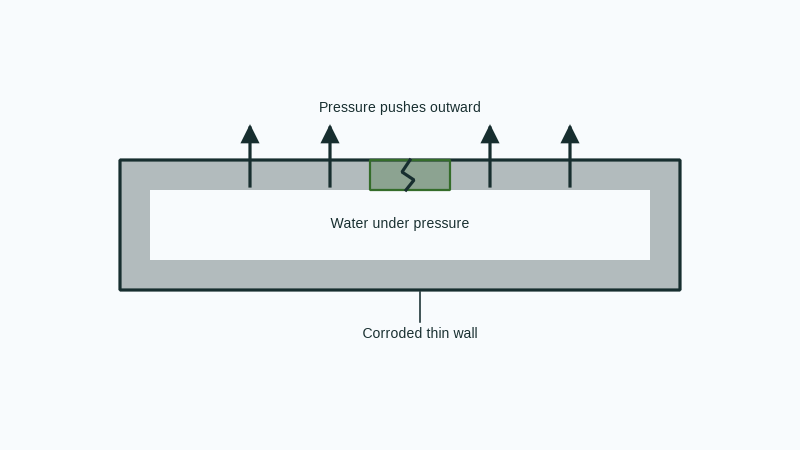
Pipes split when internal pressure exceeds what the wall can take at one spot. Either the wall has been weakened by corrosion, a defect, a freeze, a bad joint or damage, or the pressure has been pushed too high. In Simi Valley the common culprits are old pipe and strong water pressure. If one has already burst, begin with the burst pipe emergency plumber guide, or visit our home page.
Which factors most often lead to a burst pipe?
The usual list is corrosion from inside or outside, water pressure above what the system is built for, freezing, a poor joint or defective fitting, ground movement, and physical damage from digging, nails or tree roots. Most burst pipes involve two or more of these working together over time.
Think of a pipe as a part that wears. A copper line with a thinning wall can hold for years at moderate pressure, then split the week the pressure spikes. A poorly soldered joint can seep for decades before failing. The failure feels sudden, but the cause had been building.
What do I do right after a pipe bursts?
Close the main water valve, drain the pipes by opening the lowest faucet, cut power to any wet room, photograph the damage, and arrange a plumber. Do not use electrical devices in standing water. If gas piping is involved or you smell gas, leave at once and reach SoCalGas from outdoors.
With the water off, send the request through our quote form with your address and what failed. It goes to local plumbing businesses; those that accept requests pay us a fee, and one replies with a price and visit time. Form requests are read on weekdays between 9am and 5pm.
Can high water pressure split a pipe?
Yes, it is a leading contributor. Constant high pressure strains every pipe, fitting and appliance connection, and a sudden spike, such as a water hammer slam, adds shocks. A regulator installed at the main keeps house pressure in a safe range, and a gauge fitted to a hose bib reveals the actual figure.
Strong pressure does not always signal a good supply. Hillside streets can deliver high static pressure, and homes at the bottom of a pressure zone often see more of it. An inexpensive gauge that threads onto an outdoor spigot gives the number. If it reads high, or the regulator is old, read the whole-house pressure regulator page and ask a plumber to test it.
Does the pipe material affect the risk of bursting?
Each material fails in its own way. Galvanized steel rusts from inside and chokes. Copper can develop pinholes. Polybutylene, used in US homes from around 1978 to 1997, can become brittle at fittings. Older CPVC can crack with age and heat. PEX is flexible and tolerates some freezing, but can be damaged by sunlight and bad crimps.
If you own an older house, ask which material feeds it, because the answer shapes how you plan ahead. For what each means in practice, read galvanized pipe replacement, replacing polybutylene pipe and PEX vs copper.
Why do pipes split during the summer months?
Heat alone rarely splits a pipe. Summer bursts usually come from pressure spikes when irrigation zones switch on and off, from water hammer, from corrosion that has finished weakening a wall, or from ground shifting and tree roots pressing on buried lines. Plastic pipe in direct sun can also weaken over the years.
The irrigation link is easy to overlook. A sprinkler timer opening a fast valve against a closed line sends a pressure wave through the system, and in a house with high static pressure and no expansion allowance the wave finds the weakest spot. Slow-closing valves and a working regulator reduce the force. Outdoor PVC and poly lines in direct sun also get brittle with age.
Which warning signs show up before a pipe bursts?
Early signs include low or uneven pressure, brown or rusty water on first draw, hissing behind a wall, damp spots or stains on drywall or ceilings, green crust on copper fittings, a water meter that keeps creeping with every outlet closed, and a bill that climbs for no clear reason.
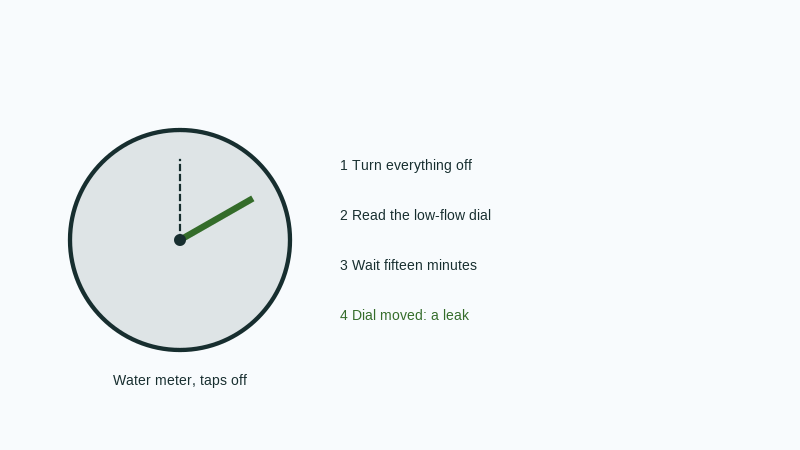
Watch the meter. Turn everything off, read the low-flow indicator, and wait fifteen minutes. If it moves, water is going somewhere. That could be a running toilet, but it could also be a leak in a wall or slab. The next steps are in a high bill with no leak in sight.
Is cold weather a risk to Simi Valley pipes?
It is uncommon in mild Southern California weather, but it can happen. Freezing needs several hours of hard frost. Exposed pipes, outdoor spigots and unheated garages are the ones to watch on a cold clear night, because they lose heat fastest and have the least protection from the house.
If a hard frost is forecast, cover outdoor spigots, open one faucet to a slow drip, and make sure the pipes in garage walls and exterior closets are insulated. Water that freezes expands, and the damage often appears only as the ice melts and flow restarts. Prevention steps are in burst pipe prevention.
Common questions
Can aged pipes burst even without a freeze?
Yes. Corrosion thins the pipe wall over many years, and then normal pressure, a surge or a small shift is enough to split it. In Southern California, burst pipes are more often a wear and pressure problem than a frost problem. A plumber can inspect the material and recommend repair or replacement.
How do I check whether the water pressure is too high?
Attach a gauge to an outdoor hose bib, turn the water on with nothing else running, and read the dial. Noisy pipes, dripping faucets and a weeping water heater relief valve can all suggest high pressure. Ask a plumber what range is right for your home before changing a regulator.
Does every burst pipe cause a flood?
No. Some pipes burst under a floor, in a wall or in the slab and release water slowly, so the first sign is a damp spot, a stain or a growing bill. A pinhole in copper can leak for months. If you suspect a hidden leak, a plumber can use listening tools to find it.
What do I ask when choosing a plumber?
Ask for a written price, what permit work is included, what pipe they will use, the plan if a wall has to be opened, and their California contractor license number. Check the number on the state CSLB site before the plumber starts work, and keep the written quote with your records.