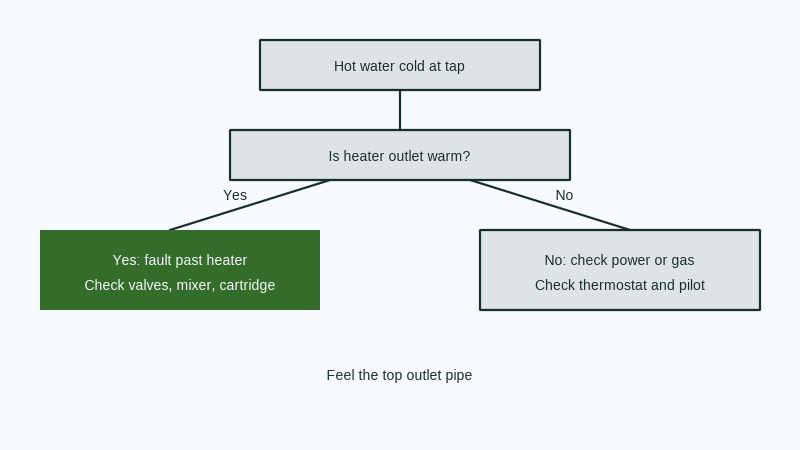
When the heater seems healthy but the shower stays cold, the cause is usually a setting, a valve, a part inside the unit, or a fault in the pipes between heater and tap. The first checks need about five minutes and cost nothing. The steps below are sorted by gas, electric and tankless type, and they show where a plumber is the right choice. The water heater repair hub gives the wider picture. When the checks find nothing, we send your request along to a plumbing business in Simi Valley or Moorpark.
Why would a heater that is on still deliver no hot water?
Running and heating are not the same thing. A gas unit may have a faulty pilot or igniter. An electric unit may suffer from a breaker that tripped, an element that died, or a thermostat set too low. Or a closed valve may cut off the hot outlet. Learn whether every tap runs cold or just one, since that separates a heater fault from a pipe fault.
Start with these steps, all within a homeowner's reach:
- Try more than one tap. If every hot tap runs cold, suspect the heater or what feeds it. Cold at a single tap points to the faucet cartridge or mixing valve in that fixture.
- Look at the thermostat. A dial knocked down or moved to vacation leaves the tank cool.
- Look at the shutoff valves on the cold inlet and the hot outlet. A valve left shut after earlier work is a frequent culprit.
- Look at the power or gas. With an electric unit, inspect the breaker and press the upper thermostat's reset button. With a gas unit, inspect the pilot light or read the display code.
Might the fault lie in the pipes rather than the heater?
Yes. When the outlet pipe at the heater is hot yet the tap runs cold, the trouble lies in between: a failed mixing valve or faucet cartridge, a crossover letting hot and cold mix inside the plumbing, a blocked line, or a leak that loses hot water en route. In a house with no recent changes, an unusually slow arrival of hot water can signal a hot line leak.
Try one quick test and touch the hot outlet pipe on top of the heater. If it is hot there while the tap stays cold, water is being diluted or lost along the way. A hot line leak can also appear as a warm or damp patch on the floor, or as a bill that creeps upward. The guide on a water bill that jumps with no leak in view can help, and the EPA notes that leaks can waste more than 9,300 gallons in an average home each year.
Another pipe-side fault is a single-handle shower valve with a worn cartridge, which lets in too much cold. A plumber swaps the cartridge in one visit.
What if a tankless heater produces no hot water?
Read any error code on the display, make sure gas and water are open to the unit, and check the inlet filter for debris. Many tankless units require a minimum flow before they fire, so a slow-running tap can stay cold. Hard-water scale often triggers codes. The guides on tankless water heater installation describe what to expect from this type.
Leave a code about ignition, flame or exhaust to a plumber. Venting and gas on a tankless unit are regulated work, and each manufacturer has its own code list, explained in the manual. Avoid resetting it again and again.
How do I troubleshoot an electric unit that makes no hot water?
Go to the breaker panel first, because a tripped double breaker causes this most often. Reset it once, and stop if it trips again. Next, press the red reset button beneath the upper access panel. With power fine but the water lukewarm or cold, an element or thermostat has most likely failed. Testing them is explained in the page on swapping a water heater element.
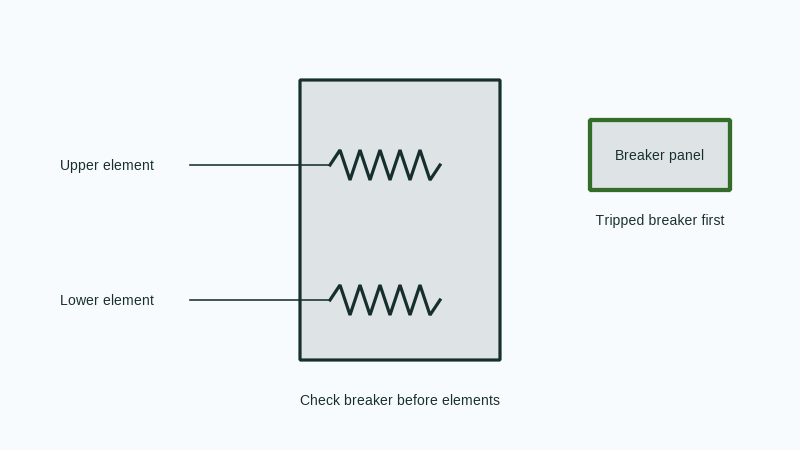
Never work behind the access panel with the breaker on. Switch it off, confirm there is no power, and only then remove the cover. The tank holds scalding water, so avoid draining it without hoses and care.
A tripping breaker is a safety warning. A shorted element or a wiring fault can trip it repeatedly, and the fix is a plumber or an electrician, not a larger breaker.
At what point do I hand the problem to a plumber?
Call for one when a relit pilot refuses to stay lit, gas is in the air, the breaker keeps tripping, the tank leaks, rust shows up in the water, a tankless code points to ignition or venting, or the heater is old enough that fixing it may not pay off.
Look for a written quote stating what was tested and what is being replaced. California requires a permit to replace a heater, and a permit means a contractor license; the job should include strapping and venting too. Depending on your address, permits come from Simi Valley Building and Safety on Tapo Canyon Road or from the Moorpark Building and Safety counter inside City Hall, and it pays to confirm hours before going.
Water pooling around the tank calls for shutting the heater's cold supply, cutting the power or gas, then reading the guide to emergency water heater repair. For an aging heater, the page on when a water heater needs replacing lists the signs and helps you weigh repair against a new unit.
How do I troubleshoot a gas unit that makes no hot water?
Inspect the pilot flame through the viewing window, or the status light on newer units. If the pilot has gone out, relight it by following the label on the heater. If it keeps dying, the thermocouple is often worn. Whenever you smell gas, do not relight: get out of the building and reach SoCalGas at 1-800-427-2200 once outdoors, or dial 911 when you feel unsafe.
The law regulates gas work. California requires a contractor, plus a permit, for gas piping and for swapping out a water heater, so DIY stops at relighting a pilot and tidying around the unit. If the burner lights yet the water stays cool, the heater may be sooted or the gas valve may be failing, and a plumber should inspect it.
Also check that nothing near the heater blocks the vent or air intake. A unit that shuts itself off because it cannot breathe is a safety feature working as intended, not a fault to override.
Common questions
What is the usual repair time for a heater giving no hot water?
A reset or a relit pilot takes minutes. Replacing a thermocouple, element or thermostat often takes a plumber less than two hours, while a tankless repair or full replacement runs longer. The plumber states a time once the diagnosis is done, and the heater needs a while to reheat after any fix.
What should I ask whoever inspects my heater?
Obtain a written quote naming the cause and the parts, along with the contractor license number so you can verify it with the state licensing board. Ask whether a permit is required and who pulls it, and get the warranty on the repair and on any new heater in writing.
Must I be home when the plumber looks at the heater?
Yes. Someone aged 18 or over must be present to provide access, approve the repair and watch hot water run before the plumber leaves. When the heater sits in a locked garage or side yard, mention that while the plumber sets the timing.
Why does my heater's hot water vanish so quickly?
Usable hot water can shrink because of a failed lower element on an electric heater, a broken dip tube or heavy sediment. Flushing may help, and a plumber can test the parts. With an old heater, replacement may be the better choice. The guide comparing tank and tankless units lays out the options.
Is having no hot water an emergency?
Rarely, unless there is a gas smell, pooling water, or a heater that is scorching or noisy. Shut off the supply if it leaks. With only cold water to deal with, you can weigh quotes without hurry. The other guides cover the options.