Fixing a hot water heater starts with one question: is it gas or electric, a tank or tankless? The answer determines which parts could be at fault and which checks are safe for a homeowner. Below are the typical failures, along with the stage at which a plumber must take over. For how the service works, see the water heater repair page.
Which parts of a hot water heater tend to fail?
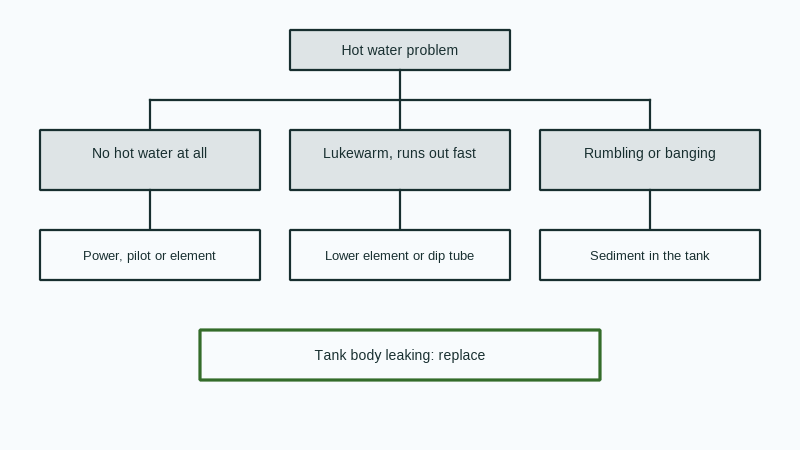
A small group of parts causes most faults: the thermostat, a heating element on electric units, the thermocouple or pilot assembly on gas units, the gas control valve, the relief valve, the dip tube, and sediment inside the tank. Leaks through the tank body are a different matter, and they mean the tank is finished.
Each fault leaves a signature. No hot water at all points to power, the pilot or a failed element. Lukewarm water that runs out fast points to a failed lower element or a broken dip tube. Rumbling points to sediment. Water on the floor points to a fitting, the relief valve, or the tank. Sorting by symptom keeps you from replacing a part that was never faulty.
At what stage does do-it-yourself end?
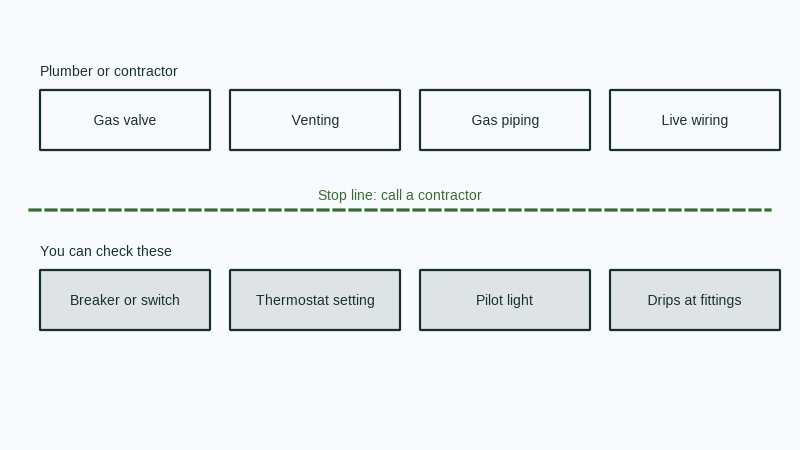
DIY stops at gas piping, gas valves, venting, anything that needs a permit, and anything inside live electrical wiring unless you know how to isolate it. Tank swaps fall in this category too, because a swap involves gas, venting or wiring and normally a city permit.
According to the state licensing board, jobs worth $1,000 or more in labor and materials generally need a California contractor license. Replacing a water heater usually involves a city permit, which in Simi Valley is issued by the Building and Safety Division. Should you ever smell gas, exit the building and notify your gas utility or 911 from outside. Do not touch switches on your way out.
What is different about repairing a tankless unit?
Tankless units fail in other ways. Instead of a tank leak, you see error codes, a flow too weak to fire the burner, a cold-water sandwich, scale in the heat exchanger, or venting faults. Fixes usually mean descaling, cleaning inlet screens, or replacing sensors, igniters or the control board.
Many repairs depend on the brand, which is why parts and service manuals matter. Pages cover Rinnai, Rheem, Navien and Noritz models. Tankless heaters connect to gas lines and vents that must meet code, so any repair involving gas, venting or electrical work belongs to a contractor.
What can a homeowner check without risk?
Safe checks include the breaker or switch, the thermostat setting, the visible fittings for drips, the pilot light on a gas unit when no gas is smelled, and the reset button of an electric one. They take minutes, need nothing but a flashlight, and rule out the easy causes.
Electric heaters have a high-limit reset button behind the upper access panel, but reaching it means working near live wiring, so turn off the breaker first and go ahead only if you are comfortable. Gas units can be relit by following the label, yet if the flame keeps dying, or you smell gas, stop. Never open the burner compartment where the air smells of gas. The guide on thermocouples explains why pilots drop out.
Which problems can be repaired, and which need a new heater?
Elements, thermostats, thermocouples, relief valves and anode rods can all be fixed. A tank leaking from the seam or bottom cannot. Age tips the balance: a heater past roughly ten years with costly repairs is usually better swapped out than patched one more time.
Elements are among the more common failures in electric tanks, and a plumber can generally change one in a single visit; the page on replacement water heater elements describes the signs. A dripping relief valve is a safety item, so read relief valve replacement before ignoring it. If the tank itself is wet, water heater leak repair separates what can be fixed from what cannot.
What details should I give when requesting a repair quote?
Describe the symptoms in plain words and supply the basics: gas or electric, tank size, age, location, and whether water is leaking. Add what you have already tested, such as the breaker or pilot, so nobody repeats it, and a photo of the data plate if possible.
A note such as "gas 50-gallon tank in the garage, about twelve years old, pilot will not stay lit" tells the plumber to bring a thermocouple and perhaps a gas control valve. "Water heater not working" tells them nothing. Put the details in the quote form; your request is forwarded to a nearby plumbing business, which will quote. Mention if hot water is urgently needed, since that changes who can come. See also why the house has no hot water for a list organized by symptom. Other services are listed on the home page.
How does cost help decide between repairing and replacing?
Weigh the repair estimate against how old the heater is and what shape it is in. A small part on a middle-aged tank is usually worth fixing. A big part on an old tank often is not. Ask the plumber what else they notice, such as corrosion at fittings, and whether a new unit is likely to be needed soon.
The price depends on the part, the brand, labor and access, and any permit required. Dollar amounts are not published here without a source, so ask for a written quote showing the part, labor and any extras. The guide to what a water heater replacement costs explains what drives a full replacement, which helps you judge whether a repair makes sense.
Common questions
How long does a heater repair usually take?
A simple part such as a thermocouple, thermostat or element can usually be done in an hour or two once the plumber has the part. Diagnosing a leak, replacing a gas control or descaling a tankless unit takes longer, sometimes needing a second visit for parts. A full replacement is a half-day job or more. You get the estimate when you receive the quote.
What should I ask a heater repair plumber?
Ask whether the visit fee counts toward the repair, which items the written quote includes, whether parts carry a warranty, and who obtains the permit if the job needs one. Get the contractor license number and look it up on the state board website. Also ask what the plumber would advise if the tank is too far gone.
Must I be home while the heater is repaired?
Yes, an adult should be home at the start to explain the problem and show the heater, and at the end to approve the work and see hot water running. If the heater is in a locked garage, arrange access ahead of time. Pets should stay away from where the plumber is working.
What makes my hot water run out so fast?
On an electric tank, common causes are a failed lower element or a broken dip tube. On a gas tank, sediment or a weak burner can shrink the hot supply. An undersized tank for the household has the same effect. A plumber can test elements, inspect the dip tube and flush sediment to tell which applies.
Can a leaking water heater be repaired?
A leak at a fitting, valve or relief valve can usually be fixed. Seepage through the tank body or seam cannot, and the tank must be replaced. The EPA notes that even small household leaks together waste more than 9,300 gallons of water every year, so do not wait. Close the supply and have it inspected.