Replacement for a storage tank water heater typically comes after a decade or a little more, and a tankless model often runs longer when flushed on schedule. Those are rules of thumb, hedged on purpose: your water, your usage and the maintenance history move the date. This page helps you judge your own unit before you reach the water heater repair stage.
What lifespan can you expect from a tank water heater?
Most tank heaters last about ten years, plus or minus a few, and sometimes longer when the water is soft and the anode rod has been renewed. Hard water, high temperature settings and constant demand shorten it. The manufacturer's warranty length is a minimum, not a promise of lifespan.
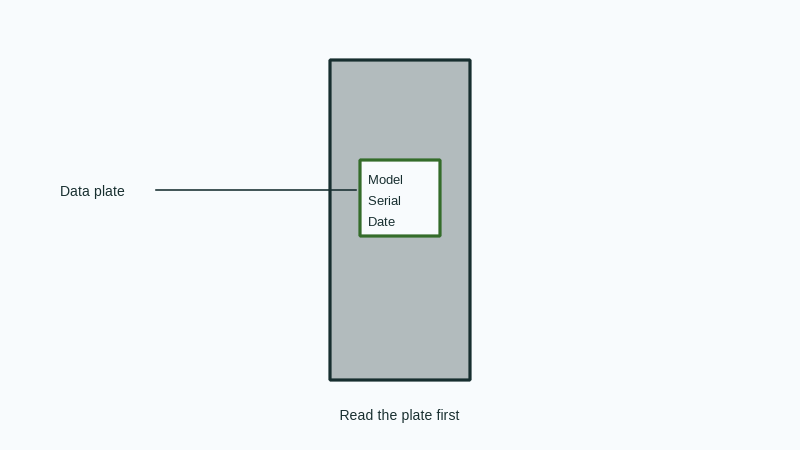
The tank is steel with a glass lining, and eventually the lining cracks and the steel rusts through. Nothing repairs a rusted tank, which is why age matters more than any single symptom. In many Simi Valley tract homes, the heater in the garage has already been replaced once, so check the data plate for the build date. The first four digits of many serial numbers encode month and year, but the format varies by brand, so confirm with the manufacturer's site.
What are the warning signs it is time to replace?
Replace rather than repair when water seeps out of the tank body, when only the hot side runs rusty, when you hear rumbling or popping from sediment, or when an aging heater keeps needing repairs. Moisture pooling under the tank is the clearest sign.
Further signals are repeated pilot or element failures, a hot supply that runs out quickly, and a relief valve or fittings that look corroded. When the tank body is dry and just one part is failing, a repair can make sense; read our notes on hot water heater repair before deciding. Set a drip pan beneath the heater if none is there, and learn the position of its shutoff valve. The EPA estimates that leaks cost the typical household more than 9,300 gallons of water a year, and a slow tank leak adds to that.
What does a replacement job include, and who does it?
The work means draining the old tank, disconnecting water, gas or power and the vent, setting a new unit, reconnecting, and testing. A permit from the city is generally required, and a contractor has to make the gas connections, so do not treat this as a solo project.
Earthquake strapping is a standard part of a California install. In Simi Valley the permit is issued by the Building and Safety Division of the city, while Moorpark has its own office, so confirm requirements before the work. The plumber also decides whether the vent, gas line size and expansion tank meet current rules. For hiring advice, see hiring a water heater plumber, then submit the quote form. The home page lists the rest of the services.
At what interval should the anode rod be changed?
Inside the tank sits the anode rod, a metal bar designed to be consumed by corrosion so that the steel is spared. In hard water it can be used up well before the tank wears out, and inspecting it, or replacing it every few years, is the least expensive way to stretch the tank's life.
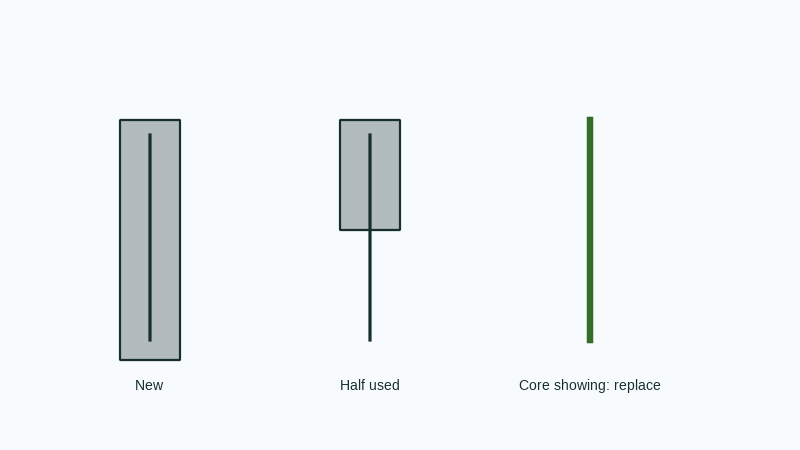
There is no single interval that applies to every house. A plumber lifts the rod, checks how much core wire shows, and says whether it needs replacing now or in a few years. Heaters with a softener loop corrode the rod faster. If you have never had the rod checked on a heater past its sixth or seventh year, ask for it. The anode rod replacement guide walks through the job and explains when the tank is too far gone for it to matter.
Does Simi Valley water change how often to replace?
It can. The valley's water is wholesale supply from Calleguas Municipal Water District, passed on by Ventura County Waterworks District No. 8 for most of the city and by Golden State Water in the eastern end. Where water is hard it scales elements and tank bottoms, so heaters often benefit from flushing and anode checks.
Do not assume a hardness number; your supplier's yearly water quality report lists it, so read the report for your own area. Moorpark customers are served by Ventura County Waterworks District No. 1, not the city, so the report is a different one. The takeaway is simple: where water is hard, maintenance matters more than the calendar, and a flush once a year is a reasonable habit to ask a plumber about.
How do you tell how old your water heater is?
Read the data plate, a silver or yellow sticker on the tank's side. It lists the model, serial number, capacity and often a manufacture date. If the serial number starts with a letter then digits, many brands use the letter for the month and the next two digits for the year.
Because formats differ, look up your brand's serial number guide rather than assume. If there is no readable label, think back to the last replacement: receipts, permit paperwork or the previous owner's disclosure. A heater from a previous owner with no records should be treated as old. Photograph the plate and keep it with your home files, because a plumber asked for a quote will want those details first.
Is maintenance required for a tankless heater?
Yes. With no tank to rust, a tankless unit still carries a heat exchanger prone to scale in hard water, plus filters that clog. Skipping flushes lowers flow, triggers error codes and wears parts faster. Makers usually advise descaling at intervals, with the spacing set by your water.
A flush means running descaling solution through the heat exchanger using a pump and hoses, then cleaning the inlet screen. Many owners pass that task to a plumber, since it needs isolation valves on the unit. Tankless water heaters can last longer than tanks when kept clean, but a neglected one can fail early. Comparing tank and tankless units covers the upkeep.
Common questions
How much time does a heater swap take on site?
A standard tank swap typically needs anywhere from a few hours to half a day once the plumber arrives, and more if the vent, gas line or electrical needs changes. Tankless conversions run longer given venting and gas sizing. Request the time estimate in writing together with the quote.
What belongs in a water heater replacement quote?
Check that the quote includes the permit, taking away the old tank, a new shutoff valve, earthquake strapping and, where required, an expansion tank. Get the contractor license number and verify it on the state board's site, and find out which warranty applies to parts and labor. Compare equal scope, not just totals.
Must an adult stay home during the swap?
Yes, an adult should be home when the work begins to show the plumber the unit and approve the job, and once more when it finishes to watch it run and sign off. The heater must be reachable, and the water will likely be off for a few hours. Sort out gate or garage access beforehand.
Should a ten-year-old heater be repaired?
That hinges on the repair. A thermostat or element is cheap relative to a new heater and may be worth it if the tank is dry. Once the tank itself leaks, no repair is possible. When several parts have failed and the heater has passed a decade, replacement is normally the better buy than yet another repair.
Can I replace the anode rod myself?
Many handy owners can, using a socket, a breaker bar and clearance above the tank. However, rods are often seized in place, the job requires the water off and the tank partly drained, and a stuck rod can damage the tank. When in doubt about your skill, let the plumber handle it and examine the rod.