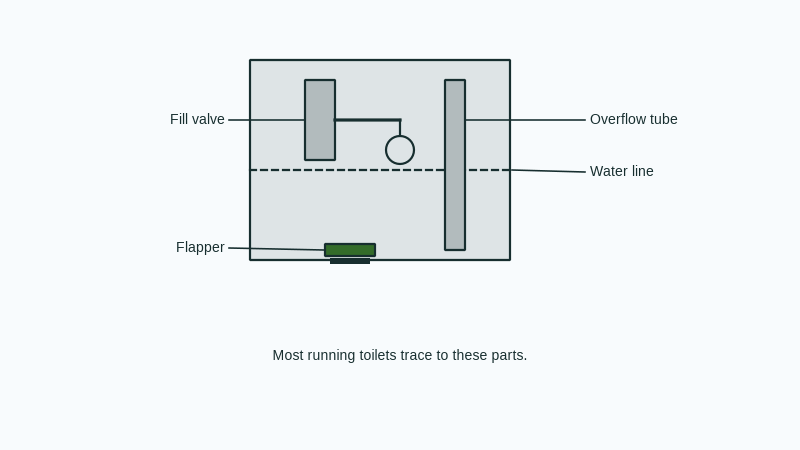
If the flush is poor, or the toilet keeps running after you use it, the cause is almost always a worn part inside the tank, not a broken toilet. Lift the lid and inspect: a loose chain, a tired flapper or a stuck handle arm explains most cases. These are small jobs, but Arroyo Simi Plumbing covers them because a running toilet quietly wastes water if ignored.
This page moves from the symptom to the part, in the order that saves you time.
Why does a toilet keep running after I flush?
Three culprits explain running on. The flapper at the tank floor may not be sealing, the chain may be adjusted too short or too long, or the fill valve may refuse to close. Water seeps into the bowl, the tank tops up again, and the loop repeats. Finding which of the three is responsible is the whole job.
Test them in turn:
- Chain. A chain trapped beneath the flapper stops it closing. Allow a half inch or so of slack.
- Flapper. Press the flapper down gently while the toilet is running. If the sound stops, the flapper is worn or warped and needs replacing.
- Water level. Water spilling down the overflow tube means the fill valve is not shutting off. Suspect the fill valve itself, or a float set too high.
- Dye test. Drip some food coloring into the tank and leave it for about ten minutes without flushing. The EPA describes this check: if color reaches the bowl, water is getting past the flapper. Flush soon after to keep the dye from staining.
Because a running toilet is quiet, it is easy to miss. Read the water meter with every tap off, as described later, to see whether a hidden leak is wasting water.
How can I free a sticking handle or dead button?
Sticking usually comes from a loose nut inside the tank, a bent lever arm or a jammed chain. Tighten the handle nut from inside the tank (its thread runs the reverse way, so loosening means turning clockwise), straighten the arm, and check that nothing snags the chain.
On a push button, the plastic linkage or rod may have come off. Lift the tank lid, find the button assembly and reattach the rod to the flapper. If the button has a cable, make sure it is not kinked. A matching replacement is easy to buy because the package lists the toilet brands.
If the handle moves freely yet nothing flushes, the chain has come loose or snapped. Reattach it to the flapper using a spare clip, leaving some slack.
What causes a weak or incomplete flush?
Usual reasons for a weak flush: the flapper closes too early, the chain has too much slack, the tank water sits low, or mineral deposits have blocked the rim holes beneath the bowl lip. Check the chain length and tank water level first, since those are the easiest fixes.
Work through the causes:
- Low tank water level. Adjust the float, or the fill valve itself, until the water reaches the line marked inside the tank.
- Chain too long. The flapper drops before the tank empties.
- Clogged rim holes. Hard water leaves deposits. Scrape the holes with a small tool or a bent wire while the water is off.
- Partial drain blockage. Slow gurgling and a rising bowl suggest a blockage downstream. The page on a blocked toilet covers that.
A toilet that has always flushed poorly, in an older home, may be a high-water-use model with a worn siphon passage. A replacement toilet can cure that but is a separate job.
How is a flush valve repaired?
The big drain outlet in the tank floor, the opening the flapper seals, is the flush valve. To fix it, close the water, empty the tank, and replace the flapper, or the full valve assembly when the seat is pitted. Kits fit most standard toilets, and a careful owner finishes in under an hour.
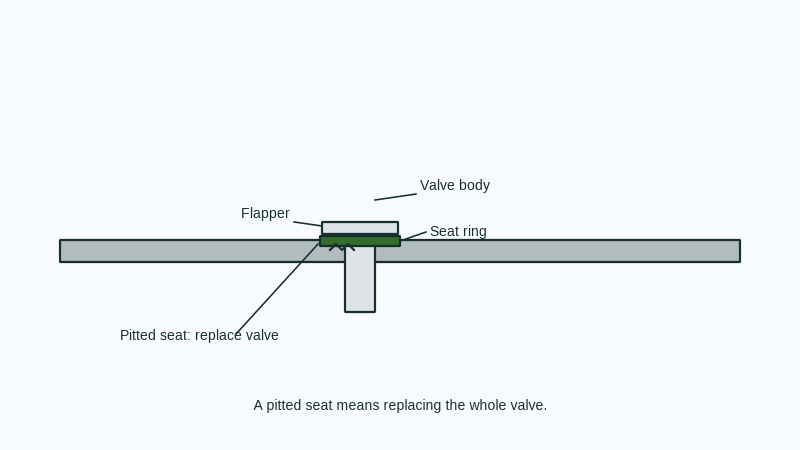
Signs the valve itself, not just the flapper, is the problem:
- The flapper is new but the toilet still runs.
- You feel a rough or cracked ring where the flapper sits.
- The overflow tube is cracked or loose.
Steps for a full valve swap:
- Turn off the supply valve under the tank, flush, then soak up whatever water is left with a sponge.
- Disconnect the supply line, remove the tank bolts and lift the tank free of the bowl. Rest it on a towel.
- Loosen the big nut beneath the tank and lift out the worn valve.
- Fit the new valve with its fresh rubber washer, hand-tightening and then adding a quarter turn.
- Set the tank back with new bolt washers, reconnect the supply, and refill.
If bolts are corroded or the porcelain looks cracked, stop. A cracked tank cannot be repaired. For a simple flapper only, see the page on flapper repair.
Should a leaking toilet be fixed quickly?
Yes, soon. A toilet that runs continuously can waste water unnoticed. The EPA calls leaks a common source of household waste and shows a meter check to find them: write down the water meter reading, keep every tap closed for two hours, then check again; any change signals a leak. A toilet is one of the first places to look.
A leaking toilet can also signal damage under the floor. Water pooling at the base or staining around the bolts is a seal or bowl leak rather than a flush valve fault. Our page on a toilet leak explains the signs, and toilets that keep running goes into the fill side.
When should I ask a plumber to repair the flush?
A plumber is worth requesting if the flapper and fill valve are already new and it still runs, the bowl cracks or leaks at the base, a shut-off valve refuses to close, or a clog will not budge. We pass your request to a nearby plumbing company, and the plumber who takes it can inspect the supply valve and wax ring too.
When you request a quote, state what you tried and describe the symptom: running, weak flush, leaking or noisy. Add the toilet's age if you know it, which helps the plumber bring suitable parts. For a failing fill mechanism, the page on a fill valve repair shows what the part looks like.
Never force a shut-off valve that refuses to turn, because a snapped valve floods the room. Close the main water valve for the whole house instead, then bring a plumber in.
Common questions
How long does a flush repair take?
A flapper or chain fix takes roughly ten to fifteen minutes. Swapping a fill valve or flush valve runs thirty to sixty minutes with standard parts. A plumber dealing with a seized shut-off valve or a cracked tank may need extra time or a return trip.
What should I ask before hiring someone to repair a toilet?
Ask if the quote covers parts, if there is a minimum charge, and if the plumber will look at the supply valve and the seal during the visit. Confirm the contractor license number using the CSLB website. Get the quote in writing before work starts, particularly when replacing the toilet is under consideration.
Why does the toilet keep running after I fit a new flapper?
A rough flapper seat, a snagged chain or a failing fill valve could be the reason. Check where the water level sits against the overflow tube, then do the dye test. Color in the bowl shows the flapper is still leaking past, and the seat on the flush valve may need replacing.
Can I shut off just the toilet while I wait?
Yes. Find the small oval valve at the wall or floor beside the toilet and turn it clockwise until it stops, which keeps the tank from refilling. Other taps keep working. Should that valve refuse to close, shut the main valve for the whole house, then arrange help.