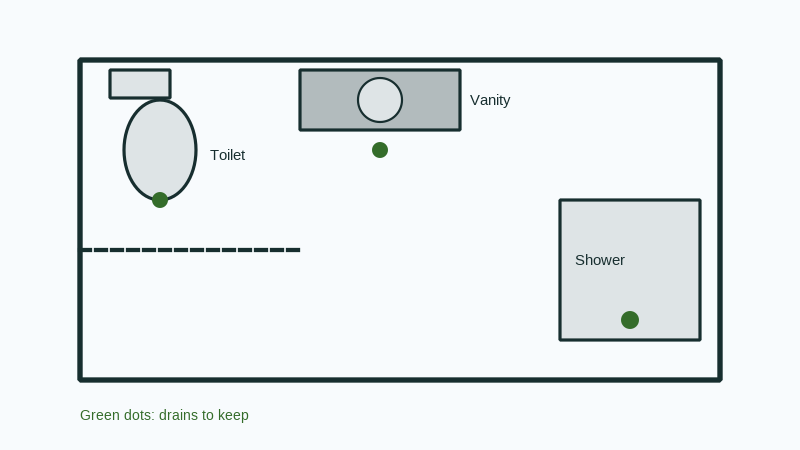
Good plumbing for a bathroom remodel starts on paper: decide where each fixture goes, check whether the drains and supply lines can reach it, and look at the age of the pipes before the walls are opened. Moving a toilet or shower costs far more than swapping one in place. This guide covers what to settle first. When the scope is clear, you can send a request through Arroyo Simi Plumbing. We pass it along to a local plumbing business, and the businesses accepting requests pay us a fee.
What plumbing decisions should I make before the remodel starts?
Decide the layout, the fixtures and the water heater plan before demolition. The layout drives everything: where the toilet, vanity and shower sit, and whether any of them move. Fixture choices decide the valve type, the rough-in measurements and the drain size. Settling these early prevents expensive changes after walls are closed.
Make this list before asking for quotes:
- Layout. Which fixtures stay where they are, and which move.
- Fixtures. Toilet, vanity faucet, shower valve, tub or shower pan. Choose the shower valve before the tile goes up, because the valve body sits in the wall.
- Fixture count. Adding a second sink or a rain shower head changes supply and drain needs.
- Water heater. A larger shower or soaking tub may stretch the current heater. If you plan a gas tankless unit, the gas line is a separate piece of work.
- Ventilation and electrical. Not plumbing, but they run in the same walls and ceilings.
Take photos and measure the existing layout. When you request a quote, the plumber needs these to price the job.
Is a permit needed for bathroom plumbing?
Relocating drains, vents or supply lines normally calls for a permit from the city building office. Replacing fixtures in the same spot usually does not. Confirm with City of Simi Valley Building & Safety Division, or City of Moorpark Building & Safety, since each has its own rules and its own hours, posted on the city site.
With a permit comes an inspection of the rough plumbing before it is covered. California wants a contractor license for paid work above a set dollar amount, and the right license belongs to whoever does a permitted job; the CSLB site lets you verify it. Owners doing the work themselves can ask the city about owner-builder rules.
A written quote should say who pulls the permit. If it is silent, ask.
In what sequence does bathroom remodel work happen?
A typical sequence is demolition, rough plumbing and electrical, inspection, wall and floor repair, waterproofing and tile, then finish plumbing and fixtures. The plumber visits twice: once at rough-in, ahead of the walls closing, and once more for the fixtures at the end. Inspections follow the rough work and the finish.
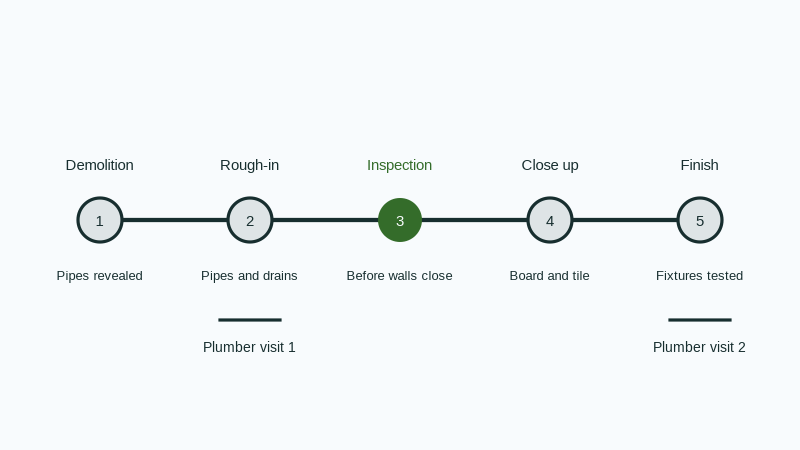
In practice it goes like this:
- Demolition. Walls, tub and old fixtures come out, which reveals the true condition of the pipes.
- Rough-in. New drain, vent and supply lines go in. The shower valve body is set to the depth the tile requires.
- Pressure test and inspection of the rough work, if a permit is in play.
- Closing the walls. Backer board, waterproofing, then tile.
- Finish. Toilet, vanity, faucets and shower trim are connected and tested for leaks.
If the order is wrong, you pay twice. Tiling before the valve is in, or setting a tub before the drain test, means tearing out finished work. Tell every trade about the schedule, so that the plumber is on site when walls are open.
How should I choose a plumber and weigh remodel quotes?
Require a quote on paper that spells out the scope: who supplies fixtures, the rough-in and finish visits, the permit, whether drywall and tile are excluded or included, and the plan if hidden pipe damage turns up. Compare like with like, and before signing, look up the contractor license at the CSLB website.
Helpful questions:
- Is the quote for labor only, or labor and fixtures?
- How is extra work from hidden damage priced and approved?
- Who orders the shower valve and when does it need to be on site?
- Are the permit and inspection part of the price?
- What is the minimum charge, and when is it applied?
For a rough idea of how labor and rates are set, see hourly plumber pricing and plumber cost in Simi Valley. For toilet and faucet work alone, there are separate pages on replacing a toilet and installing a faucet.
What pipes are in the walls of older Simi Valley bathrooms?
Houses from the 1960s to the 1990s may contain copper supply lines, galvanized steel in the oldest, and during some years polybutylene plastic. Drains are often cast iron or ABS plastic. A remodel exposes these pipes, which makes it the best time to replace old or failing ones while the walls are open.
Check what you have:
- Galvanized steel corrodes inside, narrows over time and reduces pressure. See galvanized pipe replacement.
- Polybutylene is a flexible gray or blue plastic known to fail where it meets fittings. For more, read polybutylene replacement.
- Copper is durable but can develop pinhole leaks.
- Old shut-off valves often seize. Replace them while you have access.
If many pipes are in poor shape, a bigger job may be more sensible than patching a single bathroom. When that applies is laid out in the page on repiping the whole house.
Hard water scales fixtures and valves. Find the hardness in your district's yearly water quality report.
Does the location of the toilet, shower or sink matter for cost?
Yes. Keeping fixtures on their existing drains is the cheapest route. The drain location determines where water leaves, and the slope of the drain pipe limits how far a fixture can move. Moving a toilet more than a short distance often means cutting into the floor, and on a concrete slab that means breaking concrete.
What the location of each fixture means for the work:
| Fixture | If it stays | If it moves |
|---|---|---|
| Toilet | Reuse the closet flange | New drain run, floor opened, vent check |
| Shower or tub | Reuse the drain and trap | New drain, new pan, wall and floor repairs |
| Vanity | Reuse supplies and drain | Short moves are easy, long moves open the wall |
| Water supply lines | Often reusable | New lines from the nearest accessible branch |
Many Simi Valley homes put up from the 1960s to the 1990s rest on slab foundations, or on raised floors above crawl spaces. Crawl space homes are easier to reroute underneath. Slab homes are not. Ask the plumber early whether your house is on slab or raised floor.
What can go wrong with bathroom plumbing during a remodel?
Typical problems include leaks behind the tile, a shower valve placed at the wrong depth, a drain without enough slope, and old pipe that fails once disturbed. Water damage from a small hidden leak often appears months later. Testing the new lines under pressure before the walls close catches most faults.
Prevention steps:
- Request a pressure test on the new supply lines before drywall goes up.
- Fill the shower pan with water and check that the level holds, before tiling.
- Keep the old shut-off valves out of the new walls, or replace them.
- Check that the shower valve and toilet are accessible for repair, for instance through an access panel.
- Keep the plumber's paperwork, including permit and inspection records, for resale.
A shower leak that begins after a remodel is usually a valve or pan problem rather than a fixture one.
Common questions
How many days of plumbing does a bathroom remodel need?
Rough-in often runs one to three days, depending on how much moves. Finish plumbing adds another day or less. The full remodel runs longer because of waterproofing, curing and tile. The plumber should name the days needed on site so other trades can be scheduled around them.
What should I ask a plumber ahead of a remodel?
Obtain a written scope, and learn who pulls the permit, how hidden damage is handled, and what the minimum charge is. Verify the contractor license number through the CSLB website. Also ask whether the plumber sets the shower valve at the depth your tile requires.
Should old pipes be upgraded during a remodel?
Often yes. With the walls open, the labor to replace a few feet of old galvanized or failing pipe is small next to opening the wall again later. Have the plumber quote the upgrade of exposed lines as a separate item so you can decide.
Can I keep the same toilet location?
Yes, and it is the cheapest choice. Keeping the toilet on its existing drain avoids new drain work and floor repairs. A new toilet can replace the old one on the same flange, though the flange and wax ring should be checked and replaced if damaged.