Doing a water softener install yourself is realistic when you are able to cut and join pipe, level the unit, run a drain line and plug in a cord. Most of the job is plumbing on the main supply, and a mistake floods the garage. If a step feels shaky, send a request through Arroyo Simi Plumbing and we pass it to a local plumbing business to make the connection while you handle the rest; businesses accepting requests pay us a fee.
Ahead are the order of work, the checks to make first, and how to deal with the white crust already on your fixtures.
Can I realistically put in a softener myself?
Yes, in many homes, provided the supply pipe is easy to reach and you have basic pipe skills. The tasks are mounting a heavy unit, cutting into the supply line, connecting a drain, and setting a few controls. If your pipe is galvanized steel, polybutylene or hard to reach, leave the connection to a plumber.
Two things settle whether this is a weekend job. First, the pipe material where water enters your house: copper and PEX accept push-fit or crimp fittings, while old galvanized pipe can crack when cut. Second, the layout of your garage or side yard. A softener needs floor space for the tank, an outlet nearby and a drain within reach.
Water softeners connect to the cold supply of the home, so the install does not involve gas or the water heater itself. Should you move or alter the main line, ask the city building office if a permit applies: City of Simi Valley Building & Safety Division, or City of Moorpark Building & Safety. Paid work that reaches $1,000 in labor and materials generally needs a California contractor license, which you can verify on the CSLB website.
What tools and parts go into a DIY softener install?
Gather the softener, a bypass valve if it is not built in, two flexible connectors or pipe and fittings suited to your supply, a pipe cutter, a drain hose with clamps, a level, thread tape, a bucket and towels. A shut-off valve on the supply side is wise if none is close by already.
Typical parts list:
- The softener tank and brine tank, usually one unit.
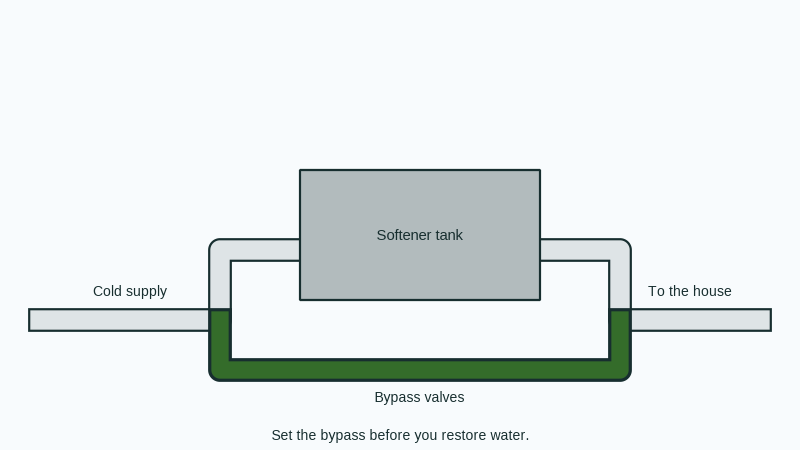
- A three-valve bypass, which lets you cut the unit out of the line without turning off the house.
- Fittings suited to your pipe: sweat, push-fit or crimp, depending on the material.
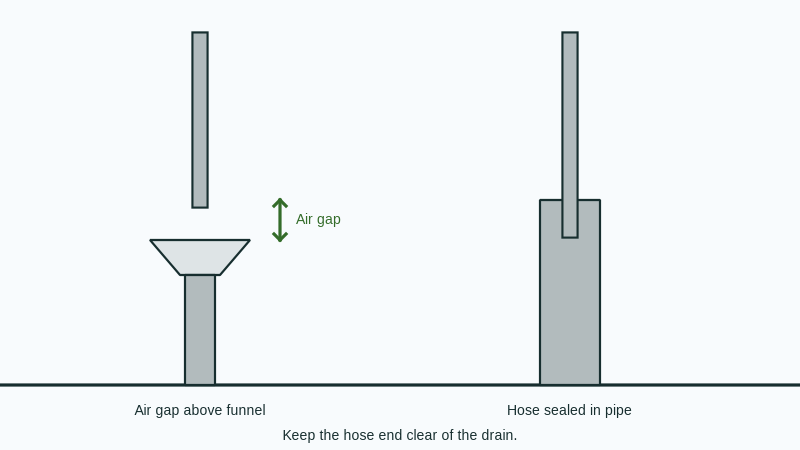
- Drain hose, set up with a gap of air above the drain so waste water cannot be pulled back into the softener.
- Overflow hose for the brine tank.
- Salt, bought after the unit is in.
Read your model's manual before cutting anything. Valve heads differ, and the manual shows which port is inlet and which is outlet. Reversing them is an easy first-time error.
How can I remove hard water scale already on fixtures?
Soak the scaled part in white vinegar, wipe it, and rinse. For a shower head, tie a bag of vinegar around it and wait about an hour, then brush the holes. Softening the water prevents fresh deposits but does not dissolve the old crust, so removing what is there is a separate task.
Some practical points:
- Faucet aerators unscrew by hand. Soak them and scrub with an old toothbrush.
- Glass and tile respond to vinegar and a cloth. Keep vinegar off natural stone, which it can etch.
- Kettle and coffee machines have their own descaling instructions in the manual.
- Water heaters. Scale builds on heating elements and in the tank, and an annual tank flush slows it. For more, see the pages on removing hard water scale and preventing scale.
Scale can conceal leaks as well. A dripping tap leaves a white line, and even a small drip accumulates. The EPA says a faucet dripping about once per second can lose more than 3,000 gallons annually, so fix the drip as well as the crust.
In what order is a softener installed?
Close the main, open a tap to drain the line, then cut the supply pipe and fit the bypass, with inlet and outlet attached. Lay the drain line leaving a gap of air above the drain, plug in the control head, then restore the water slowly and inspect every joint. Add salt last and start a manual regeneration.
Each step in more detail:
- Choose the spot. Level floor, near an outlet, on the cold line after the main shut-off and before the water heater branch.
- Shut the main. Open the lowest tap in the house so the pipe drains. Keep a bucket handy.
- Cut and fit. Measure twice, cut the pipe square, and join the bypass with the fittings your pipe takes.
- Connect inlet and outlet to the valve head, following the arrows on the head.
- Run the drain line. Hold the end above the drain with a gap of air. Do not seal the hose into a standpipe.
- Leave the bypass open, reopen the water slowly, and look for drips at each joint.
- Fill the tank with water by moving to service slowly so air escapes, as the manual describes.
- Add salt, set hardness and time, then run a manual regeneration to confirm the drain works.
Where possible, leave outdoor taps and the irrigation line on the hard supply. Soft water on a lawn is wasted salt and can harm plants. Whether you can do that depends on where your tap-off is, which is another reason to look at the layout first.
For what a plumber charges, see the price breakdown for softener installs and the guide to whole-house softener pricing. To have the work handled for you, the softener install service explains how.
When should a plumber do the installation?
Hire a plumber when the supply is galvanized or polybutylene, there is no shut-off at the entry, the drain is far off, or you doubt the work meets code. A mistake on the main line floods the house. Paying for the connection and handling the rest yourself is a sensible split.
Stop and get help as well if you spot signs of an old leak at the main, a cracked fitting, or corroded pipe. A softener will not cure those. The quote page lets you describe the job and the pipe, with a photo attached if you have one.
What should I check before buying a softener?
Check your water hardness, your pipe material, your supply pressure and your drain options. These four facts decide which unit fits, where it goes and whether the job is realistic for you. Buying the unit first and checking afterward is how people end up with a tank that does not fit or a drain with nowhere to go.
Work through this list:
- Hardness. Every water provider publishes a yearly water quality report. Most of Simi Valley is on Ventura County Waterworks District No. 8, the eastern end is on Golden State Water, and Moorpark is on Ventura County Waterworks District No. 1. Read the report for your provider and look for hardness. A home test strip is a rough check only.
- Household size. More people and more hardness mean a larger capacity unit.
- Pipe material and size at the entry point.
- Pressure. Very high pressure is hard on a softener's valve and on everything else in the house. If you hear banging pipes or see leaking fixtures, look at the water pressure regulator first.
- Salt discharge. Salt-type softeners flush brine to the drain. Ask the city and your water provider whether local rules limit that discharge before you buy.
Common questions
How long does a DIY softener install take?
Plan on three to five hours for a first install in a copper or PEX system, more if the supply pipe is awkward. Add time for the water to settle, the first regeneration, and a drip check the following morning. A plumber who does these regularly can finish faster.
What should I ask a plumber fitting a softener?
Ask whether the quote includes the bypass, the drain set with an air gap, the electrical outlet and removal of old packaging. Find out which parts they supply and what happens if a joint leaks later. Confirm on the CSLB site that the contractor holds a California license.
Will a water softener fix scale on my fixtures?
It halts new scale at the pace hard water produces it, but it does not remove old crust. Vinegar or a descaler is still needed for existing buildup. Gradually, softer water leaves less scale on taps, glass and the water heater.
Will a softener push up my water bill?
A softener draws some water for every regeneration cycle, so the bill may creep up slightly. A leak or poorly set cycle makes it worse. Compare the meter before installing and again after the first week to see whether usage shifted, and consult the page on softeners and high water bills.