Two price parts make up a whole house softener installation: the equipment, which depends on size and type, and the labor and materials to connect it to your plumbing. We print no dollar figures that we could not check against a source, so below we walk through what moves each part. Begin at the home page, and use the quote form to get written figures for your house. We pass the request on to local plumbing businesses, which pay us a fee for the ones they accept.
What goes into the total price of installing a whole house softener?
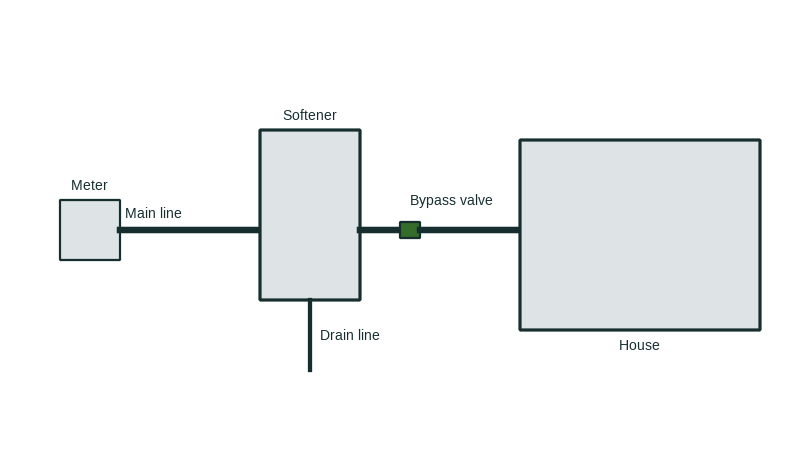
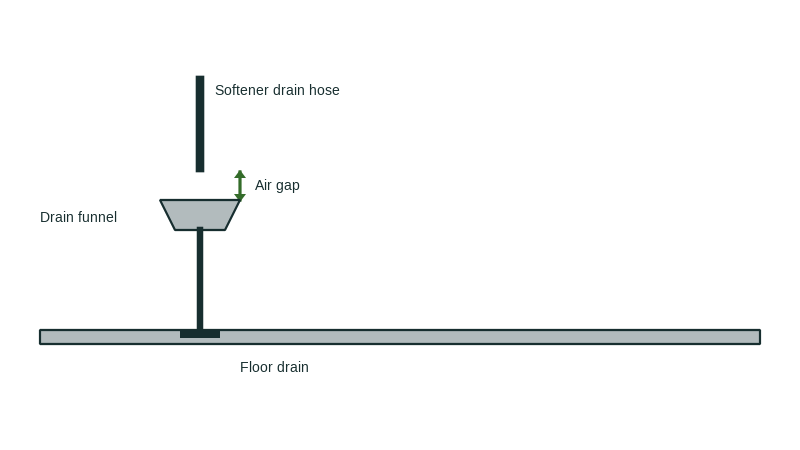
The total covers the softener, the bypass valve and fittings, the plumbing to place it on the main line, an air-gapped drain connection, a nearby electrical outlet, a spot for salt, and labor. An easy garage site with a drain close by costs less than one needing new piping or an outlet.
The line items are set out in our general guide to water softener installation cost. For a whole house setup, what matters most is the main line's size, whether there is room where water enters the house, and the distance to a floor drain, a laundry standpipe or another legal discharge point.
Many softeners fit against the garage wall next to the water heater. If the main comes in on an exterior wall, the unit may need a weatherproof enclosure. Ask the plumber where they would put it and why.
How is the right softener size worked out?
Size depends on your water's hardness and how many people use it. A plumber, or the dealer, multiplies the household's daily use by the hardness to find how much hardness the unit must remove between regenerations. Bigger is not always better, since oversize units waste salt and water.
Find the hardness number first. Your water provider's annual water quality report lists it, often in milligrams per liter, while many softener specs use grains per gallon. A single grain per gallon equals about 17.1 milligrams per liter. Your bill tells you whether Ventura County Waterworks District No. 8 or Golden State Water serves your Simi Valley address, and Moorpark is on District No. 1, so look for the matching report.
Water hardness varies across the valley and can change over the year, so a home test kit is a good double check. Do not rely on a vendor claim without a measurement. How scale damages heaters and fixtures is explained in the guide to preventing hard water scale.
Which type of softener affects the price most?
Ion exchange softeners that use salt remove hardness and are the standard choice. Conditioners without salt reduce scale buildup but leave hardness minerals in the water, and they are priced differently. The type shapes the install: a salt-based unit needs a drain and power, while a conditioner may need neither.
Compare what you want the system to do. If your aim is soft feeling water and spot-free fixtures, an ion exchange unit is the match. If you only want to slow scale in pipes and heaters, a conditioner might be enough, though results are debated and vary by supplier. Ask a plumber for the reasoning behind a recommendation and get any performance claim in writing.
Some California communities limit discharge of softener brine into the sewer system. Ask your water provider and city before buying, to avoid paying for a unit whose brine you cannot legally discharge. Do not assume that a rule exists or does not exist for your address.
What extra work can raise the quote?
Extras come from the site: a new outlet, a longer drain run, new shutoff valves, a pressure regulator, copper-to-plastic transitions, a bypass for outdoor spigots, soldering, wall penetrations, and the permit. Aged galvanized pipe at the main can also complicate the connection and nudge the job toward replacement.
A galvanized main line may lead the plumber to recommend replacing that section first; see galvanized pipe replacement and repiping for that. With high water pressure, a regulator can shield the softener and the fixtures alike.
Ask whether outdoor hose bibs will be on soft water or on a bypass. Many owners prefer to keep irrigation and hose bibs on hard water, which saves salt, and that needs a split on the line. Adding a drinking water filter at the kitchen sink is a separate choice with a separate cost.
Does a softener need a permit or a contractor?
Tying a softener into the main line is plumbing work, and California requires a contractor whenever a job needs a permit. Whether yours does depends on the city and the scope, so confirm with Simi Valley Building & Safety or Moorpark Building & Safety. Plenty of owners bring in a plumber for the installation and leave the permit question to the plumber.
Some handy homeowners manage it alone using push-fit connectors and a bypass valve, but an error can flood a garage or contaminate the line. Read our walk-through of how a softener is installed and the page on softener installation service before deciding.
Request any plumber's contractor license number, verify it with the state, and have the quote name the unit, the model and what the warranty covers.
How do I compare softener installation quotes?
Ask each business to price the same unit size and type, then compare scope: the plumbing materials, drain and outlet work, permit, first fill of salt, setup of the valve settings, and haul-away. A quote that lists only a total price makes it impossible to see where one bid is cheaper than another.
Look at ongoing costs as well. Running costs are salt, regeneration water and electricity, and the softener may change your water use. Our guide on softeners and high water bills explains the effect. Ask what the service plan, if any, covers and who services the unit.
Common questions
How long does it take to fit a whole house softener?
A simple install on a reachable main often takes a plumber a few hours, and half a day or more if new piping, an outlet or a drain is needed. The water goes off during the tie-in. Ask for a time window at booking so you can plan.
What should I ask a plumber before a softener install?
Ask which unit and size they recommend and how they chose it, where the drain goes, whether a bypass is included, whether a permit is needed and who files for it, and what the warranty covers. Also ask for the contractor license number and a paper quote you can compare.
Must someone be home for the installation?
In most cases yes: someone should open the garage, show the main shutoff and be there when the water returns. The plumber may also want to review the settings and the salt. Clear a path to the install spot beforehand.
Can I drink softened water safely?
Softened water carries a small amount of added sodium, and anyone on a low sodium diet should check with their doctor. Many households keep the kitchen cold tap supplied with unsoftened water, and a plumber can pipe the unit that way if you ask.