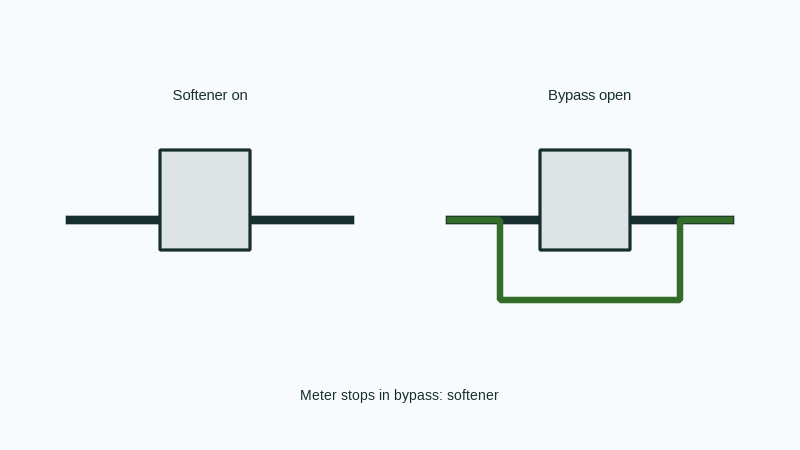
Each cycle of a properly working softener uses a modest amount of water, so it seldom explains a big jump on the bill. A faulty unit can, if its valve sticks and water drains nonstop. Check the softener first, then leaks, irrigation and fixtures. A plumber would follow that same order, and the home page lists the services should you need one.
Does a softener actually add to the water bill?
Yes, though usually only slightly. During regeneration a softener sends brine and rinse water through a drain line, which consumes extra water every cycle. With the control set well, that is a small slice of household use. A big spike points to a fault, not normal operation.
Water-wasting problems include a regeneration setting that fires too often, a control valve that sticks between cycles, a drain line that runs endlessly, and a bypass or resin fault that makes the unit regenerate again and again. Hard water also makes the unit work harder. A simple test is to listen near the softener: water running through the drain line while nobody uses any is a red flag.
What else pushes a water bill up?
Most spikes come from leaks, irrigation and fixtures. Running toilets, dripping faucets, a broken sprinkler line, a leaking heater, a slab leak and a faulty pressure regulator all raise usage. Seasonal watering, houseguests and a new pool or a refill can also push the bill higher.
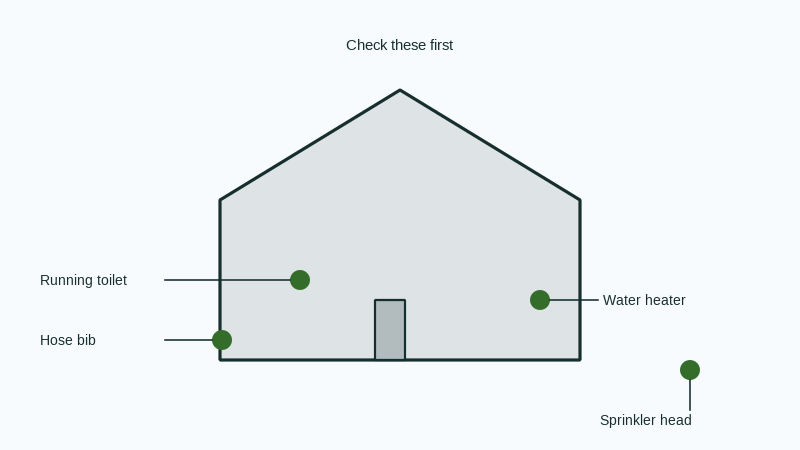
Leaks cost a typical household upward of 9,300 gallons of water per year, according to the EPA, with worn toilet flappers, dripping faucets and leaking valves among the common sources. Walk the house and test each toilet: add a few drops of food coloring to the tank, then watch for color in the bowl within ten minutes. After that, inspect hose bibs and the spaces under sinks. More causes are listed in the guide on why bills climb.
Is a damaged sprinkler head able to raise the bill?
Yes, and it is one of the most frequent hidden causes. A broken head or cracked lateral line sprays or seeps water on every cycle, often at night when nobody notices. One broken head can use a large amount of water over a month, especially when it runs across several zones.
Watch the sprinklers during a cycle for geysers, soggy patches, mud, or stripes of lush grass along the pipe run. Check the shutoff on the irrigation supply and repeat the meter test with irrigation off. A cracked line may lie underground, with the water soaking away. If the meter still runs with irrigation off and all fixtures closed, the leak could be on the main line, where a plumber can use leak detection to locate it. The longer guide covers a big bill when no leak can be seen.
When should a plumber step in?
Call in a plumber when the meter moves with everything off, if the softener sends water to the drain between cycles, if you find wet slab or lawn patches, or if the source stays hidden. A plumber has meters, listening gear and leak detection tools that homeowners lack.
Give details when requesting quotes: the last two bills, what the meter test showed, whether the softener is on bypass and its brand. Ask whether the visit price covers diagnosis only or includes repair. Fixing a softener control valve differs from replacing the unit, so ask about options. The softener installation cost page describes what a new install involves, and details go through the quote form.
Can hard water inflate the bill?
Hard water does not increase the volume of water, but it can raise the costs around it. Scale builds up in heaters and on fixtures, so heaters labor harder and aerators clog. A softener reduces that, at the price of a little regeneration water and salt.
Simi Valley's water arrives via Calleguas Municipal Water District, then through Ventura County Waterworks District No. 8 for most of the city, or Golden State Water in the eastern end. Ventura County Waterworks District No. 1 serves Moorpark customers. Hardness varies, so consult your supplier's yearly water quality report rather than guessing. Hard water scale prevention covers other remedies.
How can I tell if the softener is to blame?
Inspect the softener's drain line and listen. Water audibly flowing to the drain when the unit is not regenerating, or a wet or running drain hose, suggests a stuck control valve. Read the display for the regeneration schedule and compare it with how often the unit actually runs.
Next, make sure nothing in the house is using water and check the meter, as the EPA suggests: note the number, wait two hours with no water running, and read it again. A changed meter reading probably means a leak. Then set the softener to bypass and repeat. If the meter stops moving, the softener is the source. A plumber can service the valve, brine line and drain. The guide to softener installation explains how the unit connects.
Why is the bill high when the meter test is clean?
A clean meter test means water is not leaking while the house is idle. The bill may be high due to real use, a meter reading error, a billing change, or an intermittent leak that did not show during your test.
Compare bills from month to month and follow the usage line, not just the dollar amount. Ask your supplier whether the meter was read or estimated, and whether rates changed. If one month spiked and the next dropped, you probably had a one-off event such as a pool fill or a running toilet that someone then fixed. Your supplier's customer service can often pull an interval reading, and a plumber can check pressure, which affects fixtures. Keep notes on every change.
Common questions
How long does tracing a high bill take?
A meter test needs roughly two hours with no water running, and checking toilets and sprinklers takes an hour or less. A plumber with detection gear can often find an accessible leak in one visit. Slab and underground leaks may take longer. The plumber states the time on the quote.
Which questions belong on my list when hiring for a bill problem?
Ask what the visit covers, whether leak detection is included, what happens if a leak turns up, and whether you receive a written quote ahead of any repair. Obtain the contractor license number, then check it on the state board website. Request a clear report of what was tested.
Must I be present during the inspection?
In most cases, yes, at least when it begins, so the plumber can see the meter, shutoff valves and softener and learn what you have noticed. If the softener is in a locked garage, arrange access. Tell the plumber about pets and sprinkler timers before work begins.
How much water does one regeneration use?
It depends on the model and settings, and the manufacturer's manual gives the figure for your unit. Newer demand-initiated units regenerate according to use rather than on a fixed day, which uses less. If yours regenerates every night, ask a plumber or the installer to reset it.
Is a salt-free softener cheaper on the water bill?
A salt-free conditioner never regenerates, so it avoids the rinse water, but it does not remove hardness the way a salt softener does. It changes how scale forms instead. When scale is the problem, ask a plumber which option suits your water and your goals.