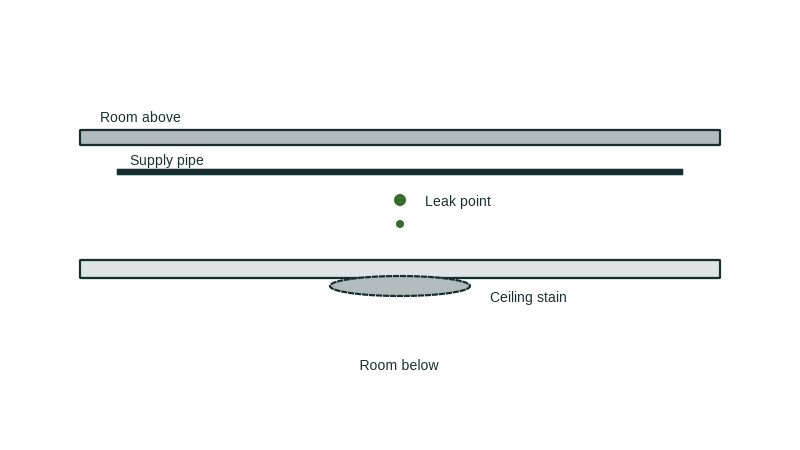
When water drips from above, close the main water valve before anything else, then keep people and pets clear of any wet bulge or light fixture. Catch the drips, carry belongings out and photograph the damage. Finding the source comes later. The home page lists the other plumbing help we pass along, and someone reads the quote form on weekdays between 9am and 5pm. Nothing here is dispatched around the clock, so stop the water yourself first.
What are the first moves when a ceiling starts leaking?
Shut the main water valve, turn off power to the affected room only if the breaker can be reached without wading through water, set buckets under the drips and move furniture aside. If the ceiling is swollen with trapped water, make a tiny opening at its lowest spot with a bucket underneath, so it drains under control. Stay clear of wet light fixtures.
Mixing water with electricity is dangerous. If a ceiling light is dripping, leave the switch alone, stay out of the room and turn the circuit off at the panel from a dry spot. If that cannot be done safely, get out and contact the electric utility, or 911 if there is danger. A visibly sagging ceiling can collapse, so never stand under it.
Take photos and short videos before cleaning up, and keep the failed pipe if the plumber replaces it, since an insurer may want to see it.
How do I find where a ceiling leak starts?
Begin with the room above. A bathroom or laundry right overhead suggests a supply line, drain, shower pan, toilet seal or washing machine hose. On a top floor, suspect a roof leak, which often appears only in rain. A stain that grows while nobody is using water upstairs suggests a pressurized pipe.
Work in this order: if the water stops after you close the main, a supply pipe is to blame; if it arrives only after rain, think roof or flashing; if it shows up after someone showers or flushes, think drain or fixture. More clues are listed in how a ceiling leak shows itself. A stain showing no active drip is treated under ceiling spots without a leak.
The EPA suggests checking your water meter, then checking it again after two hours with all fixtures off. A moving meter makes a leak likely, though not necessarily the one you can see. Small drips can hide for months, and the damage builds inside the cavity.
How is a leaking pipe above a ceiling repaired?
For a quick stopgap, shut off the water, dry the pipe and apply a repair clamp, epoxy putty or a wrap of self-fusing silicone tape. The permanent fix involves cutting away the damaged section and splice in a proper fitting. Because a pipe in a wall or ceiling cavity is hard to reach, the lasting repair should come from a plumber.
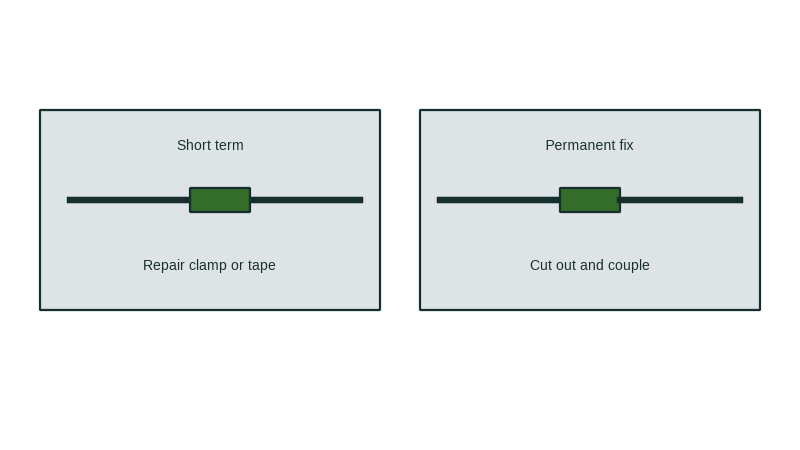
Temporary repairs buy hours, not years. A pinhole in copper often signals thinning elsewhere in the pipe, as the guide on pinhole leaks in copper explains. For leaks beneath a sink or exposed inside a cabinet, see fixing a pipe leak under the sink. For leaking supply lines in general, read leaking water pipe repair.
Dirty or smelly water may be a drain leak, so avoid contact and leave it to a plumber. In California, work on gas or the main line needs a contractor.
Which sealant works on a pipe that is leaking?
No sealant gives a lasting fix on a pressurized line. For small leaks on dry metal pipe, the usual short-term picks are epoxy putty and a pipe repair clamp, and self-bonding silicone tape can slow a drip. Thread tape is meant for threaded joints and does nothing on a pipe that is leaking. Swap out the damaged section as soon as you can.
Choose a product that suits both the pipe and the leak. Epoxy putty needs a clean, dry surface. A clamp works best on straight runs. None of these belongs on a gas line. Wait on paint or caulk over a stain until the pipe is repaired and the cavity has dried, or mold will grow behind the finish. Keep the label of whatever you apply so the plumber knows what is on the pipe.
Does a burst pipe leak differ from other ceiling leaks, and how long is the repair?
A burst pipe releases far more water, floods fast and demands shutting the main at once. Stopping the flow and cutting in a new section often takes a few hours, but the full job also covers drying, opening and patching drywall and repainting, which can run to days. Leaks through a basement or apartment ceiling may involve the unit above, so find out who owns the line.
To confirm a break, read about spotting a burst pipe, and for help see the emergency burst pipe page. Apartment renters should put the problem to the property manager or landlord in writing and take photos. A small ceiling leak is not small if it recurs, because slow leaks cause mold and rot over weeks.
After the pipe is fixed, drying counts as much as the repair. Ask the plumber if a drying service is needed for wet insulation or drywall. Claims are covered in the burst pipe insurance guide.
Common questions
What time does a ceiling leak repair need?
For the plumber, stopping and fixing one leaking pipe is often a matter of a few hours. Drywall repair, drying and paint add days. If a roof or a drain is to blame, another trade may be needed first. Ask for a written plan covering each stage and who handles the patching.
Which questions go to a plumber about a ceiling leak?
Find out how the source will be located without opening more ceiling than necessary, whether the damaged pipe gets repaired or replaced, what the visit fee covers, which party handles drywall patching and whether the quote changes if the leak is bigger than it looks. Verify the contractor license number with the state.
Must I be home while the repair happens?
Yes, or a person you trust. Access must be arranged for the room above, the attic or crawl space, and your main shutoff. Renters should arrange access through the landlord. Clear belongings from the work area and mention any other drips or stains you have spotted.
Can a ceiling leak be a slab leak?
Not usually. A slab leak sits in pipes under a concrete floor, so water shows at floor level. A ceiling leak sits in a pipe, drain or roof above. Both can appear as a rising water bill, so if no source is visible, read the slab leak detection guide.