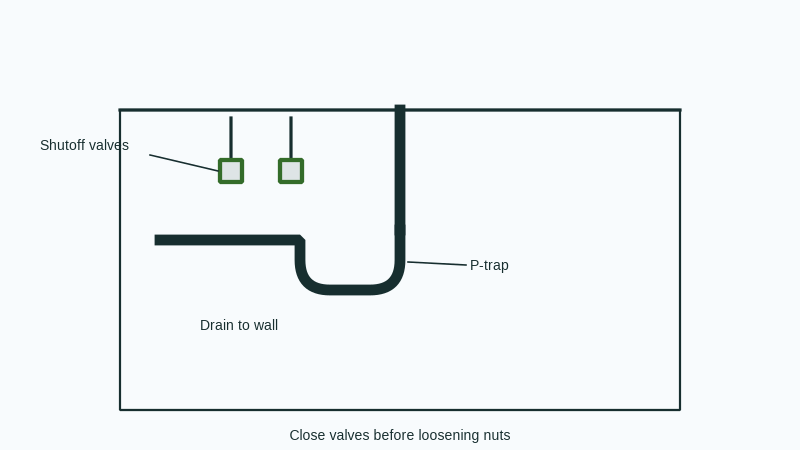
Few plumbing complaints beat a wet cabinet floor in a kitchen or bathroom, and the cause is usually simple. The challenge is locating where the water begins, since it creeps along pipes and falls from the lowest point rather than the leaking one. Below is a method for tracing it, fixes for the usual culprits, and the moment to stop. Related jobs are listed on the disposal, faucet, sink and shower page. When a problem is past a quick fix, we pass your request along to a local plumbing business serving Simi Valley or Moorpark.
Where is the water under my sink actually coming from?
Dry everything first, then trace. Empty the cabinet, wipe the pipes and the cabinet floor, spread a dry paper towel across the bottom, and run the faucet, then the drain, then any garbage disposal you have. Shine a flashlight on each joint. The first spot on the towel to turn wet marks the source.
Test in stages, because the source depends on the timing of the drip:
- Drips only while the faucet runs: supply lines, the shutoff valves, or the faucet's own base.
- Drips as the sink drains: the drain basket seal, the slip nuts on the tailpiece or the P-trap, or the trap's washers.
- Drips from the disposal: its flange, side seal or housing. See our page on disposal repair.
- Drips constantly, even with the water off: the shutoff valve stem, a pinhole in the supply pipe, or a leak higher up in the wall.
A dry towel is cheap and beats guessing. Touch each connection with a dry finger, then check again after fifteen minutes.
How do I repair a dripping P-trap or drain joint?
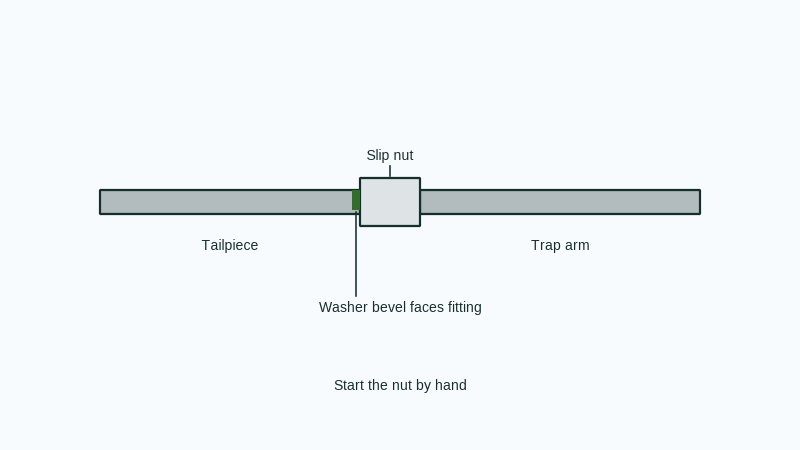
Start by tightening the slip nuts by hand in small quarter-turn steps. If water still escapes, loosen the nut, make sure the rubber or plastic washer lies flat without cracks, replace it if worn, and hand-tighten again. Put a bucket underneath before loosening anything, because trap water spills.
Tips that prevent trouble:
- Plastic traps use a coarse thread that cross-threads readily. Begin the nut by hand and never force it.
- Washers have a direction: the bevel faces the fitting. One fitted backward leaks.
- Misaligned pipes are the usual reason a joint will not seal. The trap should line up without force, and trimming a tailpiece or adding a new trap kit fixes it.
- Putty at the drain basket: when the drip appears where the strainer meets the sink, lift it out, scrape off the old putty, and reseat it using plumber's putty or silicone before tightening the locknut.
Replace a cracked trap or tailpiece rather than patching it. A new plastic trap kit is an inexpensive part at any hardware store; tell the store the right diameter (many kitchen drains are 1-1/2 inch, but measure yours).
How do I fix a leaking supply line or shutoff valve?
Close the shutoff valve below the leak by turning it clockwise, detach the supply line, and replace a braided flexible line with a new one of the same length and fitting size. Tighten snugly, not hard. If the drip is at the valve stem, tighten the packing nut slightly; if it keeps leaking, replace the valve.
If the shutoff valve will not turn all the way or does not stop the flow, you may need to close the whole house's main before working. An old valve left untouched for years can break or leak when moved. If so, stop, close the main and arrange a plumber, because replacing the valve means soldering or fitting onto the supply pipe.
Replace any braided line showing rust, bulges or kinks. A failed line can flood a house, so many plumbers advise swapping them whenever a faucet is replaced. For repairs on the faucet side, see fixing a leaky faucet.
Can a pinhole or a cracked pipe under the sink be patched?
A clamp or a dab of epoxy putty may hold a pinhole briefly, but treat it as a stopgap before a proper repair, not a cure. Copper pinholes often signal spreading corrosion, and a plumber replaces the pipe section, with a permit when required. Never trust tape to hold a pressurized line.
If a pipe is spraying, close the shutoff or the main right away. For a leak in a pipe running into the wall, do not cut the wall open yourself unless you know where the lines and wires run. Keep the water off and arrange a plumber. The EPA estimates that leaks drain more than 9,300 gallons annually from a typical household, so even a small drip deserves a lasting fix.
With older copper in your house, several pinholes within a few years may mean the pipe is nearly worn out. See the guide to how frequently a house should be repiped.
When is this job too big to handle myself?
Bring in a professional if water is escaping inside a wall, the shutoff valves cannot hold, a pipe is corroded or cracked, water has reached the floor below, or the cause stays unclear. A plumber fits valves and pipe sections properly and can inspect the rest of the cabinet.
Gas and permits: with a gas appliance nearby, a gas smell means leaving the building first; from outdoors, SoCalGas answers at 1-800-427-2200. A permit is usually needed to replace a water heater or run new pipe in walls, and a contractor license is generally required in California on work valued at $1,000 or more. Simi Valley Building and Safety is on Tapo Canyon Road; Moorpark Building and Safety is on Science Drive. Confirm hours before visiting.
Dry the cabinet thoroughly too. Wet particleboard swells and grows mold within days, so run a fan and replace a ruined cabinet floor if it has gone soft.
Common questions
What is the usual time for an under-sink leak repair?
Tightening a trap or swapping its washer takes minutes. Changing a trap kit or a supply line often runs under an hour. A plumber fixing a valve or pipe section generally needs an hour or two. The plumber's time estimate should show up in the written quote.
Which questions should I ask before hiring someone for a leaking pipe?
Request a written quote listing parts and labor, along with the plumber's contractor license number, which you can verify through the state licensing board. Find out whether the price includes the shutoff valves, whether any wall or cabinet repair is covered, and have the warranty put on paper.
Does someone have to be home for the repair?
Yes, an adult should be there to clear access to the cabinet, point out the main shutoff, and approve any extra work beforehand. When you cannot attend, let the plumber know while arranging the timing, and empty the cabinet of cleaning supplies so the pipes are easy to reach.
Why does my sink pipe leak only sometimes?
A drip that appears only with a full sink, or while the dishwasher or disposal drains, points to a slip nut, a trap washer or the drain basket seal. Fill the sink and let it drain over a dry towel to mark the spot. Our faucet guide covers the other cases.
Does a leak under the sink count as an emergency?
Not usually, if closing the shutoff valve or the main stops the dripping. It turns urgent when water is spreading, reaching electrics or soaking the floor. Close the main and arrange a visit. Mop up standing water, put a bucket under the drip, and browse more guides while you wait.