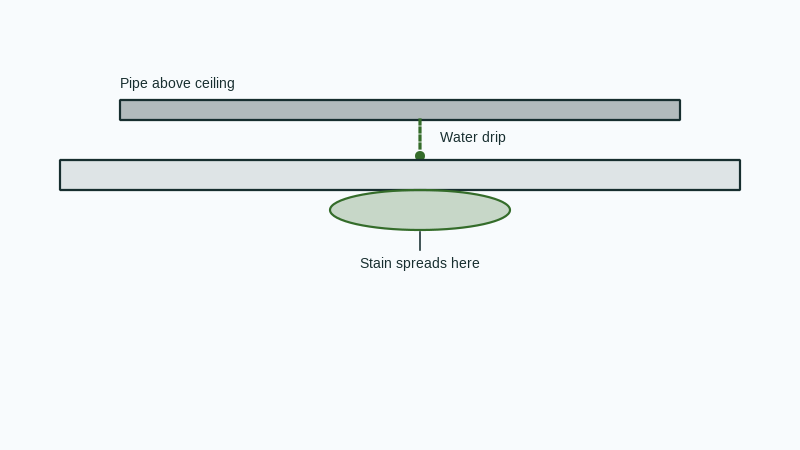
Watch for a yellow or brown stain, bubbling or peeling paint, a soft or drooping patch, a musty smell, visible drips and mold spots. Growth following rain points to the roof, while growth following a shower points to plumbing. The request form on the home page is there if you want a plumbing business to take a look; we pass requests to local businesses, and those that accept them pay us a fee.
Which early signs mean a ceiling is leaking?
The first signs are usually a faint yellow or tan ring, a patch where paint turns glossy or flaky, and a slight sag. You may also notice a musty odor or hear dripping inside the wall or ceiling. Stains often have a darker edge, because water carries dirt to the outline.
Wait to paint over a stain until you know its cause. Trace a pencil line around the edge and write the date. If the stain grows past the line over the following days, the leak is active. A stain whose size stays put may be an old leak that has dried, though it can return.
What does a sagging or bubbling ceiling indicate?
A sag shows the drywall is soaked and weakened. A bubble is water trapped behind the paint. Either way the leak has been active for some time, and the board may come down if left. Keep people out from beneath it, and have it opened so the water can drain.
Do not poke it near a light fixture or switch. If water is reaching a light, cut the circuit first. For that situation, see leaks around a ceiling fixture. The wet drywall, insulation and framing will have to dry, and if mold is already growing, restoration is a separate job after the plumbing is sorted.
Is the culprit plumbing, the roof or the AC?
Timing is the best clue. A leak that follows rain points to the roof. A leak after someone uses a shower, tub, toilet or washer above suggests drain or supply plumbing. A leak on warm days or when the air conditioner runs suggests a clogged condensate line. A steady leak with no pattern suggests a pressurized pipe.
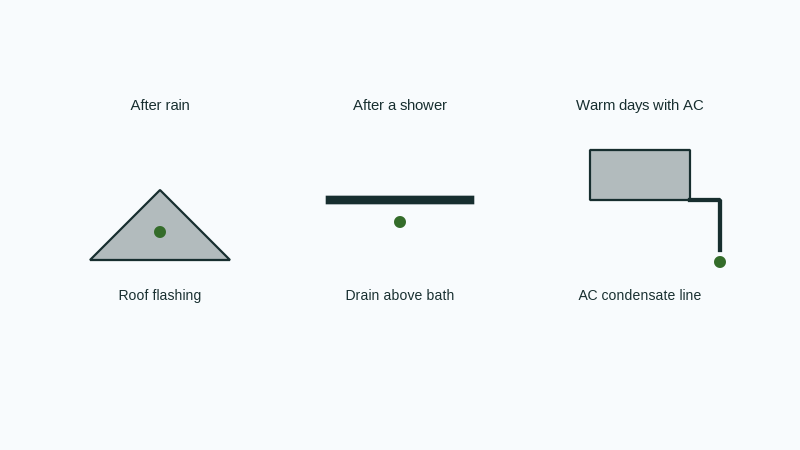
Location helps. A stain below a bathroom is likely plumbing. A stain near an outer wall or under the attic is more likely the roof or flashing. A stain near the air handler or in a hall closet below the attic equipment is more likely condensate. A plumber can test supply and drain lines and say whether the source is theirs.
What does a burst pipe sound like, and what appears outdoors?
A burst pipe may hiss, rush or drum while fixtures are off, or sound like running water inside a wall. Outdoors, watch for soggy ground, a green patch of grass in the dry season, a new puddle with no rain, low pressure and a sudden jump in your bill.
If you hear running water with nothing on, shut the main and listen again. If the sound stops, a supply pipe is leaking. Read about telling when a pipe has burst, and for an underground line, signs of an underground pipe burst.
Can a pinhole in copper pipe leak into a ceiling?
Yes. Pinholes open when corrosion eats through a copper pipe from inside, and a hair-thin stream can soak a ceiling over weeks. Causes include water chemistry, fast flow, flux residue or old age. The leak often shows as a small crust of green or white on the pipe.
As the pipe ages, pinholes tend to appear at several spots along the same line. One repair may buy time, but a pattern of pinholes is a reason to consider replacement. For the longer view, see pinhole repair in copper pipe and repipe the house.
Why is my water bill up when I find no leak?
Hidden leaks in ceilings, walls and slabs may stay out of sight for a long while, and a bill rising with no change in usage is the clue. Running toilets, irrigation faults and leaks on the line to the house also raise the bill without visible water.
Check your meter with everything off: if the dial moves, water is escaping. Look at your provider's bill, which names who serves you. Most of Simi Valley is on Ventura County Waterworks District No. 8 and the east end on Golden State Water, and Moorpark is on Ventura County Waterworks District No. 1. Then read a high water bill without a visible leak.
What damage follows if I wait?
Delay lets water soak insulation, rot framing, loosen drywall and encourage mold. Wiring in the ceiling can be damaged, and a sagging section can drop. A small repair can grow into a big rebuild within weeks, so a growing stain warrants a quick visit.
Shut the water if the leak looks pressurized, and keep a bucket and towels nearby for slow drips. Take dated photos for your insurer. What to keep is explained in the article on insurance and burst pipes.
How can I have a plumber check it?
Send the quote form noting where the stain is, what lies above it, when it began and whether it shifts with rain, showers or the air conditioner. We pass it to local plumbing businesses, and one replies with a price and a time. Requests are read on weekdays, 9am to 5pm.
Ahead of the visit, clear the room, locate the shutoff valve and be ready to describe what you tried. Likely costs are in plumber leak detection cost.
Common questions
How long does pinpointing a ceiling leak take?
A leak with an obvious pattern, such as one below a shower, may be found on the first visit. A hidden pipe or a patternless leak takes longer and needs more tests. The plumber should explain what gets checked first and what each result means.
What should I ask a plumber about a ceiling leak?
Ask how the source will be found, whether opening the ceiling is in the price, who patches the drywall, and whether an insurance report is provided. Also get the plumber's California contractor license number and check it on the state CSLB website.
Does a brown stain always mean a leak?
Not always. Old stains can come from a past leak that dried, from sweating on a cold duct, or from smoke or dust marks. Date and mark the stain. If it grows or the ceiling feels damp, regard it as active and have a plumber look.
Is it safe to wait a day or two?
When the leak is slow and you have closed off the likely source, a day is often fine. If it drips steadily, sags or sits near a light fixture, act immediately. Cut water and power to the area, and arrange a plumber.