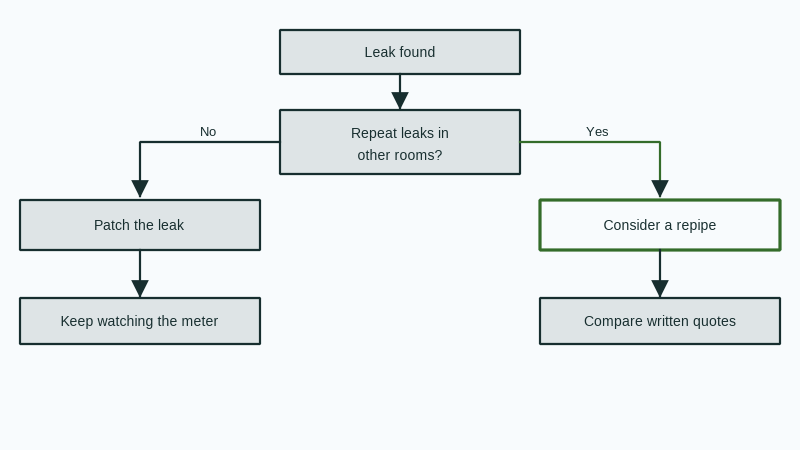
When does replacing the pipes beat fixing a leak?
A patch is the right answer when the pipe is sound and a single spot has given out. Replacement wins when the whole line is wearing thin, because each fix only sends the leak to the next weak point. Several leaks, a pipe material with a record of failing, or discolored and sluggish water all point that way. The full repiping service page walks through the way a job unfolds.
Look at the pattern. A lone pinhole in 30-year-old copper is a repair. Add a second and a third within a couple of years, in separate rooms, and the pipe walls are clearly thinning from inside. Every extra repair then costs money, opens drywall and risks water damage, and the running total creeps toward the price of new pipe.
A repipe also tells you exactly what runs inside your walls. For many owners, knowing that is the real payoff.
What are the signs a house needs repiping?
The clearest warnings are pinhole leaks that keep recurring, brown or rusty water, pressure that keeps sinking, a metallic taste, and a pipe material with a known failure record. Green crust on copper joints, flaking galvanized steel and plastic pipe stamped polybutylene each justify having a plumber take a look.
Practical checklist:
- Two or more leaks in different places within a short span.
- Rusty or discolored water that clears slowly after running a tap.
- Pressure that has declined at every fixture, with a good regulator.
- Damp patches on ceilings or baseboards with no obvious source. See ceiling leaks.
- A bill that keeps rising although your usage has not changed; see bills that climb without a visible leak.
According to the EPA, the average household loses more than 9,300 gallons of water per year to leaks, so a house leaking inside its walls can shed a great deal before any stain shows.
Which pipe materials are worth replacing?
Galvanized steel and polybutylene top the replacement list. Rust forms inside galvanized pipe, which restricts flow and stains the water. Polybutylene went into several million North American homes from roughly 1978 to 1997; chlorinated water attacks it, causing leaks at the fittings. Copper gets replaced once pinholes keep appearing.
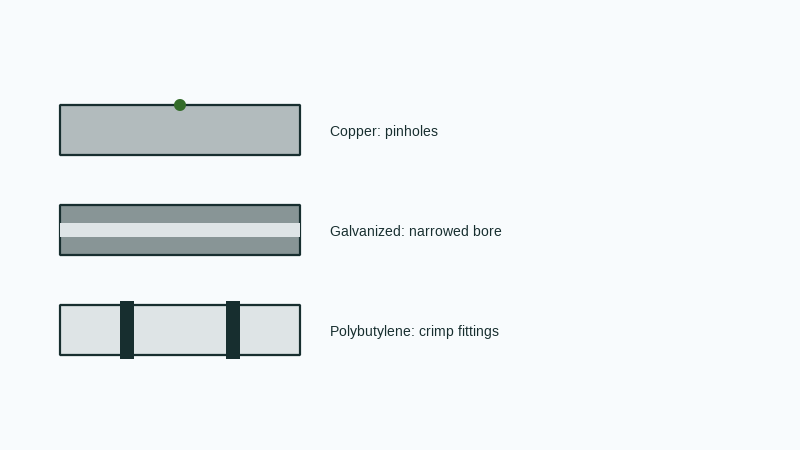
Each material has its own page. For plastic pipe from the late 1970s to 1990s, see polybutylene pipe replacement. For rusty older steel, see galvanized pipe replacement. If you are choosing what goes in next, PEX versus copper compares them.
Many Simi Valley tract homes were built in the 1960s, 1970s, 1980s or 1990s, so any of these materials could turn up depending on street and year. A short look at exposed pipe beside the heater, or where the supply line enters the house, lets a plumber identify yours. The age of the house alone is not enough to go on.
What do you gain from repiping?
Repiping brings fewer leaks, more even pressure, cleaner water and an end to repeat repair bills. The new system is also documented, from pipe material to fittings and routing, which helps at sale or insurance time. Against that stand the price, patched walls and ceilings, and a few days of disruption.
Benefits in plain terms:
- Leak risk drops. New pipe with new fittings removes the weak points.
- Pressure and flow recover if corrosion had narrowed the old pipe.
- Water clears when rust and scale stop shedding into the supply.
- Planning replaces emergencies. You choose the week, not a flood.
Expect drywall openings at intervals, a stretch of daytime without water and a total well above a spot repair. Weigh that against how many times the old pipe has already failed: the more it has, the stronger the case.
What will a repipe cost, and how long will it take?
The price depends on house size, bathroom count, pipe material, wall access and how much drywall repair is bundled in. We give no dollar figures because none are verified for this page. Timing also varies from house to house. The plumber should put both in writing after walking through the home.
Look at the quote to see if drywall patching and paint are included; that line is often priced separately or omitted. Also ask if the permit fee is part of it. In Simi Valley, the City's Building and Safety Division handles permits; Moorpark routes them through its own Building and Safety office. Any permitted job in California calls for a contractor license, so check the number before signing. The repipe cost guide lists what moves the price.
With only one leak, have the plumber compare repair and repipe in writing; the page on repiping intervals can help you decide.
If these signs match your pipes, ask for a written repipe quote and describe the leaks, any pipe you can see and how old the house is. Your request goes from us to a nearby plumbing company, and the businesses that accept requests pay us a fee. Someone reads incoming requests Monday to Friday, 9am to 5pm. The Arroyo Simi Plumbing home page shows how the service works.
Common questions
Is repiping a house worth it?
Usually yes, when the pipe keeps springing leaks or is built from a material that has a record of failing. It pays off less for one isolated leak in sound pipe. Ask the plumber to write out projected repair spending over the next few years beside the full replacement price, so the decision rests on numbers.
Which symptoms tell me my pipes are failing?
Watch for recurring leaks, rusty water, dropping pressure, green crust on copper, or polybutylene plastic pipe from 1978 to 1997. A plumber can inspect exposed pipe near the heater and meter and test pressure. Some homes were partly repiped, so the house's age alone proves nothing.
Can I repipe a house myself?
Realistically no. A full repipe means permits, inspections and opening walls, and California requires a license for a contractor taking any permitted job. Homeowners can handle small repairs, but the plumber taking this on should obtain the permit and answer for the finished work.
Does repiping hurt home value?
No verified local figure exists for us, so none appears here. Buyers and insurers do ask about pipe material, and a documented new system removes a common worry. Store the permit record with the final invoice so you can produce both later when asked.
Is polybutylene really that bad?
It is linked to leaks and failures, especially at fittings, when chlorinated water attacks it. Failure can take years or decades, and the damage happens inside the pipe, so it is hard to judge from outside. Replacement is the lasting solution; the same-topic guide is on polybutylene replacement.
What if only part of the house has bad pipe?
Replacing only a section is possible when the failing run stands apart, for example one bathroom group. A plumber can price a partial job and a full one. Partial work can leave old pipe elsewhere, so ask what risk remains.