No house gets repiped on a set number of years. Once is typical, and many houses never need it. The deciding factors are the material inside the walls, how many leaks it has had, and whether patching leaks one by one has begun to cost more than replacing the lines. This page helps you weigh that for a Simi Valley or Moorpark home. For how the work proceeds and what it covers, see our hub on repiping and pipe replacement. Your request goes through us to a local plumbing business, which pays us a fee for taking it, and a written quote comes to you before work starts.
How long do household pipes normally last?
Material, water and installation all play a role, so there is no single number. Galvanized steel tends to rust from within and is usually first on the replacement list. Copper can last a long time but may develop pinhole leaks. Modern plastic such as PEX is newer, so its track record is shorter. A plumber can inspect and advise.
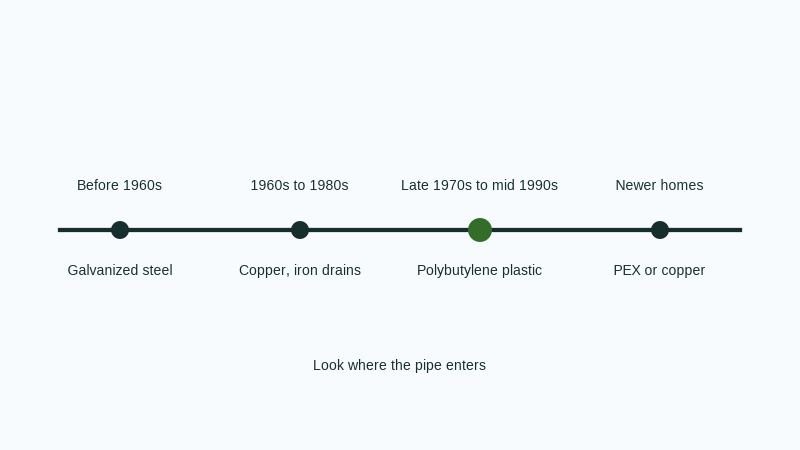
A rough guide to what you may find, by the age of the house:
- Homes before the 1960s: galvanized steel is possible, and a few have already been redone in copper.
- 1960s to 1980s tract homes: often copper supply lines, with cast iron or plastic drains. This is the bulk of Simi Valley's older stock.
- Late 1970s to 1997: several million North American homes were plumbed with polybutylene, a gray plastic linked to leaks, so watch for it. If you spot gray or blue plastic pipe with this marking, ask a plumber about it soon.
- Newer homes such as Wood Ranch: more likely PEX or copper, with a shorter track record, so inspect rather than assume.
Your own walls may not match the typical case, so it pays to look at the pipes around the water heater, under the sinks and at the main shutoff. Note the pipe color and any markings, and photograph them.
At what point should I have a plumber inspect my pipes?
Bring one in after two or more leaks, when the water runs colored, when you find gray plastic piping, or when you are buying a house from the 1960s to 1990s and want to know what lies inside the walls. A plumber can pressure test, scope drains with a camera and give a written opinion.
A good inspection report names the material, shows where it has failed, and says if a partial repipe (one section or one floor) would be enough. A partial repipe can be a sensible middle path.
What does a repipe involve, and is a permit required?
A whole-house repipe usually means no water for a day or more while new lines go through walls and attics, each fixture is connected, the system gets a pressure test and the openings are patched. The work needs a plumbing permit, so the job must go to a contractor who holds a California license. Simi Valley and Moorpark each run their own Building and Safety office.
Never let a contractor skip the permit to cut cost. A job that requires a permit in California must go to a contractor who holds a California license, and the work should be inspected. Check the license number on the contractor board's website at cslb.ca.gov. California also limits deposits to the smaller of $1,000 or 10 percent of the contract price.
For Simi Valley addresses the City of Simi Valley Building and Safety Division issues permits, and for Moorpark addresses Moorpark's own Building and Safety Division does. Both post their permit steps online, so confirm current requirements with the right office.
Which is better for repiping, PEX or copper?
California homes use both, and either can be installed well. Copper has decades of history, resists heat and can be repaired; it costs more and aggressive water can attack it. PEX bends, installs quickly and has fewer joints; it is newer, and sunlight and certain chemicals matter. Ask the plumber which they recommend and why.
Check what local code and your insurer say before choosing. For more on the trade-offs, read the PEX versus copper comparison. Water chemistry matters too: Simi Valley and Moorpark water is supplied through the Calleguas Municipal Water District, but no hardness figure has been verified here, so look at your supplier's yearly water quality report.
Is a repipe smarter than fixing leaks one at a time?
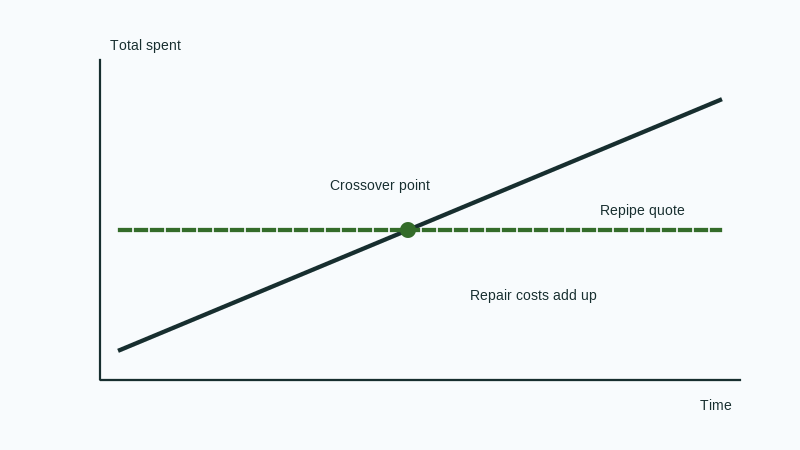
Repair fits an isolated failure in otherwise healthy pipe. Repiping fits cases where the pipe itself is failing, since each repair is a patch on a line that will give way elsewhere. Total what you have already spent, then have the plumber put a repair price beside a repipe price.
An honest comparison weighs more than price. Repiping opens walls and ceilings and brings a few days of disruption, plus drywall repair and painting. A leak repair may be quick. Yet a house with failing pipes keeps causing water damage, which is expensive and can complicate insurance. Read our article on insurance and burst pipes before assuming a claim will fund a repipe, because policies often treat wear and gradual leaks differently from sudden bursts.
Which warning signs point to a repipe?
The main warnings are leaks that recur in different spots, discolored or rusty tap water, pressure falling at several fixtures, green crust on copper joints, and pinhole leaks that keep returning. One leak is a repair; three leaks in two years form a pattern worth pricing against replacement.
Add these to the list:
- Orange or brown water the first time a tap runs in the morning, which can mean rust inside the pipe.
- Pressure that declines over time even though the regulator tests fine.
- Wet marks on ceilings, floors or walls that come back after patching.
- A water bill that creeps up though your habits stayed the same. The checks are listed on the page about a high bill and no visible leak.
- A plumber's report that the pipe walls are thin or corroded.
By EPA's count, leaks waste over 9,300 gallons of water per household each year on average, and hidden pipe leaks push the figure higher. Slab leaks are especially costly to chase; see slab leak repair cost.
Common questions
How many days does a typical repipe take?
A full repipe often takes several days, depending on house size, access and how much patching you want done. The quote the plumber writes up includes a schedule. Expect no water for part of each day while lines are swapped.
What should I ask a plumber before a repipe?
Request the contractor license number and check it on the state board website. Also get a written quote naming the materials, who pulls the permit, the schedule, who repairs the walls, and what warranty applies, all in writing. Compare at least two quotes before signing.
Does someone have to be home the whole time?
Someone usually needs to be present on the first day, and the plumber will say how much access each room needs. Plan for the water being off too, and settle where you will wash, cook and use a toilet. Get the plumber's plan for this ahead of time.
Can I repipe just part of the house?
Yes. A partial repipe replaces one failing section, such as the kitchen and bathroom runs, and leaves sound pipe alone. It can cost less and cause less disruption, but ask the plumber how likely the remaining line is to fail soon.
Will a repipe increase the home's value?
We have verified no figure on that, so we will not claim one. New plumbing removes a worry for a buyer and for an insurer, but the benefit depends on the market. Ask a local real estate professional. Our other guides give plumbing background.