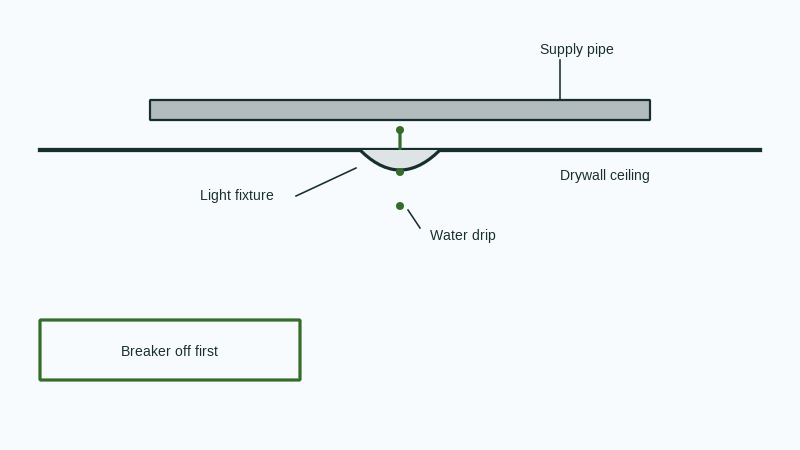
If a ceiling light begins to drip, switch that circuit off at the breaker, leave the fixture and its switch untouched, move people away from underneath, and shut the water valve if a pipe overhead could be responsible. Then work on finding the source. The home page has the quote form for when you want a plumber.
Which steps come first when a light fixture is dripping?
Head to the breaker panel without standing in water and switch that circuit off. Keep everyone back from the wet spot, and do not touch the switch. Set a bucket under the drip and move belongings out from below. If a pipe might be the source, close the main water valve too.
Go to the panel on a dry floor, with dry hands. If the panel is in the wet area, or you cannot tell which breaker is the right one, shut off the main breaker instead, provided you can do so safely. If you are unsure, stay away and ask a qualified electrician. Water that has reached wiring means the fixture and the wiring behind it need checking before power is restored, even after it dries.
Why does water appear at a ceiling light?
A light fixture is an opening in the ceiling, so water collecting above the drywall tends to reach it first. Typical sources are a supply pipe, a drain line, a bathroom overhead, a leaking roof, or the condensate line from an air conditioner in the attic. Which of these it is decides which trade you need.
Look at the clues. Is it raining? A roof leak will show up with weather. Did it begin soon after somebody ran the shower, filled the tub or flushed the toilet upstairs? Then a supply or drain line beneath that fixture is the likely culprit. Does it drip steadily with no pattern? A pressurized supply pipe is more likely. Does it appear only when the air conditioner runs? Suspect the condensate line.
Is the cause plumbing or the roof?
Roof leaks follow rain and often show up in rooms near the exterior wall or under the attic. Plumbing leaks follow water use or occur steadily, and are common beneath bathrooms, kitchens and laundry rooms. A plumber tests pressure and examines fixtures. Roofing is the roofer's work. Some leaks need both.
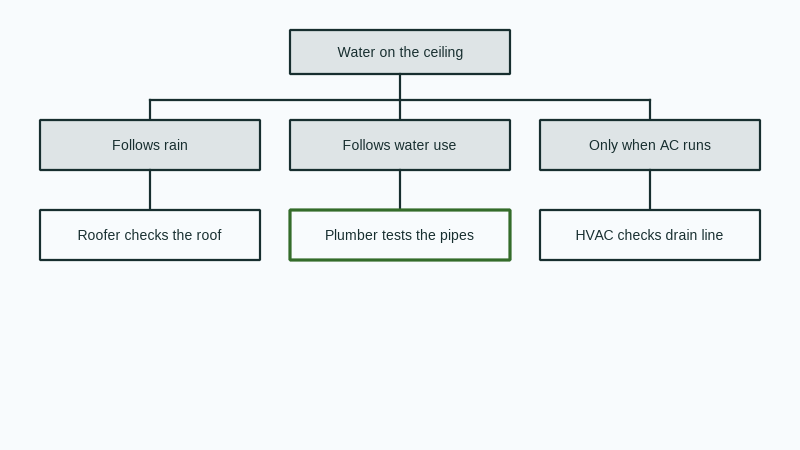
Have the plumber pressure-test the lines running over the area and inspect the fixtures upstairs. If no plumbing cause turns up, a roofer or an HVAC technician may be suggested to examine the condensate line. To tell the types apart, read how to spot a ceiling water leak.
What if the dripping stops by itself?
That does not mean the leak is gone. It may only mean the upstairs fixture is not in use, the rain has stopped or the condensate pan has drained. The water is likely to return, and the wet insulation and wiring behind the fixture keep the risk alive.
Draw around the stain in pencil, write the date beside it, and take a photo. Leave that circuit switched off until the area has been inspected. Dry the room with fans if the plaster feels damp, but do not push water around with the light on. For stains that appear without drips, see ceiling water spots when nothing is leaking.
Which tradesperson do I need: plumber, electrician or both?
Often both. The plumber tracks down the water source and repairs it. After the leak is fixed and everything has dried out, an electrician inspects the circuit along with the wiring and the fixture. If the roof or the AC drain is to blame, those trades are brought in too.
Ask whether the plumber will supply a brief written report of the findings, since it supports any insurance claim. The electrician should test the circuit and swap out wet fixtures or wiring where needed. Do not turn a circuit back on once water has gotten into it, until it has been checked.
What does a plumber do during the visit?
The plumber inspects the room above the leak, tests the supply with the water off and on, runs water to check the drains, checks a moisture meter or thermal camera, and may cut a small inspection hole in the ceiling. Then they repair the pipe or advise a different trade.
Opening the ceiling lets trapped water drain, which prevents a sudden collapse of a heavy, wet section of drywall. A bulging, sagging stain is a hazard, especially with a fixture in it. Keep away from that part of the room, and let the plumber do the opening.
Can I fix a ceiling light leak myself?
You can contain it, shut off water and power and dry the area. Repairing the source, especially a supply pipe above the ceiling, is better left to a plumber. Electrical work behind the fixture should be done by a qualified person.
When the law requires a contractor, do-it-yourself ends. Jobs over the state threshold, and any work needing a permit, require a California contractor license. If the house has a gas appliance in the attic or near the leak, do not disturb it.
How do I arrange for a plumber to inspect it?
Use the quote form to say where the fixture is, what sits above it, how long the leak has been going, and which supplies you have turned off. Mark the request urgent. We pass it to nearby plumbing companies, which pay us a fee when they accept requests, and one of them replies with a price and a time.
Requests get read on weekdays between 9am and 5pm. Before and after those hours, what counts is keeping the power and water off. For the likely cost, see plumber leak detection cost. If a pipe has actually burst, go to handling a burst pipe.
Common questions
Does a leaking ceiling light put anyone at risk?
Yes. Water on a live fixture can cause shock, a short circuit or a fire in the wiring. Switch off the breaker, avoid touching the fixture and keep people clear. Treat it as both a plumbing and an electrical problem until both have been checked.
May I switch the light on again after it dries?
Not until the wiring and fixture have been checked. Water can corrode connections and soak insulation that stays damp inside the ceiling for days. A qualified electrician should test the circuit before power is restored, even if the fixture looks dry.
What do I need to find out from a plumber before they fix a ceiling leak?
Ask how the source will be found, whether the price includes opening the ceiling, whether the drywall gets patched or only the pipe, and whether you need an electrician too. Also get the plumber's California contractor license number and check it on the CSLB website.
How long does it take to locate the source?
An obvious plumbing leak can be found within the first hour. A hidden pipe or a roof or condensate leak can take longer, with several tests. A plumber should give an estimate and explain what they will rule out first.