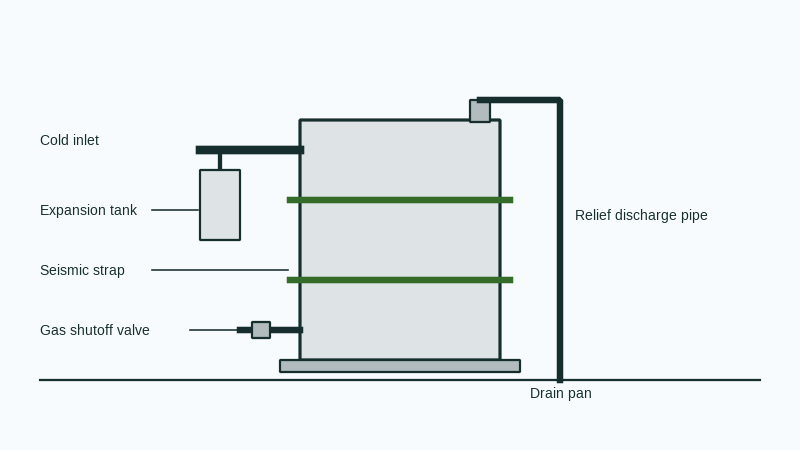
The business that swaps your water heater ought to supply a written scope that names the new unit, the permit, the gas or electrical hookup, venting, shutoff valves, earthquake strapping, an expansion tank when one is needed, and haul-away of the old tank. If a quote lists just the heater and a single lump sum, ask what is missing. For background, see the overview on repairing and replacing water heaters.
Which tasks does a water heater swap include?
The plumber turns off water and fuel, drains the old tank, disconnects the plumbing, the gas or electrical supply and the vent, removes the old unit, sets the new one in place, completes the connections, adds code items, fills the tank and bleeds out air, checks for leaks, lights the unit and tests the vent draft or the electrical load.
Typical code items include a relief valve rated for temperature and pressure with a correct discharge pipe, a drain pan where the location calls for one, seismic strapping, and for gas units a flexible gas connector with a shutoff valve. An expansion tank is sometimes added. A good installer explains each item on the quote. A local plumbing business does and prices the work, and every line should be visible before you agree.
What happens on installation day?
The plumber arrives, confirms the quote and scope, turns off water and fuel, and works for several hours. A like-for-like swap is often finished within half a day; changes to venting or gas lines stretch it. Hot water stays off until the unit is full, tested and heating.
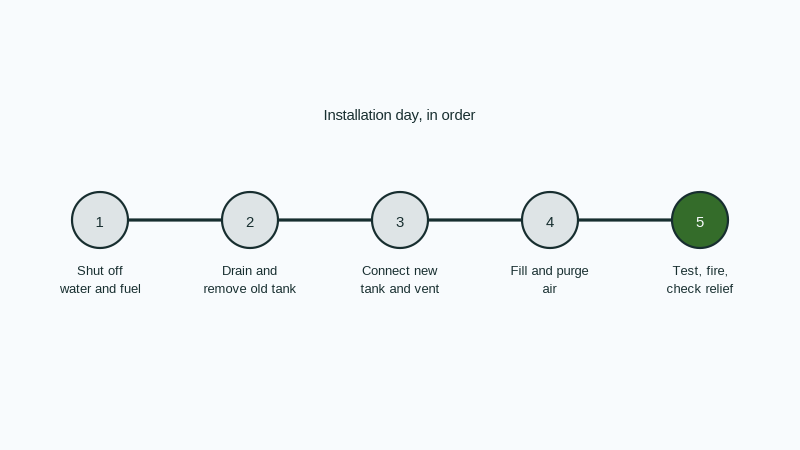
The plumber checks for leaks, inspects the relief valve discharge, sets the thermostat to a safe temperature, tests combustion on gas units and points out the shutoffs. The inspection may come the same day or later. Hold on to the permit sign-off, the manual and the warranty card. Ask what upkeep the plumber suggests, such as flushing and anode checks; see the usual replacement interval for water heaters.
Who pulls the permit, and from whom?
The plumber normally files the permit application and schedules the inspection, and the quote should say so. In Simi Valley, the City of Simi Valley Building and Safety Division handles permits and runs a self-service online portal. In Moorpark, you go to the City of Moorpark Building and Safety office, which also has an online portal.
Inspectors generally examine the venting, gas connection, relief valve discharge, strapping and combustion air. An insurer or a buyer can raise a skipped permit later. Office hours and contact lines change, so check the city's own site before visiting or ask the plumber what they have confirmed. On the day the Moorpark page was read, it said online inspection booking was temporarily unavailable, so find out from the plumber how scheduling works.
Should I keep the same heater type or change it?
Swapping one for the same kind is simplest and usually the least disruptive. Going from a gas tank to tankless, or from gas to electric, alters venting, gas sizing, electrical capacity and cost, and may require permit drawings. Tankless units free up floor space and heat on demand, though they cost more at the start.
Ask the plumber to spell out what a change would involve in your house. In a tract home where the heater sits in the garage, going tankless can call for a larger gas line plus a new vent. Pages on tank versus tankless and gas tankless installation cover those trade-offs.
How do I check out a plumber before hiring?
Get the plumber's contractor license number, then look it up through the Contractors State License Board's website to confirm it is active and in the right classification. Ask whether the business is insured, and insist on a written quote. A spoken price or a social media profile is not enough to rely on.
California requires a contractor license once labor and materials together reach $1,000, and also for any job that needs a permit. Because a heater swap generally calls for a permit, licensing applies whatever the price. A business that says no permit is needed, or offers to skip it for a discount, leaves you holding the risk if a gas or safety problem appears later.
What should a complete quote list?
A complete quote gives the model and capacity, the fuel, the work on gas, water and electrical lines, venting changes, the relief valve and its discharge pipe, strapping, the expansion tank when needed, the permit, haul-away and the labor warranty. It presents one total, with exclusions listed.
Treat anything that might change on the day as its own question: a vent failing inspection, a gas line too small for a tankless unit, a rotted shutoff valve, or a shelf or platform needing a rebuild. Good plumbers raise these ahead of time. Compare quotes of equal scope, not only the bottom-line price. For what moves a quote up or down, see what a water heater replacement costs.
What if my heater is leaking at this moment?
Close the cold water supply feeding the heater, switch off the gas or power, and protect the floor. A leaking tank cannot be repaired, so replacement is the way forward, and how soon someone can come depends on local availability. Take photos of the leak in case you file an insurance claim.
When a fitting or valve is the source, a repair may be enough, so ask for a diagnosis first. Hiring a plumber for a water heater leak explains the difference. If you smell gas, get out of the building and contact your gas utility or 911 once you are outside. Once you are ready, use the quote form to send the details, and a local plumbing business will provide a quote. The home page lists the other services.
Common questions
How many hours should I expect a heater replacement to take?
Once the plumber is on site, a same-type tank swap usually takes anywhere from a few hours to half a day. Changing fuel, relocating the heater, adding venting or upgrading a gas line takes longer. A permit inspection may mean a separate visit. The quote states the plumber's schedule.
What should I ask before hiring someone to swap a heater?
Get the contractor license number, and learn who obtains the permit. Check whether the quote covers strapping, relief valve piping, haul-away, and an expansion tank where one is required, and which warranty applies to labor. Ask what happens if the vent fails inspection. Have the scope written down ahead of the job.
Do I need to be home during a heater replacement?
Have an adult present on arrival to approve the quote and show the plumber the heater and shutoffs, and again at completion to see the unit run and sign off. If the heater sits in a locked garage or fenced yard, arrange access beforehand. Keep animals out of the work zone.
Can I supply the heater and hire a plumber to fit it?
Some plumbers will fit a unit you provide, though many prefer supplying it so warranty and fit are clear. Ask first. If you buy it yourself, check that it matches your fuel, vent and size, and that the plumber is responsible for labor only.
Is a permit actually needed for a heater swap?
Generally yes, in California cities including Simi Valley and Moorpark. Check with the city's building office, since local rules and fees are theirs to set. With a permit, an inspector checks the gas, vent and safety items, which protects you.