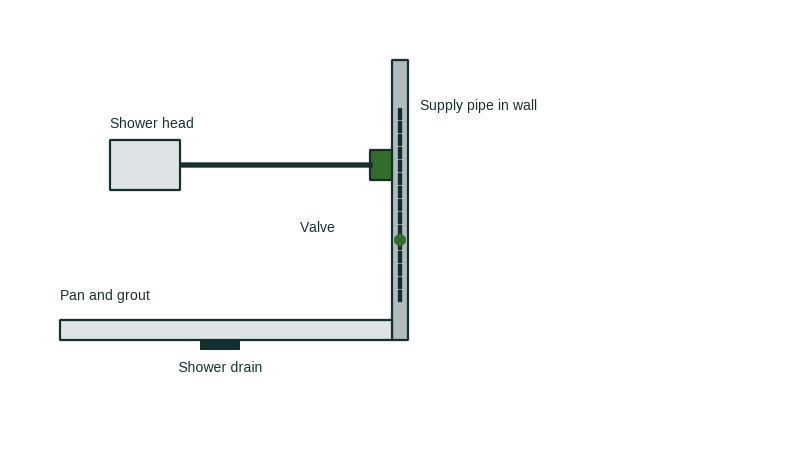
Water showing up anywhere it should not is a shower leak: dripping from the head, spraying around the valve, staining the wall or the ceiling beneath. What you observe tells the plumber where to look. This page is part of our group on sinks, showers, faucets and disposals, and a quote request gets a local plumbing business to take a look.
Where is the water in my shower coming from?
The spot where water appears points to the cause. Dripping from the shower head or spout usually means a worn cartridge or a damaged seat. Moisture around the handle indicates a worn valve stem or packing. A ceiling stain in the room underneath, or one on the wall behind, suggests a supply pipe, drain connection or failed pan or tile seal inside the wall.
Run the shower and watch. If the drip ends once the water is shut at the valve, the fault is on the valve side. If water appears only while someone stands in the shower, suspect the pan, drain or grout and caulk. If wetness appears when nobody is using the shower at all, it is a pressurized line, so shut off the water at the main and treat it as urgent.
Cracked tile and grout let water into the wall slowly, and the damage shows months later as soft drywall or a musty smell. Never ignore a stain.
What causes weak flow at one faucet, or just the bathtub?
When a single fixture is weak while the rest run strong, the cause is local: a clogged aerator or shower head, a stop valve left partly closed, a worn cartridge or a debris plug in the branch pipe. When the entire house is weak, look at the regulator, the main valve or the supply itself.
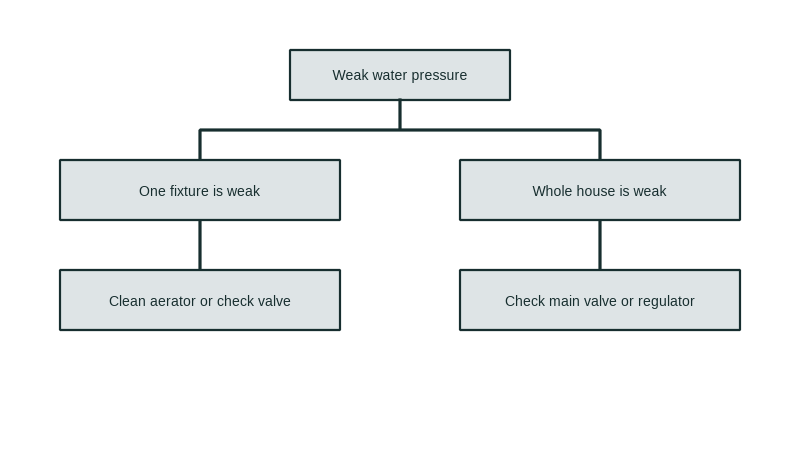
Take off the aerator and soak it in vinegar to clear scale. A bathtub with no pressure while everything else is fine needs a look at the diverter, the tub spout and the cartridge. Swapped hot and cold lines and a closed or partly closed stop at that fixture can also cut flow. Whole-house cases appear in what to do about a sudden pressure drop, and weak flow at the kitchen sink deals with a single sink.
Weak hot with fine cold can point to the water heater side. For that, read a shower that runs cold.
What is sink plumbing like in a mobile home?
Mobile home sinks use the same fixtures but often have plastic supply lines, small drain pipes and access from below the floor, so repairs call for care and the right adapters. Never mix pipe types without proper fittings. The layout is explained in the guide on plumbing beneath a mobile home.
Keep in mind that skirting, insulation and a belly wrap hide leaks, so a concealed wet patch can go unnoticed. If you find water underneath, close the main valve, then ask a plumber familiar with manufactured homes to assess it.
How do I respond when a shower pipe bursts?
If water sprays or pours from the wall, close the main shutoff, open a lower faucet to drain the line and keep away from electrical fixtures, then arrange a plumber and photograph the damage. A burst shower supply pipe means opening the wall, replacing the pipe, then drying and patching the drywall.
Burst pipes in shower walls are often old galvanized or corroded copper, or a joint that gave way under high pressure. See signs a pipe has burst and burst water pipe help. Leaks like these often push water bills up, a topic covered in big bills with no visible leak.
How do I fit a garbage disposal from Glacier Bay, InSinkErator or American Standard?
Most disposals from these makers, including the InSinkErator Badger 500, mount the same way: a sink flange with a snap ring, a mounting assembly, a dishwasher inlet knockout and a drain connection, plus an electrical hookup. Your model's manual from the maker is the authority, so read it first.
Check whether your model comes with a cord or must be wired in, and whether your sink has an outlet beneath it. Do not wire to a circuit if you are unsure, since electrical work can require a permit and someone who knows the rules. Remember to punch out the dishwasher plug if a dishwasher is connected, a common beginner's miss. To help choose a service, see garbage disposal installation service and air switch installation.
Can I fix a dripping shower faucet on my own?
Often yes. A steady drip from the spout or head normally comes from a tired cartridge, washer or seat, and replacing it is a basic job: turn the water off, take off the handle and trim, pull out the cartridge, match it to the same brand and model and fit the new one. If corrosion has reached the valve body or no replacement fits, hire a plumber.
Brand and model matter, and photos help. The parts appear in our guides on fixing a leaky shower faucet and Delta shower faucet repair. A handle that sticks, or water that mixes hot and cold at the wrong settings, usually points to the cartridge. In hard water areas scale can lock a cartridge in place, so pulling it takes a puller tool or a plumber.
If you cannot isolate the shower, close the main valve while you work, since some shower valves have no local stops. Replacing the valve itself means opening the wall, which is why what plumbers charge to replace a shower valve or cartridge is worth reading.
When does a plumber beat a repair kit?
Hire a plumber if you cannot isolate the leak, if water is in a wall or ceiling, if damage has reached the valve body, if tile has to be opened or if a pipe has burst. A visit also suits disposal wiring or a new drain. The plumber should leave the fixtures tested.
Ask for a written quote naming the fixture and parts. Requests are read on weekdays from 9am to 5pm, and a local plumbing business replies with its own timing. Always confirm with the state's license board that a contractor license number is current.
Common questions
How long does a shower leak repair usually take?
A cartridge swap on an accessible valve is often under an hour. A leaking pipe behind the tile, a drain or pan repair, or a new valve all require opening the wall, and can take a day or more with tile and patch time. Ask for a schedule that includes drying and finish work.
What should I ask the plumber about a shower leak?
Ask how they will find the source, whether they will open the wall or tile and who repairs it afterward, what the visit costs if the fix is simple and whether replacement parts match your fixtures. Get the contractor license number and a written quote too.
Do I have to be home for the shower repair?
Yes. The plumber needs to enter the bathroom, shut off water and sometimes reach the room below or an attic access. Clear the shower area, remove products and share what you have noticed, such as when the leak appears and which fixtures are affected.
Will a shower leak harm the floor beneath it?
Yes. A slow leak can soak the subfloor and ceiling beneath and lead to rot and mold before you notice. Stains, sagging drywall, warped floors and musty smells are signs. If you see any, stop using the shower until a plumber checks it.