To fix a bathtub faucet that leaks, stop the water, pull off the handle, put in a new washer, seat or cartridge where one is worn, and put everything back together. The part you swap depends on how many handles there are and how they move. The common types follow, and a wider range of fixtures, from sinks to showers and disposals, is covered in the fixtures hub.
Where in the tub is the water coming from?
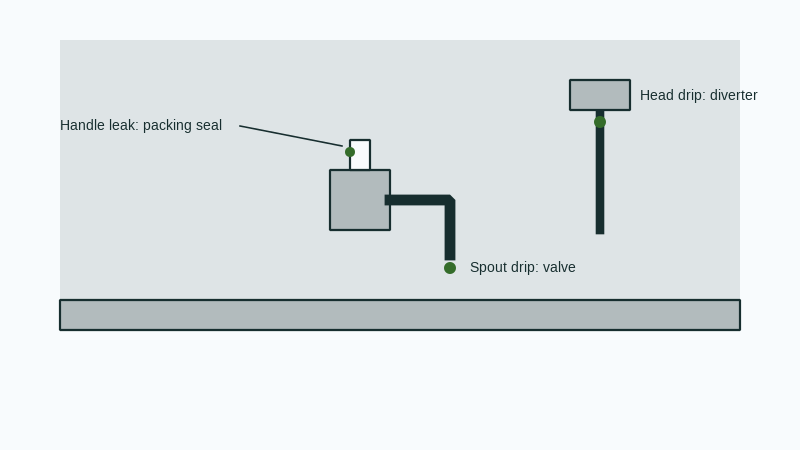
First trace the water to one of three spots: the spout, the shower head, or the area behind the handle. A spout that drips while the tub sits idle points to the valve or cartridge. A dripping shower head points to the diverter. Water collecting around the handle points to a packing seal or O-ring.
Dry the faucet and tub, then observe for a few minutes. If it is hard to tell, press a dry paper towel against the suspect area. Note whether the water is hot, cold or both, since a leak limited to the hot side means that valve is worn. A damp wall or ceiling below can mean the pipe is leaking behind the tile, which calls for a plumber instead of a faucet repair. The EPA names dripping faucets and leaking valves among common household leaks.
Which kind of tub faucet is it?
A hot handle plus a cold handle usually means compression or cartridge valves. One handle that rotates for temperature and pushes or pulls for flow typically signals a single-handle cartridge or ball valve. Look for a screw beneath a cap, or a setscrew under the handle.
Older two-handle faucets rely on rubber washers pressed against a seat, which wear and drip. Newer designs use a ceramic disc or cartridge replaced as one unit. The brand often appears printed on the handle or trim, and the replacement must match brand and model. Bring the worn part to a hardware store, or photograph it beside the stem and jot down any numbers. The guide for two-handle faucets gives more on that style.
Is it costly to ignore a drip?
A drip wastes water daily, lifts your bill, and can stain the tub while wearing out the cartridge. According to the EPA, household leaks can add up to upwards of 9,300 gallons of water a year, and a dripping faucet is among the usual sources.
Dripping hot water also throws away the energy spent heating it. Repair parts cost little, and many homeowners finish within an hour. If you replace the entire faucet, the cost of faucet replacement guide lays out the factors. Keep a spare washer and cartridge on hand for next time. To bring in help, fill out the quote form, and a nearby plumbing business receives your request from us and prices it. Other services are listed on the home page.
Why does the shower head still drip while the tub spout runs?
The culprit is the diverter, meaning the knob you lift on the spout or the button you push on the valve, which has worn out or scaled over. Once it stops sealing, part of the flow reaches the shower head. Often the spout diverter is changed just by changing the spout, which screws or slides onto the pipe.
See how your spout is fastened: feel for a setscrew beneath it, or turn it counterclockwise. A spout that slides on is held by a setscrew. When the diverter is built into the valve behind the wall, a cartridge or valve repair is needed. If the shower head still drips once the tub is shut off, the cartridge may be worn as well. The page on leaky shower faucets covers that case.
How do I fix a dripping single-handle tub faucet?
Stop the water, pry off the handle cap, unfasten the handle along with any retaining clip or screw, pull out the cartridge with the proper puller or pliers, insert the matching new cartridge oriented the same way, and reassemble. Direction matters, since a cartridge turned the wrong way reverses hot and cold.
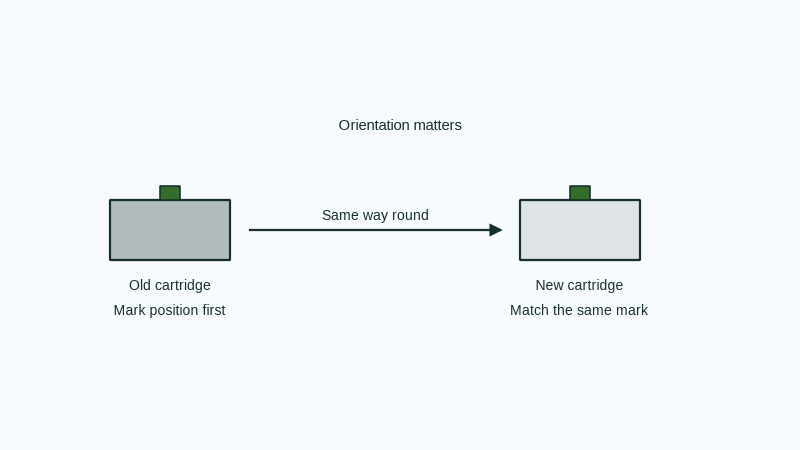
Before pulling the old cartridge, mark its position with a pencil, and hold on to the retaining clip. A cartridge that will not release may be stuck with scale. Mineral-rich water builds scale. Simi Valley's supply is bought wholesale from Calleguas Municipal Water District, so check hardness in the water quality report from your own supplier. Some vinegar can loosen scale on parts. The page on single-handle faucets says more.
How do I fix a dripping two-handle tub faucet?
Close the water supply and open the tap so the line drains. Take off the handle and trim, then use a wrench to free the stem. Replace both the O-ring and the rubber washer, check the brass seat for pitting, and reassemble in reverse. Restore the water slowly and test for drips.
Look at the seat inside the valve body: if it is rough or pitted, a fresh washer will not seal, and the seat needs a seat dresser tool or replacement. Rub plumber's grease onto the O-rings and remember the order of the parts. A stem that will not budge, or trim stuck fast to the wall, is a reason to stop before tile or the supply pipe breaks. If the tub lacks a shutoff of its own, you may have to close the house's main valve.
When does a plumber need to take over the job?
Stop when the handle refuses to come off, the parts are corroded, dripping carries on after new parts, water appears in the wall or the ceiling below, the shutoff valves fail, or no matching replacement exists. A damaged valve body means the in-wall valve must be replaced.
Work inside a wall means opening tile or access panels, which is plumbing and sometimes tile work too. A new valve in the wall, or an entire fixture, may need a permit depending on scope, so ask the city building office or the plumber. California generally requires a contractor license for work of $1,000 or more, as well as for any job that needs a permit. The page on shower leak plumbers explains the in-wall cases.
Common questions
How long does a bathtub faucet repair take?
A handy owner holding the right part usually needs one to two hours for a washer or cartridge swap. A plumber on site often finishes in about an hour, and takes longer when the valve body or wall needs work. The plumber's quote comes with a time estimate.
What should I ask a plumber about a tub faucet job?
Ask if the quote includes parts and labor, whether any visit fee is credited toward the repair, and what happens if the valve inside the wall needs replacing. The contractor license number can be checked on the state board website. Also ask what warranty applies to the work.
Does someone have to be home for a tub faucet repair?
Yes, an adult should be there when the plumber arrives, to show the leak and approve the quote, and return when it is finished to test the faucet. Clear items out of the tub and bathroom beforehand. If access to the wall behind the tub is through a closet or the next room, mention it.
Is shutting off the water necessary to fix a tub faucet leak?
Yes. Stop the water first, at the fixture's own shutoff if there is one, or at the main. Then release the pressure by running a tap. Floods and burns happen when someone works on a live valve, and a stuck stem can snap under pressure. Confirm the water is off by opening the tap and watching the flow stop.
What makes a tub faucet drip only when hot?
The washer, valve or cartridge on the hot side is worn. Replace the hot side parts and check the seat. On a single-handle faucet, a drip on hot often means a tired cartridge. For safety, if the water runs very hot, lower the thermostat on the water heater.