Why is the kitchen the only sink without hot water?
The problem stays inside that single sink. The usual suspects: a clogged faucet cartridge or aerator, an under-sink stop valve left partly shut, a supply hose that is kinked or collapsed, or a worn single-handle cartridge that no longer opens the hot side. Hot water at the other taps proves the water heater is working. If you suspect the heater after all, see the guide to water heater repair.
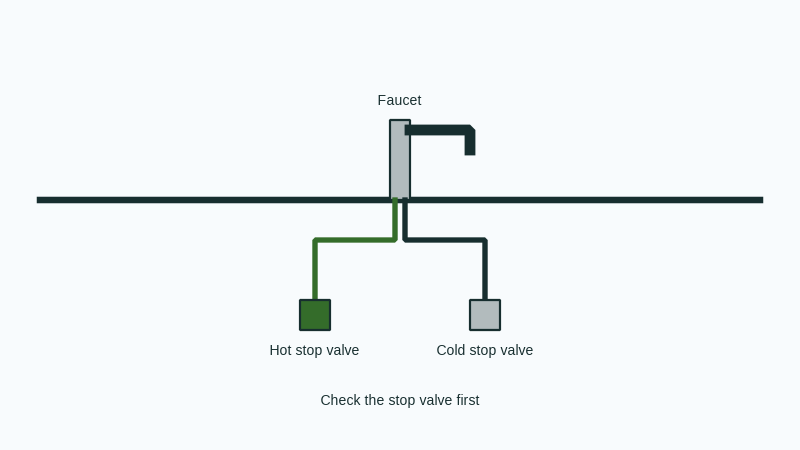
Test it in a minute. Run the bathroom tap and the shower on hot. If they warm up, the heater is fine. Then look beneath the kitchen sink at the two stop valves. The left one is normally hot, though follow the hose to the faucet and check for a label or a red marker. A valve nudged shut during storage or a cleanup is surprisingly common.
When the kitchen sink has a pull-out or touchless faucet, the hot side may be where debris collects.
What do I inspect first beneath the sink?
Go through the hot stop valve, the supply hose and the faucet aerator, in that order. Turn the stop valve fully counterclockwise. Look for a kink or crush in the braided hose. Unscrew the aerator and rinse it, because mineral grit and debris often block just the hot flow.
Be careful while testing. Place a towel and a bucket under the valves in case a connection weeps. Before taking a hose off, close the stop valve. Should the valve resist turning, or drip when you move it, stop and leave it to a plumber, since forcing an old valve can turn a small problem into a leak.
Water in Simi Valley and Moorpark carries minerals, and the annual water quality report from each supplier lists hardness. Scale is a common reason an aerator or cartridge clogs. Read your supplier's report for the hardness level; your bill names the supplier.
What if all the hot taps in the house run cold?
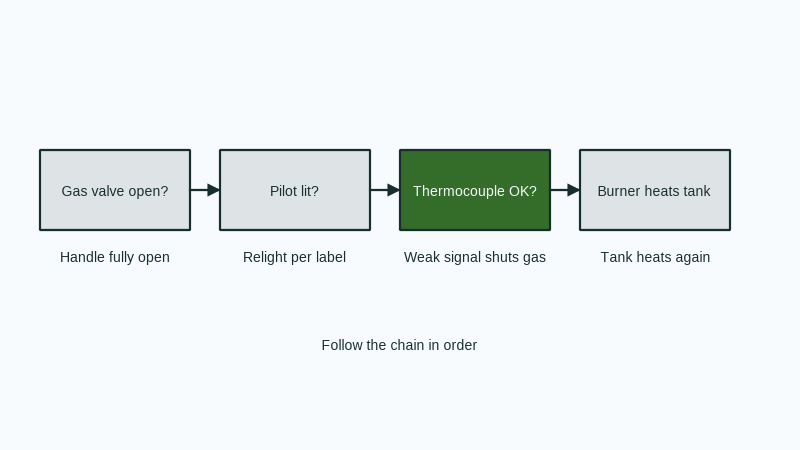
When none of the hot taps warm up, the heater or its feed is at fault. With a gas tank, make sure the pilot is lit or the display reads normal, and the gas valve is open. With an electric unit, inspect the breaker and the high-limit reset. With a tankless unit, read the display code and confirm power. Our guides on having no hot water at all and a shower that stays cold cover that situation.
If you smell gas, leave the building at once, then reach SoCalGas at 1-800-427-2200 from outdoors; 911 is the number when a person is at risk. Do not touch switches or strike a flame indoors.
A heater leaking water onto the floor should be switched off with the cold supply closed; see water heater leaks.
Might the dishwasher or other plumbing be the cause?
Yes, though less often. A crossed connection, such as a faulty check valve or a dishwasher or filter tee that lets cold back into the hot line, can leave the sink lukewarm. A new filter or instant-hot tap connected badly can also restrict hot flow. If the trouble began after recent work under the sink, tell the plumber what was done.
Other clues: if hot water arrives only after a long run, the sink may be far from the heater and the pipe cold, which is a distance issue rather than a fault. Some homes work around it with a recirculation pump or a small heater installed right at the sink. If hot water is weak rather than absent, our page on hot water pressure covers it.
When is hiring a plumber worth it?
Make contact once the quick checks fail, the stop valve is stuck, a cartridge needs replacing, you spot a leak, or the heater itself is faulty. One visit is usually enough for a plumber to pinpoint the bad part. With an old heater, the plumber may suggest looking at its age first; see the typical lifespan of a water heater.
A permitted job, such as replacing the water heater, must be handled by a contractor holding a California license. In Simi Valley, permits come from the city's Building and Safety Division; in Moorpark, from its Building and Safety office. We don't state dollar prices, since no local figures are verified, and the quote comes from the plumber after the visit.
If the sink is still cold after the checks, ask for a plumber and mention if the trouble is limited to the kitchen sink. The request is forwarded to a local plumbing business, and incoming requests get read on weekdays from 9am to 5pm. How it all works is set out on the Arroyo Simi Plumbing home page.
Common questions
What makes the kitchen faucet run only cold?
When other taps run hot, the usual cause is a blocked hot-side cartridge or aerator, a partly closed hot stop valve or a crushed supply hose. Check the valve and aerator first. A worn cartridge can be swapped, and that swap takes a plumber little time in one short visit.
Why is the wait for hot water so long in the kitchen?
The pipe between heater and sink holds cool water that has to be pushed out first. The farther the sink sits from the heater, the longer the wait. Usual cures for this kind of delay include a recirculation pump, a shorter pipe run, or a compact heater placed near the sink.
May I turn the stop valve by hand?
Yes, turning an under-sink stop valve is a normal task for a homeowner. Be gentle, and quit if it refuses to budge or begins leaking. Forcing a stuck valve can break it. A plumber can fit a new valve in place of a failing one.
Could someone have switched off the heater?
Yes. An extinguished pilot, a tripped breaker or a switched-off heater can each cause no hot water at any tap. If only the kitchen is affected this is unlikely, but look at the heater anyway to rule it out completely.
Can hard water be the reason?
It can. Mineral scale clogs aerators and cartridges, and it often appears on the hot side first because heat speeds scale formation. Soaking the aerator in vinegar frequently helps. Consult your water supplier's annual quality report to see how hard your water is.