Most single-fixture clogs yield to a plunger, a plastic hair tool or a hand snake, and none of them involve chemicals. Begin by noting which drains run slowly. If just one does, the clog is in that fixture's trap or short branch. If several back up together, the trouble is in a larger line, and that is work for a local plumber.
Showers, tubs, kitchens, laundry lines and more are covered below. For toilets and main lines, turn to the broader drain cleaning and clogs page. If a drain stays stuck, fill in the quote form and we pass it to a plumbing business close by. Other jobs we pass along around Simi Valley and Moorpark are listed on the home page.
How can I unblock a shower drain?
Lift off the strainer cover and pull out the hair using a plastic drain tool or a gloved hand, then rinse the drain with hot tap water. Most shower clogs are a tangle of hair and soap just beneath the grate, within reach of a barbed plastic strip. Skip this step only if water also rises in a nearby tub or toilet, which points deeper.
If the water stays slow after one pass, feed a hand snake (a flexible cable with a turning handle) in a few inches per push. Rotate the handle as you advance, then draw back slowly and wipe off what comes up. Repeat until the cable returns clean.
A clogged shower drain is often the first sign of a hair problem, and it returns within weeks unless you set a fine mesh catcher over the opening. Soap leaves a sticky film inside the drain that hair clings to, so a monthly hot rinse helps.
What clears a clogged bathtub drain?
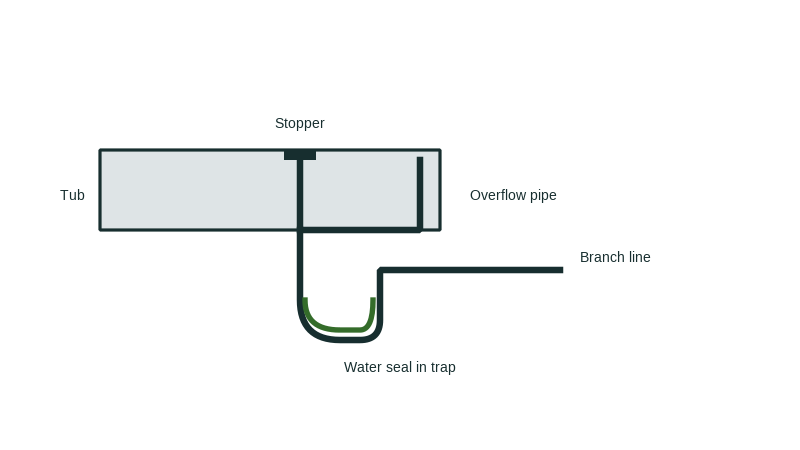
Tub clogs usually form at the stopper or in the overflow-and-trap assembly under the tub. Remove the stopper (lift-and-turn, pop-up with a set screw, or a trip-lever linkage), strip the hair off the stem, then plunge with a wet rag held over the overflow plate so pressure goes down the drain instead of out the overflow.
A cup plunger works best, with an inch or two of water standing over the drain. Seal the rim, press once softly to push air out, then pump firmly for about 20 seconds. Pull the plunger off sharply to create suction. Two or three rounds generally show whether the clog is near or far.
If the tub drains somewhat but slows again within a day, the blockage is partial and probably deeper in the line. At that point, stop pushing and consider a snake long enough to pass the trap, or a visit. Forcing a jammed cable risks scoring aging pipe, and an older house may have sections of cast iron or galvanized pipe under the floor.
Can baking soda and vinegar really clear a drain?
Baking soda with vinegar fizzes, but against a real clog it usually accomplishes little. The foam may soften a thin soap layer inside a sluggish drain, but it will not dissolve a clump of hair or a grease plug. Treat it as a gentle rinse, not a repair, and switch to a plunger or snake if water still sits.
Most natural or no-chemical tricks fare the same. Hot water can melt a fresh grease smear in a kitchen line but can also push grease farther down, where it cools and sets again. Enzymatic cleaners are a milder store-bought choice: the Wikipedia article on drain cleaners describes them as biodegradable products that break down grease, hair and food, though they may not suit severe blockages.
Harsh chemical products are a different matter. The same article says they usually contain corrosive acids or alkalis and that excessive use can damage pipes. Never combine two products, never add one to standing water you just treated with another, and if a plumber is coming next, say what went down the drain so they can wear the right gloves and eye protection.
How do I clear a kitchen drain or garbage disposal?
Kitchen clogs are mostly grease and food. Run hot water and plunge the sink, using a wet rag to block the second basin and the dishwasher line. Next, set a bucket beneath the trap and open it. If a disposal hums but will not spin, switch it off at the wall, push an Allen key into the hex socket underneath and turn it, then press the reset button.
Never put a hand in a disposal, even when it is off at the wall; use tongs for anything stuck on the blades. A garburator is the same machine under the Canadian name, and the same steps apply. If the disposal turns without trouble and yet water rises into the sink, the clog sits past it, in the trap or the line to the wall.
Opening the trap will release a grey, smelly paste. Scrub it out, confirm the washers sit properly, and snug the slip nuts finger-tight before adding another quarter turn to each. For deeper kitchen work, see the guides to unclogging a kitchen sink and garbage disposal repair, plus the notes explaining a slow sink drain.
What fixes a clogged laundry drain, drain vent or AC drain?
Each needs its own fix. A washer standpipe clears with a snake or a wet-dry vacuum. A blocked vent shows up as gurgling drains and is cleared from the roof, a ladder job for a plumber. An AC condensate line often clears by flushing at its access port, and EPA lists blocked AC drain lines as a moisture source in homes.
On a laundry line, lint is the usual culprit. Stretch a mesh sock over the washer hose end to catch it, and run hot water through the standpipe monthly. If the standpipe overflows mid-cycle, stop the washer and run no more loads: water in the wall is a bigger problem than a dirty drain.
A vent problem shows as slow drains across the house, gurgling after a flush, or traps that empty of water. Nests, leaves and debris are the usual cause. Roof work is a fall risk, so leave it to a local plumber. With an AC drain, switch the unit off before opening the line, and if water has stained a ceiling, dry the area inside a day or two, since EPA says mold usually will not grow when wet materials are dried in 24 to 48 hours.
How is the drain line under a kitchen sink put together?
Under the sink, the strainer's tailpiece drops into a P-shaped trap, and the trap arm runs to the wall stub. Slip nuts and washers seal each joint, tightened finger-tight first and then a quarter turn beyond. The arm should slope slightly toward the wall and must not be built as an S-trap. Adding a new drain to a wall is plumbing work that may need a permit.
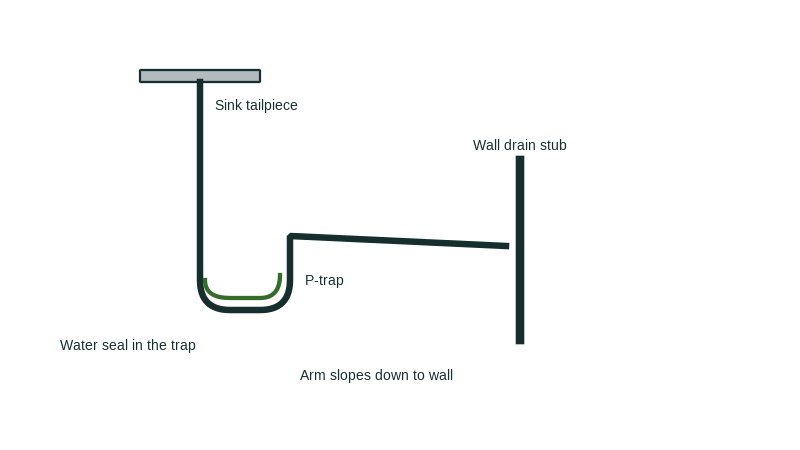
On a sink with two bowls, a continuous waste tee ties the two tailpieces together ahead of the trap. The dishwasher drain hose normally attaches at the disposal inlet or a tailpiece branch, and it is typically looped high under the counter to stop dirty water from running back. Read your appliance's own label and instructions before cutting anything.
Replacing a trap on an existing drain is within reach of most homeowners. Relocating a drain, adding a fixture, or opening a wall to extend a line is a different matter. Simi Valley and Moorpark each have a city Building and Safety office, and a local plumber can say if the job needs a permit.
At what point should I stop and book a plumber?
Stop if several fixtures back up at once, a snake meets no resistance and the water still sits, or you smell sewage. These signs point to the branch or main line, beyond what a hand tool reaches. A local plumber can run a camera and a motorized cable, and the quote form is how you ask for that.
Other signs also say stop. Water surfacing in a shower while the washer runs is a backup, not a slow drain. A drain that clears and fails again within days suggests a bellied or root-grown section. Raw sewage in a floor drain or tub is a health issue, so keep kids and pets away and wear gloves and boots if you must go near it.
Before hiring anyone, write down which fixtures are affected, when it began, and what you have tried. Mention what went down the drain, including any chemical cleaner. For a clogged toilet, read the page on repairing a blocked toilet, and for price guides see unclogging a toilet: what a plumber charges and unclogging a sink: the cost. The form is checked on weekdays from 9am until 5pm. Name the drain in it, and the request reaches a local plumbing business that handles drain cleaning.
Common questions
Are chemical drain cleaners safe for home use?
They can hurt pipes, skin and eyes. Per the Wikipedia article on drain cleaners, they usually contain corrosive acids or alkalis, and heavy use can damage pipes. If you use one, follow the label, wear gloves and eye protection, never mix products, and warn any plumber who visits afterward so the standing water is handled carefully.
How long does a plumber take to clear a drain?
It depends on where the clog is. A single fixture trap is normally a short visit, while a main line with a camera inspection takes longer. The visiting plumber gives a time guide after examining the drain. The form promises no response times, and there is no after-hours line.
Which questions suit a plumber visiting for a clog?
Check if the price covers a camera look, how the plumber will clean up, and the next step if the first method fails. Have the quote in writing ahead of the job. If a permit is involved, ask who pulls it. Check the contractor's license through the licensing board's California website.
How do I stop a drain clogging again?
Put a fine mesh catcher in the shower and tub, keep grease out of the kitchen sink, and run hot water through each drain monthly. A strainer in the kitchen basin catches food scraps, and a lint sock on the washer hose catches fibers. If one drain keeps clogging, have a plumber check the pipe slope and condition.