What is the quickest fix for a blocked kitchen drain?
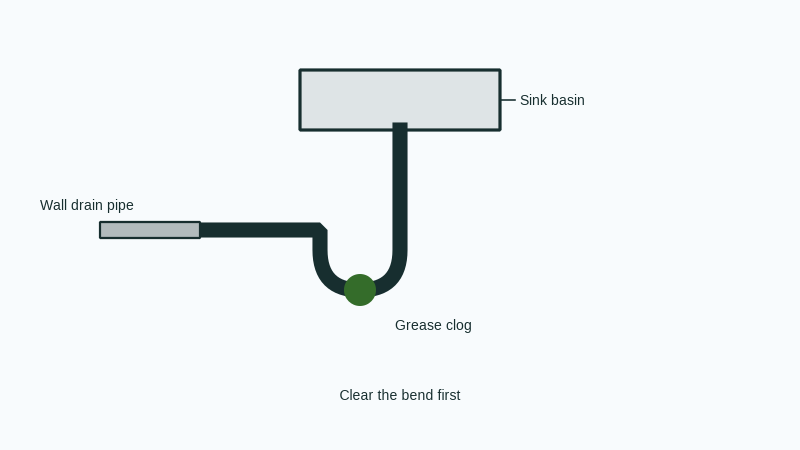
Begin with a cup plunger. Add just enough water to cover the cup, press it flat against the drain opening, and pump hard for about 20 seconds. On a double sink, plug the other drain with a damp cloth. Repeat a few times; most soft grease and food clogs give way. If water still pools, move on to the trap. Other drains follow the same logic, and a stubborn one may need a plumber for clogs.
Two tips make plunging effective. Pick a flat-bottom cup plunger made for sinks, not the flanged toilet type. And hold the seal tight; air leaks waste the push. With a garbage disposal, run it briefly first to rule out a jam, but only once the blades are clear.
If plunging brings up black sludge or sends water into the other basin, that is useful: it shows the blockage lies past the junction, so head straight for the trap.
How do I clean out the trap beneath the sink?
Put a bucket under the trap, unscrew the two slip nuts by hand or with pliers, then pull off the U-shaped pipe and tip it out. Remove the grease and debris, rinse the pipe, inspect the washers and reassemble. Many kitchen clogs sit in this bend, and cleaning it takes about ten minutes.
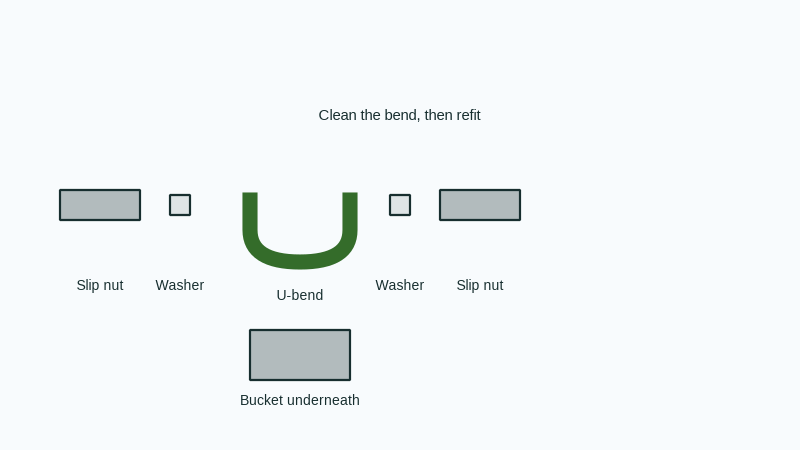
Take the nuts slowly: old plastic threads strip easily. Keep the bucket under the joint, since a full trap holds more water than you expect. Once it is back together, snug the nuts by hand, then turn on the tap and look for drips. A clean trap with water that still will not drain means the clog sits farther back in the wall pipe.
A short drain snake, or a straightened coat hanger with a small hook, can reach beyond the trap. Feed it in gently, rotate, then draw it back and clear what comes out. Never shove hard against resistance; you can scratch the pipe or snag a joint.
Do baking soda, vinegar or chemical cleaners help?
Baking soda followed by hot vinegar can loosen a light film, but a solid clog seldom budges. Chemical drain cleaners are a poor bet: they are hazardous to skin and eyes, can damage some pipes and, when they fail, leave the pipe full of caustic water for whoever opens it next. Never mix products, and follow the label if you do use one.
If a chemical cleaner was used and the clog remains, warn the plumber before the trap is opened so protection can be worn. A kettle of very hot water can help with grease, but do not pour boiling water into a cracked or older plastic trap.
Older homes, such as those in Old Town Simi and Strathearn, may have aging drain lines, so gentle methods are the safer start whatever your house age.
Why does my kitchen sink keep clogging?
Repeat clogs come from what goes down the drain: cooking grease that cools and sticks, coffee grounds, rice and pasta that swell, eggshells and fibrous peels. A narrowed or rough pipe farther along can also catch debris. If clogs return every few weeks, suspect grease first, and a camera inspection can check the pipe.
Helpful habits: scrape greasy pans into the trash prior to washing, use a drain strainer, run hot water after washing up, and keep fibrous waste out of the disposal. For slow drains that are not yet blocked, see reasons a sink drains slowly, and garbage disposal repair if the unit hums or jams.
When the kitchen sink, a shower and a toilet all back up together, the main line is clogged and the sink is not the cause. Stop using water and book a plumber, because the flow has no way out.
When should a clogged kitchen sink go to a plumber?
Book a visit after plunging and trap cleaning fail, the clog returns fast, more than one fixture is slow or backing up, or the drain smells strongly of sewage. A plumber brings a drain machine and a camera to find the cause. For a main-line clog, do not wait.
Plumbers price a visit by the job. No dollar prices appear here since no local figures are verified; the guide to unclogging costs shows what moves the price. Ask what happens if the first pass does not clear the line.
Any plumbing job that needs a permit must be done by a contractor holding a California license; a simple unclog does not usually need one, but a drain repair that opens pipe may. In Simi Valley, the city's Building and Safety Division issues permits.
When it refuses to clear, ask for a plumber and mention whether other drains are slow as well. A nearby plumbing business gets the request from us. Weekday requests are read from 9am to 5pm. The Arroyo Simi Plumbing home page explains the process.
Common questions
The sink still will not drain after plunging, why?
The clog is probably past the trap, in the wall or main drain, or the plunger lost its seal. Block the second drain, check the seal and try again. If water still pools, clean the trap, then try a snake, and book a plumber if that fails.
Is boiling water okay for a clogged sink?
Hot tap water is fine for grease. Older plastic traps and cracked fittings can soften or warp under boiling water, so use it carefully, if at all. Never pour it into a sink holding a chemical cleaner, since splashing can burn.
Is it safe to use chemical drain cleaner?
Be cautious. These products can burn skin and eyes, give off fumes, harm some pipes and endanger whoever opens the drain afterward. Plungers, traps and snakes make safer first steps. If you have used one, warn the plumber. Never mix products, and follow the label exactly if you do use one.
How can I prevent my kitchen drain clogging again?
Keep grease and fibrous waste out, use a strainer, flush with hot water after greasy washing and clean the trap now and then. If a clog keeps coming back, ask a plumber about a camera inspection and drain cleaning, because a partial blockage deeper in the line may be the cause.
What if a clogged shower drain or toilet is also slow?
Several slow fixtures point to a main line clog. A clogged shower drain, a slow toilet and a backed-up sink all at once mean water has nowhere to go. Stop using water and ask for a plumber; see clogged toilet help.