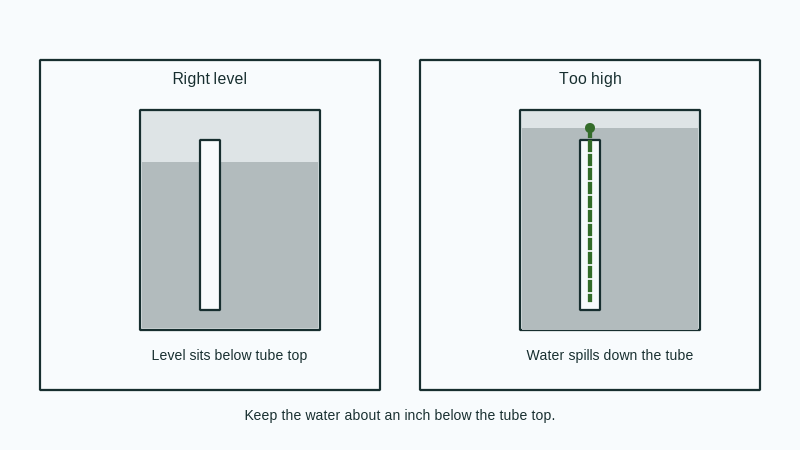
Inside your toilet tank, an open pipe stands up from the middle. Its purpose is to catch the water if the fill valve ever fails, sending it into the bowl rather than across your floor. When a toilet hisses or runs with water pouring into this tube, the tank is overfilling, and a cracked tube leaks out of the tank. Either problem can usually be fixed, often with an inexpensive kit. Prefer not to do it yourself? Arroyo Simi Plumbing passes your request along to a local plumbing company; each company that takes a request pays us a fee.
What does the overflow tube do?
The tube acts as a safety drain. If tank water rises above its intended height, the excess pours into the open end of the tube and drains to the bowl, so the tank never goes over the rim. The refill hose also sends a little water down the tube to top off the bowl following each flush.
With the lid off, you will see a small flexible refill hose clipped near the upper end of the tube. That hose refills the bowl once the flush ends. On most toilets the tube forms one piece with the flush valve assembly, sharing a base with the flapper. That matters, because a crack or weak seal at the base lets water drain into the bowl all day.
A mark or line inside the tank shows the correct water level, normally around one inch under the tube's upper end. Water lapping at the tube's rim signals a fault on the fill side.
Why does water pour down the overflow tube?
Water enters the tube once the tank rises beyond the right level. The usual causes are a fill valve stuck open, a float set too high, or a worn valve seal. Start with the float, lowering it. If the water keeps climbing, replace the fill valve.
Run through these checks in order:
- Check the water level. If the water touches the tube's top, either the float is set above the right mark or the fill valve fails to close.
- Adjust the float. With a cup float, twist the adjustment screw or slide the clip down the rod. With a ball float, gently bend the arm or turn the adjuster.
- Test the fill valve. If the level stays high even with the float lowered, the valve seal is worn. Replace the valve. See fill valve repair and inlet valve repair.
- Listen for a hiss after the tank is full. A hiss means the valve is still letting water through.
- After plumbing work in the area, grit can lodge in the valve and keep it open. Shut the supply, remove the cap per the instructions, and flush the valve with a short burst of water into a cup. That often clears the debris.
What does a leaking overflow tube cost in water?
A slow leak into the tube can go unseen for weeks. According to EPA, household leaks can add up to a large amount of wasted water, with toilets among the most common sources. A toilet that runs even a thin stream all day raises your bill, so catch it early.
To test for hidden use, note your water meter reading, keep all water off for two hours, then compare it with a second reading. A changed number means water is escaping. If the toilet is the cause, the repair costs little compared with the water lost. See toilets that keep running for more on the pattern.
In Simi Valley, your bill shows which district supplies your street. Most of Simi Valley is on Ventura County Waterworks District No. 8, the eastern end is on Golden State Water, and Moorpark is on Ventura County Waterworks District No. 1. Each district can explain how to read your meter.
What is involved in replacing the tube or flush valve?
Since most toilets build the tube into the flush valve, replacing it means exchanging the whole flush valve assembly. Turn off the supply, empty the tank, take the tank off the bowl, loosen the nut below, fit the new valve with its seal, and put it all back together. Kits suit most standard toilets, and the job takes under an hour.
Steps:
- Close the supply valve, then flush to empty the tank. Sponge out the rest.
- Disconnect the supply line, remove the tank bolts from underneath and rest the tank on a towel.
- Unscrew the large plastic nut under the tank and take the old valve out.
- Position the new valve, compare the overflow tube height with the fill valve and trim it if the instructions call for that.
- Seat the new rubber gasket and tighten the nut by hand, then one more quarter turn.
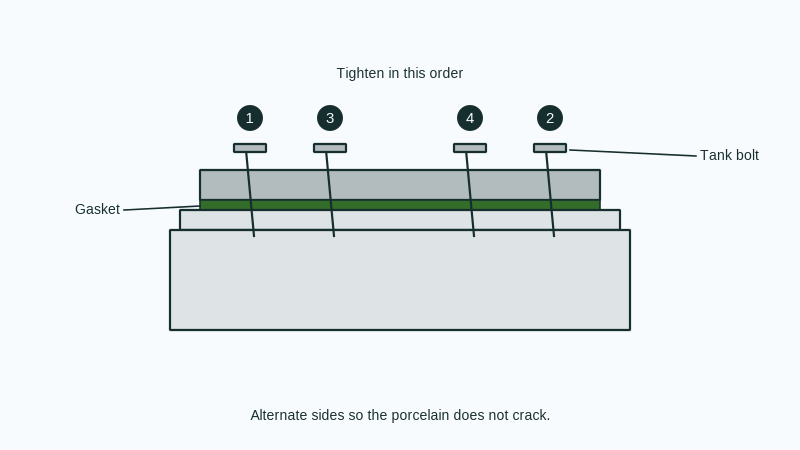
- Set the tank on the bowl with a new tank-to-bowl gasket and washers. Tighten the bolts evenly, switching sides, so the porcelain does not crack.
- Reconnect the supply, refill, and look for leaks by holding dry paper beneath the joints.
If a bolt will not turn or the porcelain is cracked, stop. A cracked tank or bowl must be replaced, not repaired. Shut-off valve repair covers the case of a supply valve that refuses to close.
When is it time to bring in a plumber for the overflow tube?
Get help if water still runs after you have adjusted the float and swapped the fill valve, if the tank bolts are seized, the porcelain has cracked, or the shut-off valve refuses to turn. A plumber can change the flush valve, inspect the wax ring and check the floor for water damage.
Water on the floor already? A leak at the base may mean a failed wax seal. See a toilet leak for the signs. When you send a request, describe what you tried, the toilet's age and the symptom you see: water down the tube, a damp base or a tank that will not hold water.
California requires a contractor license for paid plumbing jobs that exceed a modest dollar amount; you can look one up through the CSLB website.
How can I find out if the tube itself is cracked or leaking?
Look for a hairline crack, a chipped top or a wet seal at the base. Dry the tank, drip a little food coloring in, and watch whether color reaches the bowl without a flush. EPA describes this dye check for finding toilet leaks. If the water level is normal but the dye turns up in the bowl anyway, the leak is at the flapper, the base seal or a cracked tube.
To separate these causes:
- Press the flapper firmly down. If the leak stops, the flapper or its seat is to blame. See flapper repair.
- Shine a light along the tube and run a finger over it to feel for cracks.
- Dry the base of the tube and watch for water beading at the seal.
- Check that the tube does not wobble, since a loose tube loosens its seal.
A cracked tube cannot be glued into a lasting fix, because plastic that must survive inside a wet tank is hard to patch. Plan to replace it.
Common questions
How much time does an overflow tube repair need?
Setting the float takes minutes. A fill valve swap takes about half an hour. Replacing the whole flush valve with its overflow tube is roughly an hour for a careful owner, a little less for a plumber who does it often. A seized bolt can add time.
What questions should I ask before someone repairs my toilet tank?
Find out whether parts are included, what the minimum charge is, and whether the plumber will inspect the shut-off valve as well as the wax seal. Get a written quote, and before agreeing to the work, check the contractor license number against the CSLB website.
Is a bit of water in the overflow tube normal?
A small amount flows down the refill hose into the tube after each flush, which is normal. A steady stream into the tube, or a tank that fills right up to the tube's opening, is not. Lower the float or replace the fill valve to stop it.
May I shorten the overflow tube?
Only if the instructions for your valve allow it. The tube sets the tank's maximum level, and one cut too short lets water spill into the bowl at a low level and wastes water. Follow the manufacturer's height guide when fitting a new valve.