How do I halt a plastic pipe leak in a hurry?
Close the nearest shut-off valve, or the main valve if the closer one is hard to locate. Next, drain the line by running the tap that sits lowest in the house. Wipe the pipe with a rag, since a temporary wrap, clamp or epoxy only holds on a dry surface. That buys time to arrange a proper repair through Arroyo Simi Plumbing.
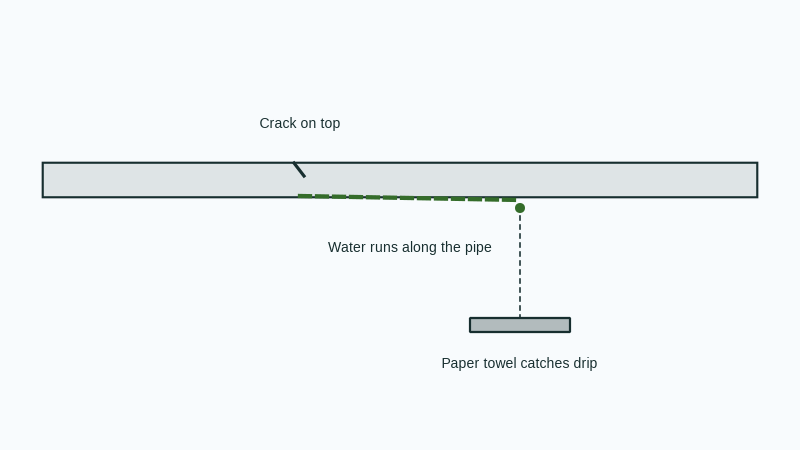
The visible wetness tells only part of the story. Water runs along plastic pipe and falls from the lowest point, so a damp patch on a ceiling or cabinet floor can lie a foot or more away from the true crack. Dry the area, put a sheet of paper towel under it, and mark where the following drop lands before wrapping anything.
Several short-term fixes suit plastic: a rubber patch secured by a hose clamp, silicone tape that fuses to itself, stretched snug over overlapping turns, and two-part putty rated for wet surfaces. None of these lasts. Use them just to restore water for a day or two.
What permanently repairs a cracked plastic pipe or joint?
Take out the damaged section and install new pipe with the right couplings. A crack along a straight run means cutting out a length. A weeping joint typically needs a fresh fitting, because glue or thread tape on a wet, dirty joint seldom seals a second time. The right method depends on the kind of pipe.
Check the pipe markings first. Stiff pipe in white or cream is PVC or CPVC. PEX is the bendy kind, sold in red, blue and white. Bendy gray pipe with a plastic look may be polybutylene, which has a poor reputation. If yours is gray and flexible, read the page on polybutylene pipe replacement before paying for a patch.
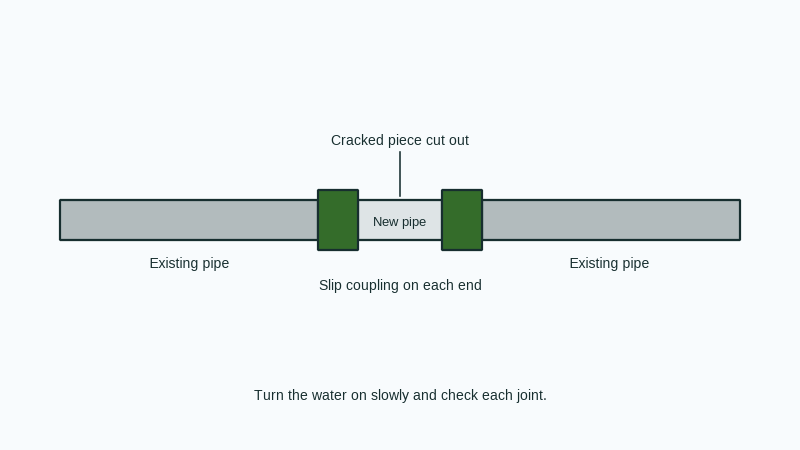
With rigid pipe, a slip coupling lets a new length drop into the gap without bending the line. Push-fit couplings need no glue and work on damp pipe, which makes them the usual choice for a quick fix, though many plumbers favor solvent-welded or crimped joints where nobody will look again. PEX calls for a crimp or clamp ring and a fitting made for PEX.
Pipe and fittings have to match. Mixed metals, sizes or pipe families are the leading reason a patched joint leaks again.
What if the leaking plastic pipe is outdoors?
Shut off water to the outside line, let it drain, and look for the split. Outdoor plastic gives way to sun, frost and mower hits. Cut out the damaged portion and connect the ends with a slip coupling or push-fit coupling, then turn the water on slowly and watch the joint for several minutes.
Irrigation pipe in many Simi Valley yards is thin-wall plastic that a shovel nicks easily. Dig by hand near the wet spot, as a trowel does less harm than a spade. A pinhead leak is easy to dismiss, but the EPA notes that a leak about 1/32 inch wide can waste around 6,300 gallons a month on an irrigation line, and that shows up on your bill.
If the broken piece belongs to the supply pipe running from the meter to your home, stop and let a plumber examine it. That line stays under pressure all day, and where the shut-off sits on the home side of the meter matters. Digging near buried gas piping is risky too, so find out where your gas line runs before breaking ground. If you ever smell gas, leave the building first, then contact the gas utility's emergency line from outdoors, and use 911 if anyone's safety is at risk.
What is the way to fix a tap that drips?
Shut the small valve beneath the fixture, dismantle the tap and replace whatever has worn. Water beading at the spout normally comes from a washer, cartridge or seat that has worn out. Water at the handle points instead to an O-ring or packing nut. Match the part to the brand, as cartridges from different makers are not interchangeable.
The EPA says one drip every second adds up to more than 3,000 gallons wasted in a year, so a worn washer is not just a cosmetic issue. Put a towel in the basin, block the drain so tiny screws cannot vanish, and photograph each step. A hardware store can match the worn part if you bring it along.
If the shut-off valve beneath the sink will not close fully, or the faucet body is corroded, replacing it is the cleaner route. The guides on fixing a leaky faucet and the faucet replacement cost have the details.
How can I replumb an older house or a mobile home?
Old houses and mobile homes fail in different ways. Older houses may hold galvanized or copper supply lines that corrode from the inside. Mobile homes run light plastic and flexible lines under the floor, where freezing is rare here but rodents, shifting skirting and heavy foot traffic over a pipe run cause damage.
In a mobile home, supply, drain and vent lines all sit in the belly beneath the floor, and the water arrives through a riser close to the home. The lines are thin and the joints hang near the ground. The guide to plumbing beneath a mobile home shows how the pieces connect.
When a house keeps leaking in separate places, patching each spot stops making sense. A whole-house repipe swaps out the entire network. Compare materials in the PEX versus copper article before you request quotes.
How should I pick a plumber for the leak?
Ask what the repair involves, what will be swapped, what the price includes and if a permit applies. A clear written answer beats a hurried spoken number. Once labor and materials reach $1,000 or more, California generally requires a contractor license, and a stranger should hand over a license number without hesitation.
Before work starts, check that number against the state contractor board's website. Confirm the business name on the quote matches the name on the license, and read the quote for the words "repair", "replace" and "parts". Vague wording is where overcharging hides.
You can also ask where the plumber will start. A good answer names the shutoff, the pipe, the fitting and the probable cause of failure. A plumber who cannot say what failed leaves you paying for guesswork.
How do I recognize overcharging by a plumber?
Collect at least two written quotes for identical work. Big gaps usually come from different scopes, not different rates. Warning signs include refusing to itemize, pushing you to decide within minutes, asking for the bulk of the payment before work starts, or adding large charges after arrival. Ask what is included and in what order.
Be alert to "diagnostic" fees that never go toward the repair, vague "materials" lines and prices that depend on whatever the plumber "finds". A fair quote names the fitting, the length of pipe, any access work such as opening a wall, and who fixes the wall afterward. How plumbers price a visit is explained in the plumber cost guide.
If a quote feels wrong, skip the argument at the door. Say thanks, request the figures in writing and gather a second price. Water damage is urgent, but waiting an hour for another quote rarely changes the outcome, especially once the supply is off.
Where do I find a dependable local plumber?
Describe the job in plain words through the quote form, adding the pipe type, where the leak is and the fixes already attempted. The request goes from us to a local plumbing business that works your corner of Simi Valley or Moorpark, so whoever arrives knows the housing stock and water supply nearby. Businesses that accept requests pay us a fee for them.
Mention early any conditions that add risk: a well or septic tank on a canyon lot, an older home with mixed pipe types, or a leak near a water heater and the gas supply. The service areas page names the parts of Simi Valley and Moorpark we cover.
Photos help. Send one wide shot of the pipe run and one close-up of the damage. Note whether the water is off, whether a ceiling is wet, and when someone will be home. A person reads them Monday to Friday, 9am to 5pm. Use the quote form to send yours.
Common questions
How long does a plastic pipe repair normally take?
A straight section swapped with a slip coupling can be done in under an hour, provided the water is off and drained. Joints buried in a wall, beneath a slab or in a mobile home belly run longer, since the plumber must first get access. Repairing the wall or ceiling afterward is a separate job, often handled by another trade.
Is tape or epoxy ever a lasting repair?
No. Tape, putty and epoxy exist to buy time. With constant pressure and temperature swings they can soften, slip or peel. Use them to stop the flow while a proper repair is arranged, then replace the damaged section or fitting. If the leak is on a pressurized supply line, keep the waiting period short.
Which questions come first when I am choosing a plumber?
Find out exactly which parts will be replaced, whether the price covers parts, access and cleanup, and who repairs any wall that gets opened. Check whether a permit is needed and who gets it. The contractor license number should be checked against the state board. Have all of it written down before any work begins.
Does an adult need to be home during the repair?
Yes, someone should point out the shut-off and the damage when the plumber arrives, then come back to test the repair at the end. A trusted adult may substitute for you. For a leak beneath the house or in a mobile home belly, make sure the crawl space or skirting is open to the plumber.